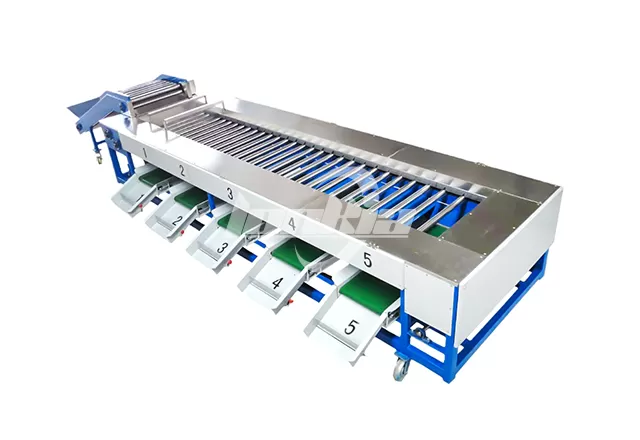
In the modern fruit and vegetable processing industry, manual sorting is increasingly unable to meet the demands for high-efficiency, high-consistency production. This is particularly true for products such as potatoes, tomatoes, bell peppers, chili peppers, and eggplants, where traditional manual grading is not only inefficient but also prone to issues such as inconsistent sizing, high wastage rates, and rising labor costs. Automatic fruit sorting and grading machines are gradually becoming essential equipment for processing plants, packaging centers, and export companies.
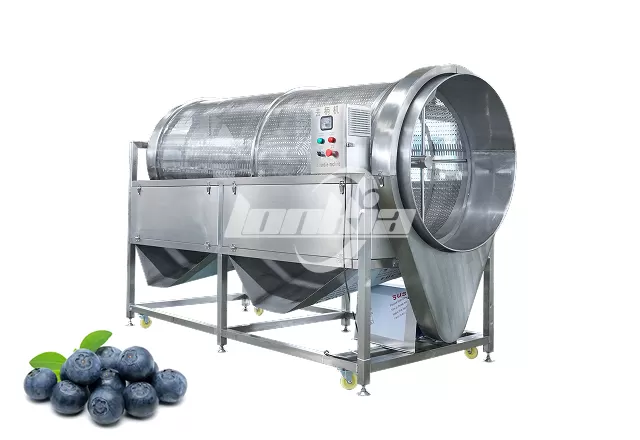
The Lonkia automatic fruit and vegetable sorting and grading machine employs a drum-type grading structure that automatically performs multi-stage sorting based on the diameter of the produce, enabling continuous production and improving product consistency and processing efficiency.
Why do Fruit and Vegetable Processing Plants Need Vegetable Grading Machines?
For export-oriented processing plants, different sizes of fruits and vegetables often correspond to different sales channels and packaging standards. For example:
- Small-sized potatoes are used for potato chip production
- Medium-sized tomatoes are used for packaged sales
- Chili peppers and bell peppers require grading by diameter
Relying on manual sorting is not only slow but also prone to significant errors. The automatic fruit sorting and grading machine can quickly sort fruits and vegetables into multiple grades by adjusting the spacing between drums, significantly improving grading accuracy and production stability.

Compatible with Multiple Fruits and Vegetables—One Machine, Multiple Uses
When purchasing vegetable grading equipment, many customers prioritize whether a machine can handle a wide range of products. Lonkia's grading machines feature a modular design suitable for:
- Potatoes
- Tomatoes
- Eggplants
- Bell peppers
- Chili peppers
- Onions
- Cucumbers
- Carrots
By adjusting roller spacing and conveyor speed, the machine can accommodate produce of varying sizes and shapes. This design helps processing plants reduce equipment investment and improve production line utilization.
Automatic Feeding and Continuous Operation
For vegetable processing plants handling over 10 tons of raw materials daily, stable and continuous operation is critical. This vegetable grading machine can be equipped with an automatic feed hopper and an elevating conveyor system to ensure uniform feeding and reduce the burden of manual loading.
The machine supports continuous operation for 5–8 hours, making it suitable for fruit and vegetable processing centers, fresh-cut vegetable factories, and export packaging workshops. The variable-frequency speed control system allows for flexible adjustment of operating speed based on different materials, thereby improving sorting efficiency.
Food-Grade Stainless Steel Construction—Ideal for Food Processing Environments
Food safety and equipment durability are among the top concerns for customers during procurement. The parts of the Lonkia vegetable grading machine that come into contact with materials are manufactured from food-grade 304 stainless steel, offering the following advantages:
- Corrosion resistance
- Easy to clean
- Resistant to rust
- Suitable for humid processing environments
- Stable Long-Term Operation
Additionally, the equipment features a food-grade silicone conveyor system that effectively minimizes impact damage to fruits and vegetables, making it particularly suitable for delicate produce such as tomatoes and bell peppers.

Manual Inspection System Enhances Product Quality
To meet export and high-standard packaging requirements, many customers add manual inspection stations. The grading machine for vegetables can be equipped with a manual inspection conveyor belt, allowing operators to quickly remove damaged, unripe, or visually defective products during the grading process.
This combined "automatic grading + manual inspection" model not only improves efficiency but also further enhances product quality consistency. Some processing plants have reported that this model significantly reduces rework issues in subsequent packaging stages.
Customization Support to Meet Processing Needs in Different Countries
Requirements for voltage, grading capacity, and production configuration vary by country. Lonkia can provide the following based on customer needs:
- 220V/380V customization
- Single-phase/three-phase power compatibility
- Solar power adaptation
- Multi-stage sorting outlets
- Custom dimensions and conveyor structures
For markets such as the Middle East and Africa, we can also optimize equipment stability and continuous operation capabilities to suit local processing environments.
Conclusion
As the fruit and vegetable processing industry continues to demand higher levels of automation and standardization, automatic fruit sorting and grading machines have become essential equipment for improving processing efficiency and product quality. For various processing scenarios involving potatoes, tomatoes, peppers, and other produce, a stable, efficient, and customizable grading system can help enterprises reduce labor costs and enhance market competitiveness.
Lonkia continues to provide professional fruit and vegetable grading solutions to customers worldwide, helping processing plants achieve more efficient and stable automated production.