In the fruit and vegetable processing industry, washing is a critical step that affects product quality. Different types of fruits and vegetables have distinct surface structures; for example, root vegetables such as carrots and potatoes tend to accumulate soil on their surfaces, while leafy vegetables like lettuce and spinach are more prone to damage. Therefore, selecting the appropriate fruit and vegetable washer is crucial for improving cleaning efficiency, reducing raw material waste, and ensuring stability in subsequent processing stages.
Currently, the most common fruit and vegetable washing equipment on the market includes bubble washing machines and brush-type washers. Although both are used to remove impurities, there are significant differences in their operating methods, suitable materials, and cleaning focus.
Working Principle of Bubble Washing Machines
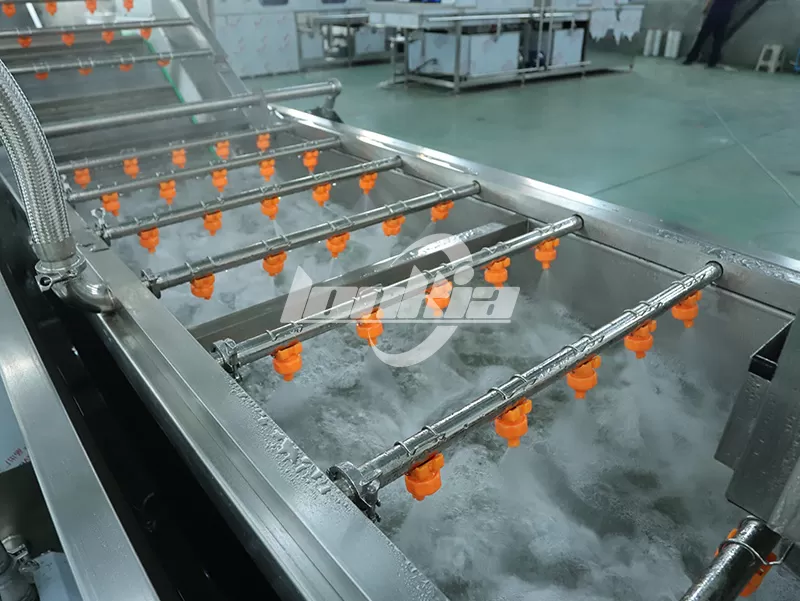
Bubble washing machines primarily rely on the combined action of water flow and bubbles to complete the washing process. A bubble generator is installed at the bottom of the equipment; as large numbers of bubbles continuously tumble in the water, they cause the fruits and vegetables to disperse and move thoroughly within the tank.
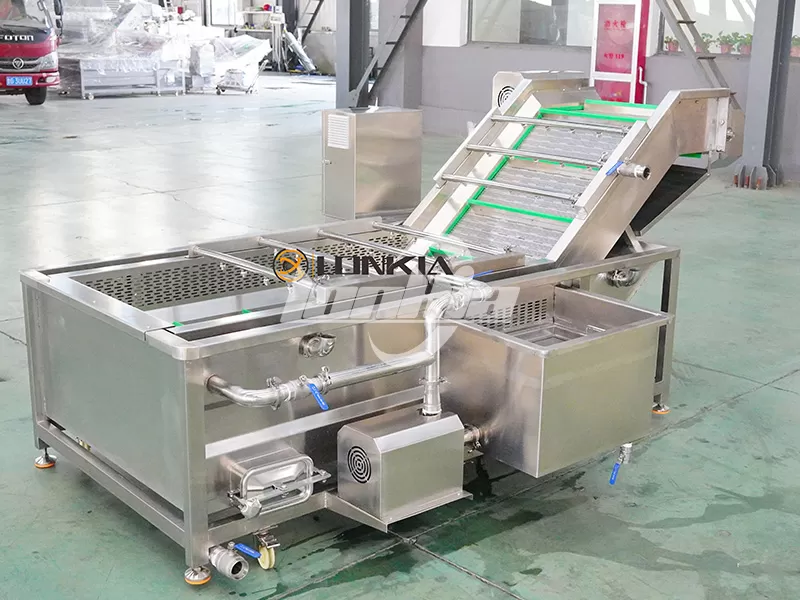
When the bubbles come into contact with the surface of the produce, they create a continuous impact that removes mud, dust, and some impurities adhering to the surface. At the same time, the equipment is typically equipped with a spray system to perform a secondary rinse on the produce during conveyance, further enhancing the cleaning effect.
The most notable feature of this cleaning method is its gentler process. Since the produce is primarily tumbled by the movement of water flow and bubbles without being subjected to intense friction, this method is particularly suitable for products with thin skins or those prone to damage.
For example:
- Leafy vegetables such as lettuce and spinach
- Soft fruits such as strawberries and grapes
- Fruits and vegetables with relatively soft surfaces, such as tomatoes and cucumbers
For processing facilities that need to maintain the integrity of the produce's appearance, the bubble washing method can effectively reduce damage rates.
Working Principle of the Brush-Type Fruit and Vegetable Washer
The brush-type fruit and vegetable washer primarily relies on the contact between rotating brushes and the surface of the produce to clean it. Multiple sets of food-grade brush rollers are installed inside the equipment; as the produce moves along the conveyor, it continuously tumbles, creating moderate friction with the brushes, thereby removing firmly adhered soil and surface impurities.
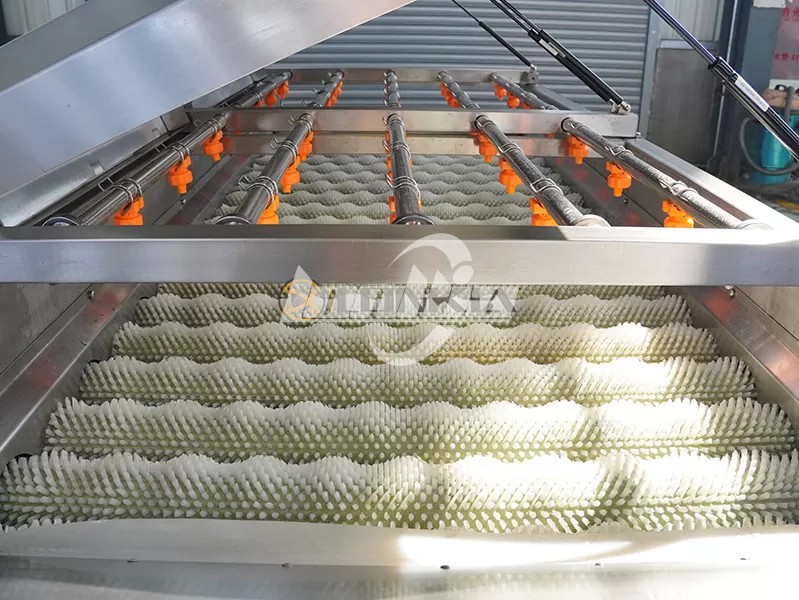
Compared to bubble washing, brush washing offers superior surface cleaning capabilities and is better suited for root and tuber crops with hard skins, uneven surfaces, or layers of soil.
Common applications include:
- Carrots
- Potatoes
- Sweet potatoes
- Beets
- Ginger and other root and tuber vegetables
For example, after harvest, carrots typically have a significant amount of soil adhering to their surfaces, which is difficult to completely remove using only a standard water stream. Brush rollers can make deep contact with the product's surface, improving soil removal efficiency.
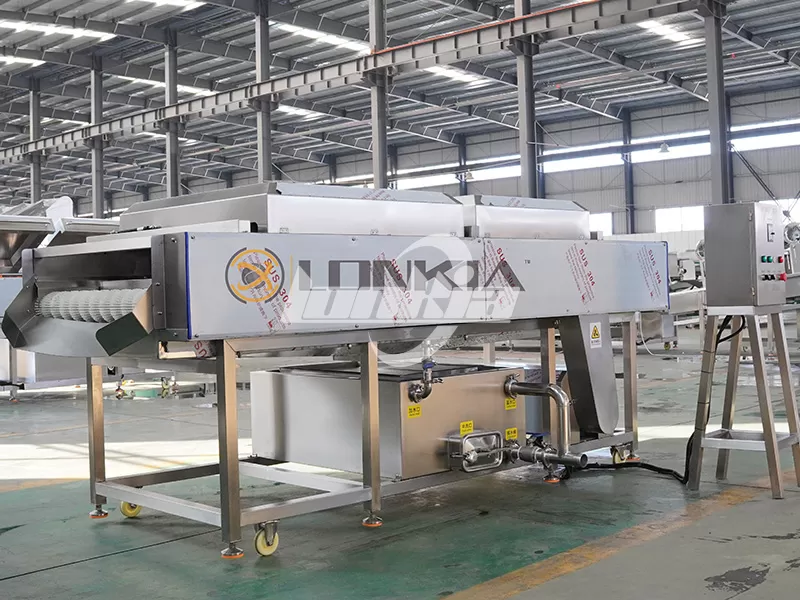
Key Differences Between Bubble and Brush Washers
| Comparison Items | Bubble Washer | Brush-Type Fruit and Vegetable Washer |
| Cleaning Method | Cleaning via bubbles and swirling water flow | Cleaning via rotating brush friction |
| Key Advantages | Gentle cleaning, minimizes damage | Effective at removing stubborn stains |
| Suitable Products | Leafy greens, fruits, tender vegetables | Root vegetables such as carrots and potatoes |
| Cleaning Focus | Removing dust and impurities | Removing soil and surface debris |
| Product Protection | High | Adjustable based on brush material |
For food processing companies, stronger cleaning power isn't necessarily better; rather, the correct cleaning method must be selected based on the characteristics of the raw materials.
How to Choose the Right Fruit and Vegetable Washer for Your Plant?
When selecting a vegetable and fruit cleaner machine, the first consideration should be the type of product being processed.
- If your primary raw materials are delicate products such as lettuce, spinach, or fruits, a bubble-type washing system is generally more suitable. It uses water circulation and the action of bubbles to clean while maintaining product integrity.
- If you primarily process root and tuber crops with muddy surfaces—such as carrots, potatoes, and beets—it is recommended to choose washing equipment with a brush mechanism to enhance cleaning effectiveness through mechanical scrubbing.
For businesses that process a variety of fruits and vegetables, a combined washing solution—such as a combination of bubble washing and brush washing—can be selected based on production needs to achieve optimal results for different materials. Lonkia offers washing equipment solutions designed for various fruit and vegetable processing needs, with configurations tailored to the characteristics of the customer's raw materials, processing workflows, and production line requirements.
Summary
There is no absolute superiority or inferiority between bubble-type and brush-type fruit and vegetable washers; the key lies in whether they are suited to the products being processed.
Bubble-type washers are better suited for fruits and vegetables that require gentle handling, while brush-type washers are better suited for root and tuber products that require more thorough mud removal and surface cleaning. When purchasing fruit and vegetable washing equipment, selecting the correct configuration based on the characteristics of the raw materials is essential to achieving better cleaning results and more stable production performance.