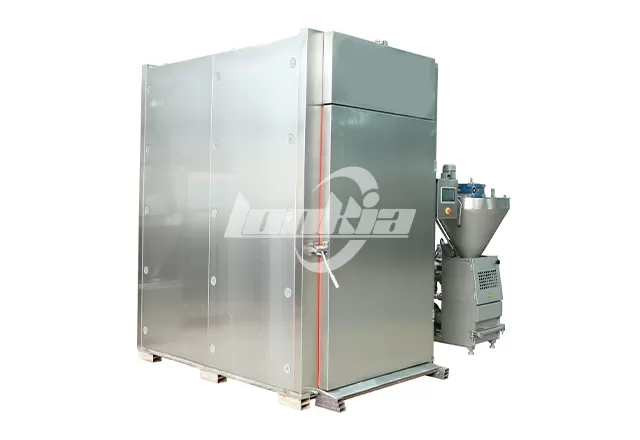
When selecting an industrial fryer machine, many customers are most concerned not with appearance or price, but with the heating method. Different heating methods not only affect equipment stability but also directly impact product quality, energy costs, and production efficiency. Therefore, choosing the right heating system is a critical step in determining the performance of the entire snack frying production line.
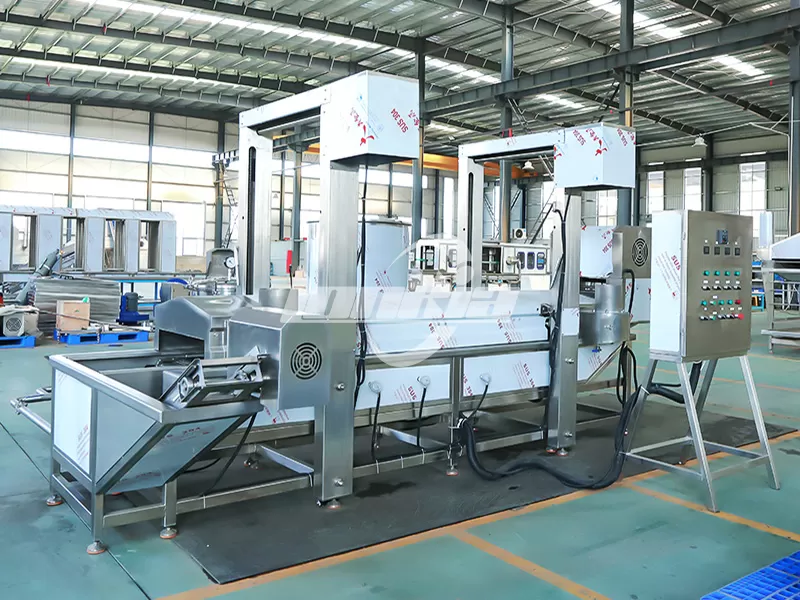
What Are the Common Heating Methods for Industrial Fryer Machines?
Currently, mainstream industrial deep fryers primarily use three heating methods:
1. Electric Heating
Electric heating uses heating elements to directly heat the oil. It features a simple structure and precise control. The equipment is typically equipped with an automatic temperature control system, enabling stable temperature output and ensuring product consistency.
👉 Features:
- High temperature control precision, suitable for products with strict quality requirements
- Compact structure and simple operation
- Uniform heating, promoting consistent product color
2. Gas Heating
Gas heating involves heating the oil by burning natural gas or liquefied petroleum gas (LPG), a method widely used in industrial production.
👉 Features:
- Fast heating rate and strong thermal response
- Suitable for continuous high-volume production
- Faster temperature recovery during high-load operation
3. Heat Transfer Oil/Steam Indirect Heating (Heat Transfer System)
This method uses heat transfer oil or steam to heat a heat exchanger, which then transfers the heat to the cooking oil; it is an indirect heating method.
👉 Features:
- More stable and uniform temperature
- Reduces localized overheating
- Helps improve product quality and oil stability
How to Choose Between Different Heating Methods?
1. Consider Production Scale and Continuous Operation Requirements
If your snack frying production line operates continuously (e.g., French fries, nuts, meat processing), we recommend prioritizing:
- Gas heating: Suitable for high-volume production
- Heat transfer oil system: Suitable for continuous production with high quality requirements
Continuous frying equipment typically requires stable heat supply to prevent temperature fluctuations from affecting product quality.
2. Consider Product Quality Requirements
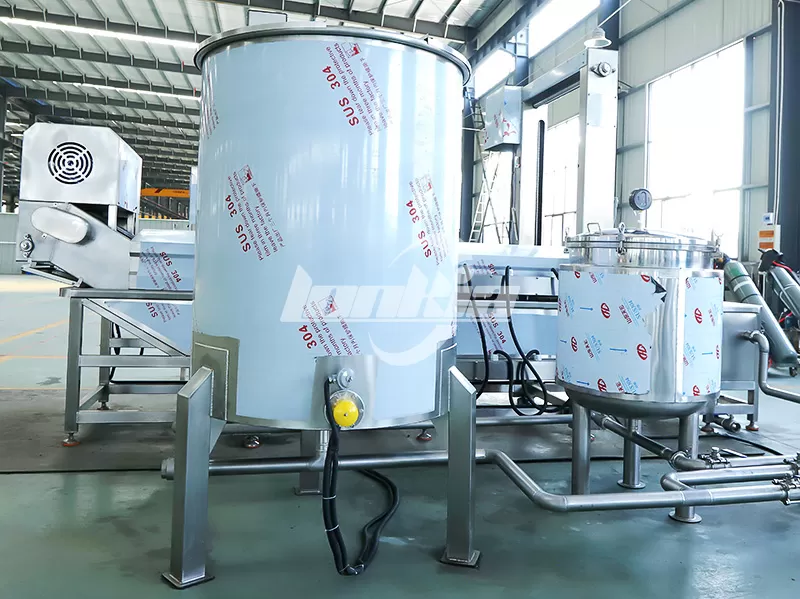
Different foods have varying requirements for temperature stability:
- Snack foods (potato chips, puffed snacks): High-precision temperature control is recommended (electric or thermal oil)
- Meat products: Require rapid temperature recovery (gas heating has an advantage)
Temperature fluctuations directly affect color, texture, and oil content; therefore, stability is more important than heating speed alone.
3. Consider Operating Costs and Energy Availability
Energy costs vary by region:
- Low electricity rates: Prioritize electric heating
- Abundant gas resources: Prioritize gas heating
For example, while gas equipment involves slightly higher initial investment, it typically offers greater cost advantages during high-volume production.
4. Consider Equipment Automation and System Compatibility
Modern industrial fryer machines are typically equipped with:
- Automatic temperature control systems
- Oil circulation and filtration systems
- Continuous conveyor belt systems
These systems must be compatible with the heating method to ensure truly stable operation.
Practical Selection Recommendations
If you are still undecided, consider the following simple guidelines:
- Prioritize consistent quality → Choose electric heating or thermal oil systems
- Prioritize production capacity and efficiency → Choose gas heating
- Produce multiple product varieties → Prioritize switchable or customizable heating solutions
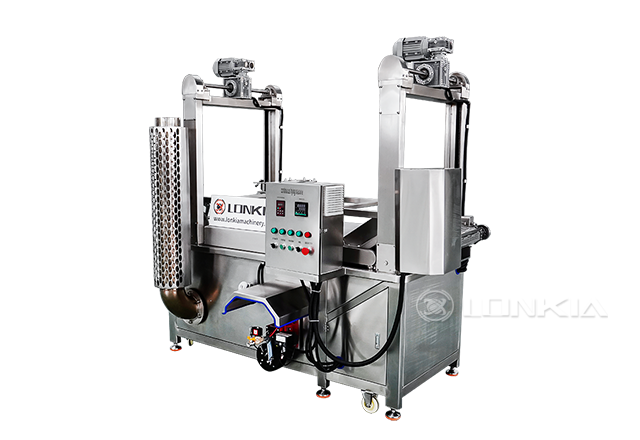
Continuous fryers like those offered by Lonkia typically support customization for multiple heating methods, allowing flexible configuration based on different product requirements. They are particularly suitable for food processing companies with long-term planning.
Summary
Choosing the right heating method essentially involves striking a balance between efficiency, quality, and cost.
A truly high-performance industrial fryer machine must deliver:
- Stable temperature
- Controllable energy consumption
- Adaptability to continuous production
Only by meeting these criteria can a machine consistently produce stable products in actual production, helping businesses reduce costs and enhance competitiveness.