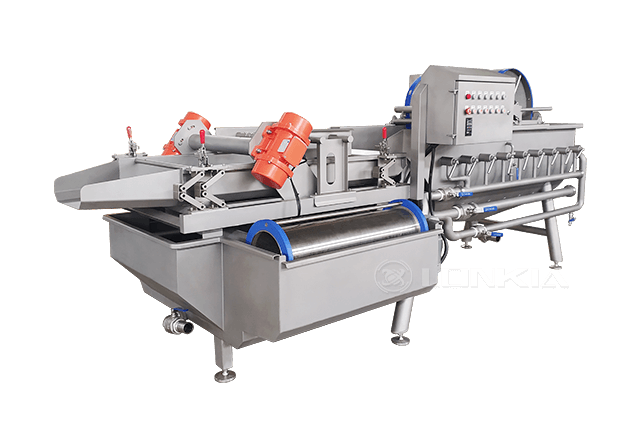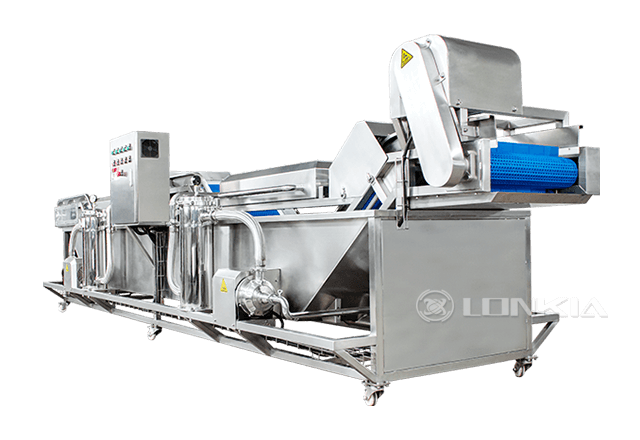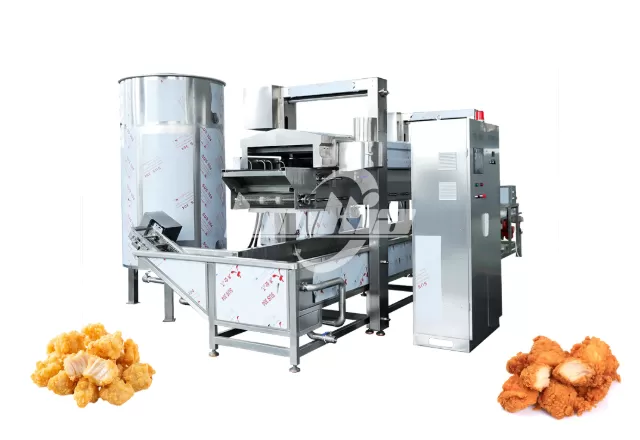
When selecting a vegetable blancher, steam heating and electric heating are the two most common heating methods. They exhibit distinct differences in blanching machine price, energy consumption structure, operating costs, and suitable applications. Understanding their respective characteristics enables businesses to more accurately control investment budgets and select equipment best suited to their processing needs. For many vegetable processing plants comparing blanching machine price, knowing how heating methods influence cost is essential.
Structural Differences Between Heating Methods and Their Cost Implications
Steam-heated vegetable blanchers consist of steam heat exchanger tubes, steam control valves, and insulation structures, relying on factory boilers for steam supply. These units feature relatively stable construction, faster heating rates, uniform temperature distribution, and superior performance in maintaining continuous production capacity. Because of these structural advantages, steam systems often influence the overall blanching machine price on the higher side.
Electric-heated vegetable blanching machines utilize multiple electric heating elements to directly heat water. Their heating method is simple and flexible, eliminating the need for a boiler system. However, the number and power rating of heating elements directly impact overall costs. Due to simpler configurations, the initial blanching machine price of electric-heated machines is generally lower than steam models.
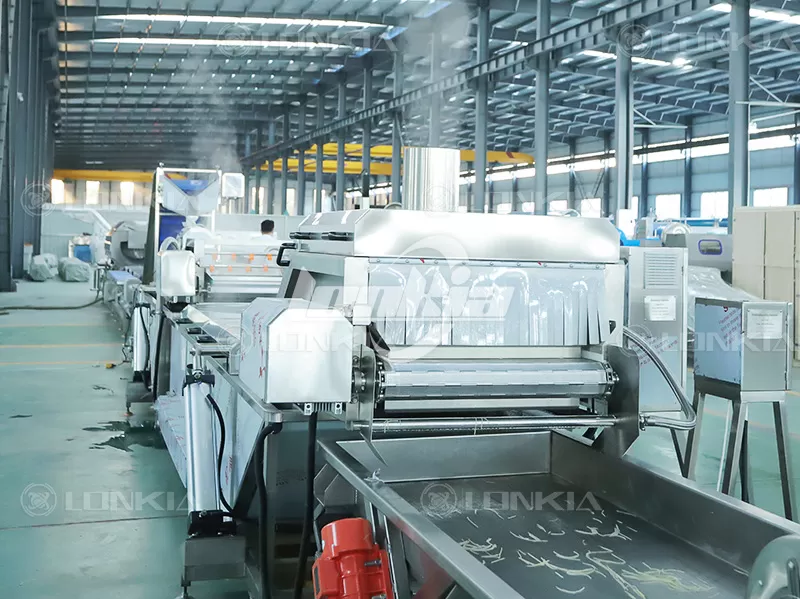
Impact of Operating Costs on Blanching Machine Price
For many clients, the purchase price represents only part of the cost; long-term operating expenses are equally significant when evaluating blanching machine price from a total investment perspective.
- Steam Heating: If the factory already possesses a boiler for steam supply, steam blanching machines generally exhibit lower operating costs, making them highly suitable for continuous production environments.
- Electric Heating: While eliminating upfront boiler investment, prolonged processing incurs higher electricity consumption, increasing usage costs over extended production periods.
Therefore, for long-cycle, high-frequency processing, steam heating proves more economical in the long term and can affect how customers judge overall blanching machine price beyond the initial purchase.
Differences in Production Capacity Requirements and Temperature Control Stability
When continuously processing materials like tomatoes, carrots, and potatoes, temperature stability directly impacts product quality. Steam heating offers faster ramp-up speeds and stronger heat recovery capabilities, resulting in minimal temperature fluctuations during high-volume material flow. This performance advantage often plays a role in how manufacturers set the blanching machine price for steam systems.
Electric heating provides equally reliable temperature control precision but slightly weaker rapid heat recovery capabilities. It is therefore better suited for factories with less intensive processing volumes or without steam sources.
Which Heating Method Best Fits Your Production?
If your facility already has a steam system, choosing a steam blanching machine typically yields lower overall costs. For new plants or those with flexible scales, electric heating presents lower investment pressure. Lonkia's tomato blanching machines support both heating methods and can provide optimal configuration solutions based on production capacity and facility energy conditions, helping customers obtain durable equipment at a reasonable blanching machine price. Regardless of the heating method you choose, understanding these differences ensures you invest in a system that aligns with your operational needs and long-term budget expectations.