In modern food processing, potato washing and peeling machines have become essential equipment in the raw material pretreatment stage. Among these, the brush roller design is widely used in the processing of potatoes and various root vegetables due to its stability and adaptability. For customers seeking efficiency, high yield, and consistent quality, selecting the appropriate equipment design is particularly important.
Brush Roller Design: Achieving Integrated Washing and Peeling
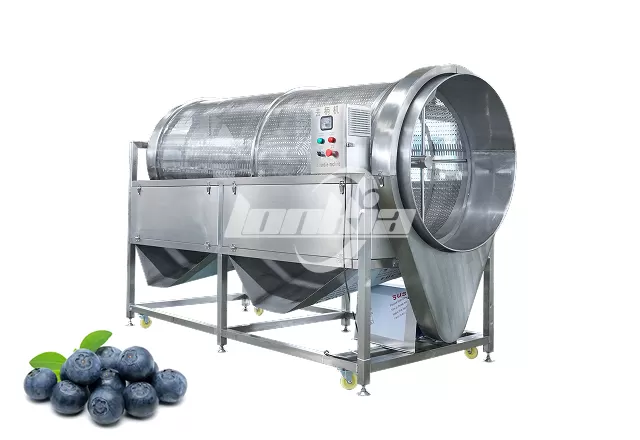
Brush roller-type potato washing and peeling machines achieve simultaneous peeling and washing through friction between the rotating brush rollers and the produce. During operation, the potatoes continuously come into contact with the brush rollers as they roll, while a high-pressure spray system effectively removes dirt and the outer skin.
Compared to traditional multi-stage processing equipment, this integrated design enables:
- Reduced equipment investment
- Shorter processing cycles
- Improved overall production efficiency
For processing companies, this translates to lower operating costs and a more stable production line rhythm.
Efficient Peeling with Reduced Raw Material Waste
One of the primary concerns for customers is whether the peeling is thorough while minimizing raw material waste.
The brush roller potato washer and peeler utilizes a combination of soft and hard brush rollers that can be adjusted based on the condition of the raw material, ensuring high peeling rates while minimizing flesh loss. Some models achieve a peeling rate of approximately 98% while maintaining a low breakage rate.
This design is particularly suitable for:
- Potatoes with thin skins
- Irregularly shaped raw materials
- Processing scenarios requiring strict yield control
Durable Structural Design to Reduce Long-Term Operating Costs
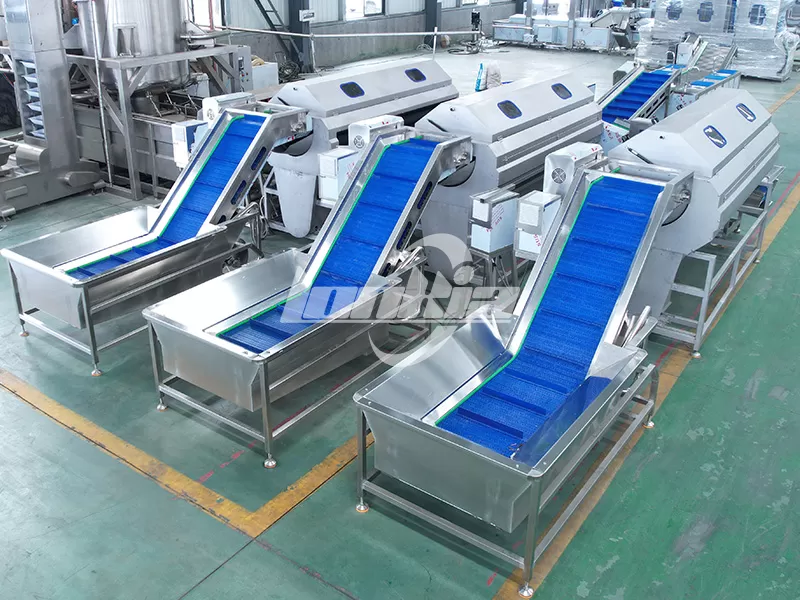
High-quality brush peeling machine typically features a food-grade 304 stainless steel body paired with highly wear-resistant nylon brush rollers, ensuring excellent corrosion resistance and durability.
The advantages include:
- Stable performance during prolonged continuous operation
- Easy to clean, reducing maintenance frequency
- Longer service life
For processing plants operating over the long term, this design can significantly reduce equipment replacement and repair costs.
Adaptability to Multiple Materials, Improving Equipment Utilization
The brush roller potato washing and peeling machine is not only suitable for potatoes but can also process a variety of root and tuber crops, such as carrots, ginger, and cassava.
This means:
- A single machine can process multiple products
- Reduced duplicate purchases
- Improved equipment utilization
This is particularly crucial for multi-product processing enterprises.
Simple Operation, Suitable for Continuous Production
The potato washer and peeler typically features automatic rolling and continuous discharge designs, with clear operating procedures and low staff training costs.
In actual production, its advantages include:
- Automatic operation after loading
- Simultaneous washing and peeling
- Uniform and stable discharge
It seamlessly integrates with subsequent processes such as cutting and blanching, making it a vital piece of equipment at the front end of the production line.
Consistent and Stable Processing Results
Compared to manual peeling, mechanical brush roller processing offers greater consistency. Through standardized parameter control, it ensures consistent appearance and peeling levels across every batch.
For food companies requiring standardized production, this enables:
- Improve product appearance consistency
- Reduce the impact of manual variation
- Enhance overall quality control
Advantages of Lonkia Equipment
As a manufacturer specializing in food processing equipment, Lonkia places greater emphasis on equipment stability and practical performance in the design of its brush roller potato washing and peeling machines. For example, by optimizing the brush roller arrangement and expanding the spray coverage, the equipment ensures effective peeling while further improving washing uniformity, making it better suited for continuous production needs.
Conclusion
Overall, the brush roller potato washing and peeling machine has become the mainstream choice in root vegetable processing due to its efficient integrated processing, low wastage, strong adaptability, and stable performance.
For customers, selecting the right equipment is not merely a matter of improving efficiency; it is a critical step in controlling costs and enhancing product quality. If your production line requires stable and reliable pre-processing equipment, this type of system is undoubtedly a solution worth prioritizing.