In the food processing industry, the cleanliness of storage crates not only affects production efficiency but also directly impacts food safety. As automated cleaning equipment, industrial crate washers are gradually replacing manual cleaning and becoming standard equipment on modern production lines.
If you are in the process of selecting a model, this guide will help you make the right decision quickly.
What Is an Industrial Crate Washer?
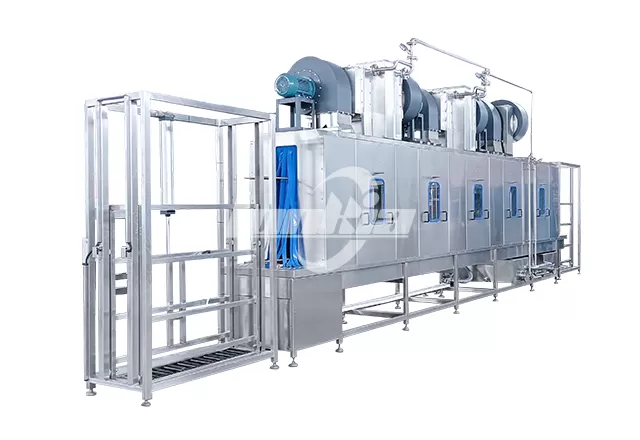
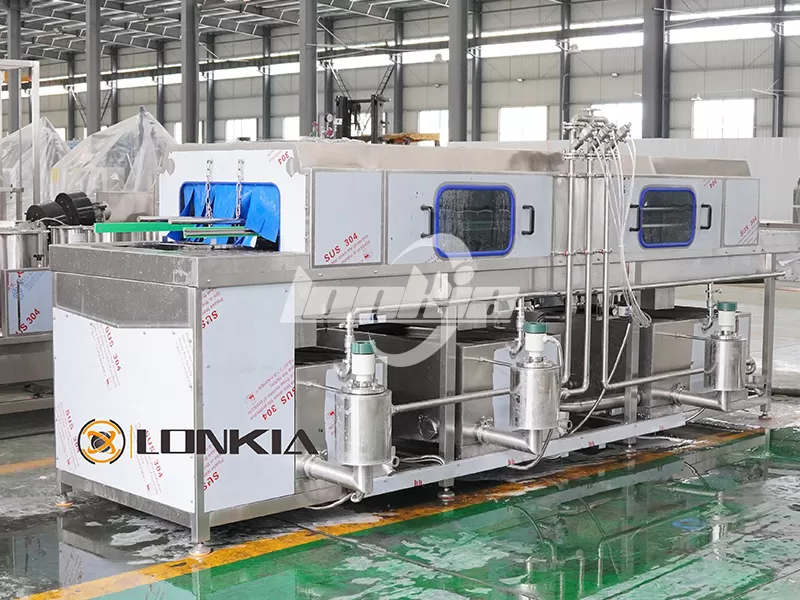
An industrial crate washer is an automated device designed to clean plastic crates, storage bins, and pallets. It achieves continuous operation through a combination of a conveyor system, high-pressure spraying, and multi-stage cleaning.
Key features of the crate washing equipment include:
- High-pressure spraying to remove grease, bloodstains, and residue
- Multi-stage cleaning (pre-wash + main wash + rinse)
- Support for heating and disinfection
- Continuous conveyor operation
Compared to manual cleaning, this automated method achieves more consistent and thorough cleaning results.
Analysis of the Core Structure of Plastic Crate Washer
1. Conveyor System
Reusable crates are automatically fed into the washing channel via a chain, enabling continuous operation and ensuring a stable production cycle.
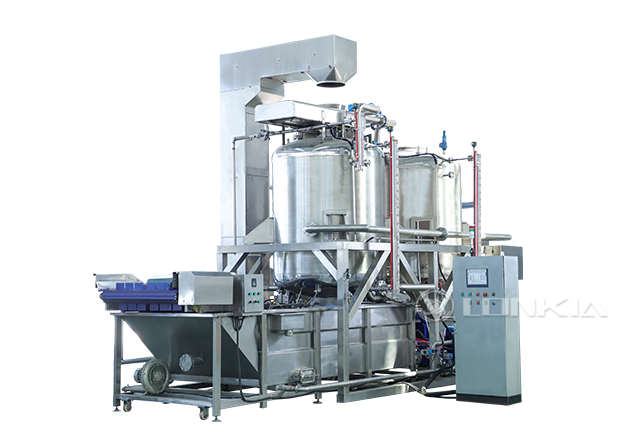
2. Multi-stage Washing System
Standard configurations typically include:
- Pre-wash Zone: Removes large particles
- Main Wash Zone: High-pressure hot water cleaning
- Rinse Zone: Removes detergent residue
The multi-stage structure ensures thorough cleaning for varying degrees of contamination.
3. High-Pressure Spray System
The equipment provides 360° spray coverage to reach every corner of the crates, effectively removing grease and stubborn stains.
4. Heating and Drying Modules
Supports electric or steam heating to enhance cleaning performance, and can be configured with an air-drying system for rapid drying.
Key Considerations When Purchasing a Crate Washer Machine
1. Is the cleaning thorough?
Core evaluation criteria:
- Does it feature a multi-stage washing structure?
- Does it support high-temperature washing (typically 50–65°C)?
- Does it have a high-pressure spray system?
👉 This directly determines whether the equipment meets food safety standards.
2. Does the production capacity match the production line?
Common range:
- 300–1,000 crates/hour (standard configuration)
- Can be scaled up to higher capacities
👉 Selection principle: Align with the production line's cycle time to avoid bottlenecks
3. Is the crate washing equipment stable and durable?
Key considerations:
- SUS304 stainless steel construction
- High-pressure pump quality
- Availability of an automatic control system
Stainless steel construction ensures long-term operational stability and is suitable for continuous operation environments.
4. Does it support automated control?
Modern crate cleaning machine typically features:
- PLC control system
- Temperature and speed adjustment
- Automatic operation
👉 The higher the level of automation, the lower the labor costs.
5. Does it support customization?
In practical applications, customer requirements vary significantly:
- Different crate sizes
- Varying levels of contamination
- Need for drying
Equipment suppliers like Lonkia typically offer customization to better align with production lines.
Core Advantages of Industrial Crate Washers
- Improved Cleaning Consistency: Automated systems ensure consistent cleaning results for every crate, eliminating human error.
- Enhanced Production Efficiency: The plastic crate washer operates continuously, processing hundreds or even thousands of crates per hour.
- Reduced Labor Costs: Minimizing manual intervention lowers long-term operational costs.
- Enhanced Food Safety Standards: Consistent temperature and spray pressure make it easier for the equipment to meet standards such as HACCP.
How to Select the Right Crate Washer?
We recommend evaluating based on the following three core criteria:
1. Cleaning Requirements
Are there grease, protein residues, or stubborn stains?
2. Production Line Compatibility
Does it need to integrate with existing production lines?
3. Feature Configuration
Are the following required:
- Heating system
- Drying system
- Automated control system
Summary
Selecting the right industrial crate washer essentially involves addressing three key questions:
- Is the cleaning thorough?
- Does the efficiency meet production line requirements?
- Is the equipment stable and durable?
- A well-designed machine not only boosts production efficiency but also significantly reduces long-term operating costs.
If you are seeking a stable and reliable solution, Lonkia possesses extensive experience in structural design, cleaning systems, and customization capabilities, and can provide tailored equipment solutions for various food production scenarios.