In the food processing industry, bubble washers have gradually become essential equipment for washing vegetables and fruits due to their highly efficient and gentle cleaning methods. For buyers, understanding the equipment's structure not only aids in selecting the right model but also directly impacts cleaning performance and long-term operating costs. This article will provide a systematic analysis of the bubble washer's structure and key components, helping you make more informed decisions.
Overview of the Bubble Washer's Overall Structure
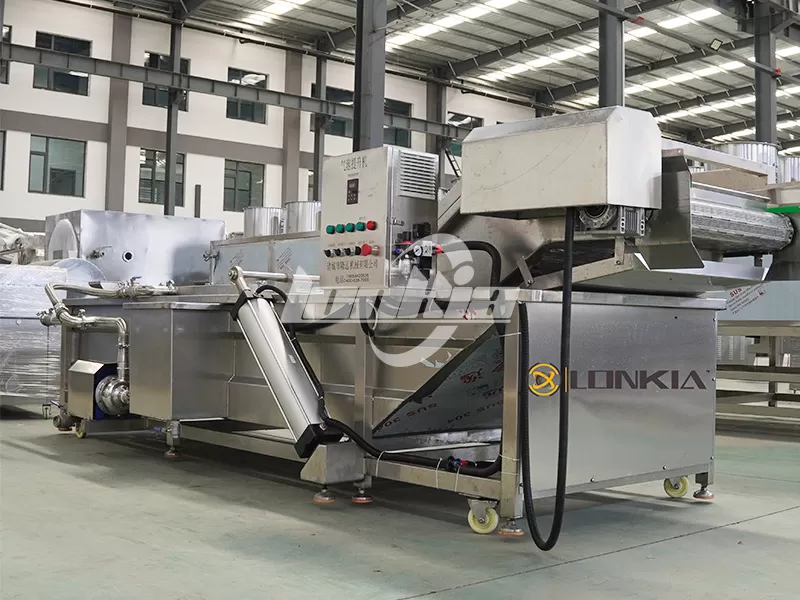
A bubble cleaning machine typically consists of a cleaning tank, a bubble system, a conveyor system, a spray system, and a filtration and recirculation system. Its compact design makes it suitable for continuous production. The equipment achieves efficient cleaning through the synergistic action of bubbles, water flow, and conveyor movement.
Its core features are:
The combination of "bubble impact + water flow agitation + conveyor movement"
During operation, materials enter the washing tank and are continuously tumbled and moved forward by the interaction of bubbles and water flow, thereby achieving thorough cleaning.
Detailed Explanation of Core Components
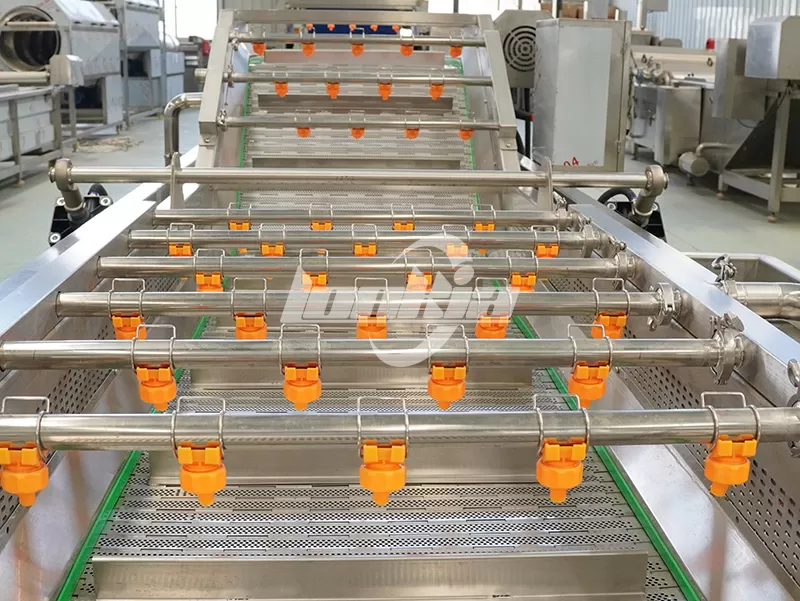
1. Washing Tank
The washing tank is the main structural component of the bubble cleaning machine system, designed to hold water and materials.
- It is constructed from food-grade stainless steel (typically 304)
- It offers excellent corrosion resistance and stability
- Its internal structure is designed for optimal water flow distribution
2. Bubble Generation System
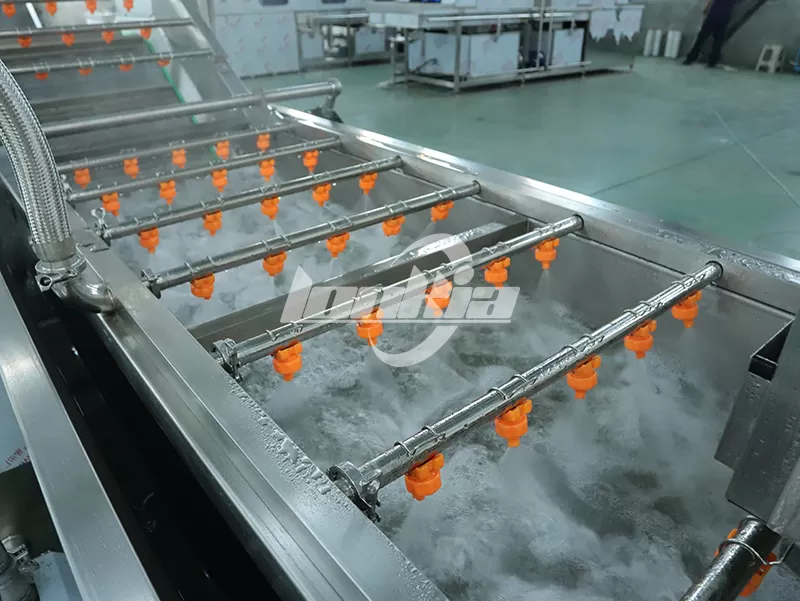
This is the most critical component of the bubble washer. An air pump continuously injects air into the water to generate a large volume of bubbles.
- As the bubbles rise, they create a turbulent water flow.
- When the bubbles burst, the resulting impact force dislodges impurities.
👉 This "bubble burst + water flow turbulence" mechanism effectively removes contaminants such as soil and pesticide residues
👉 It also penetrates into the gaps between leaves, achieving a cleaning effect that is difficult to attain with traditional methods
3. Conveying System
The fruit and vegetable washing machine's conveying system typically uses a mesh belt structure to move the material.
- Supports continuous feeding and discharge
- Operating speed is adjustable
- Operates in sync with the washing process
During washing, the material continuously tumbles on the conveyor belt, thereby improving cleaning uniformity
👉 Advantages:
- Enables continuous production
- Reduces manual intervention
4. High-Pressure Spray System
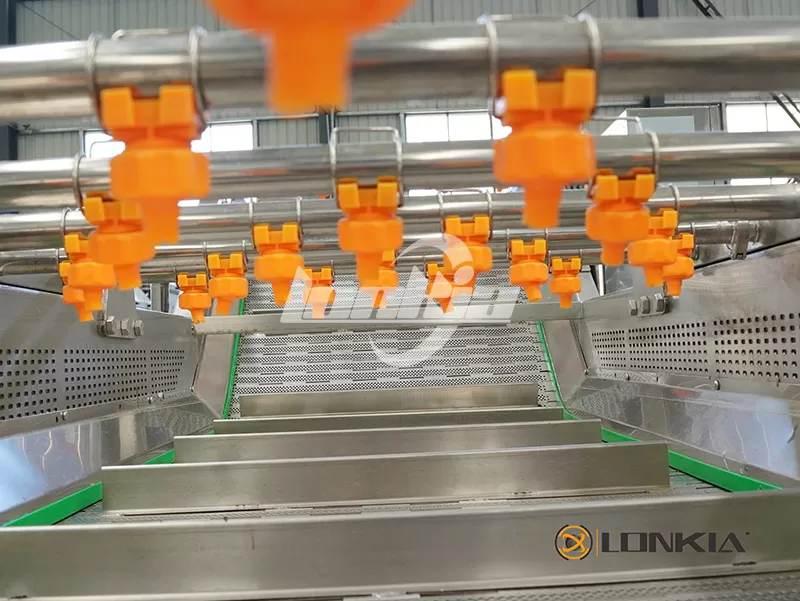
The spray system is typically located at the discharge end.
- Performs a secondary rinse on the material
- Removes residual impurities
- Improves cleanliness
This system works in conjunction with bubble washing to ensure a more thorough cleaning result
👉 This configuration further enhances the overall cleaning effectiveness, enabling products to meet higher standards
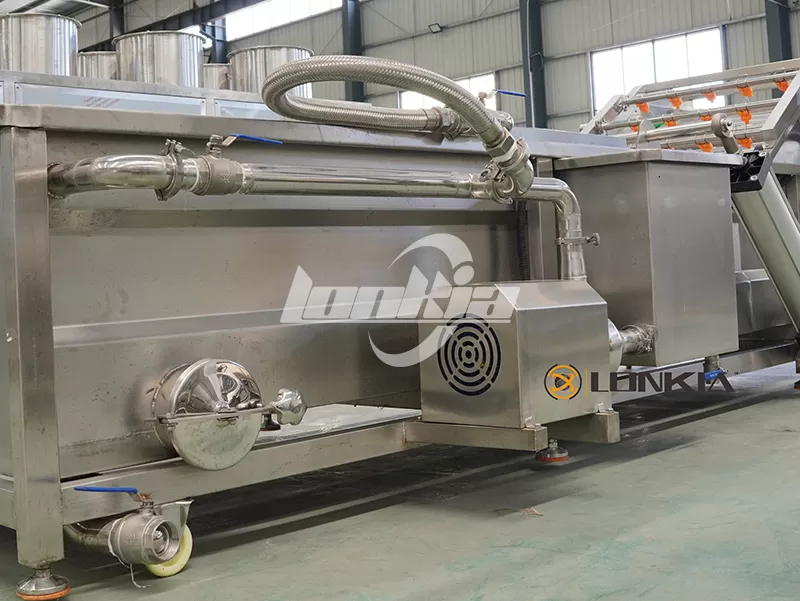
5. Water Circulation and Filtration System
The bubble washing machine's filtration system is used to maintain clean water quality.
- Filters out silt and impurities
- Enables water recirculation
- Reduces the frequency of water changes
👉 Advantages:
- Maintains stable water quality
- Reduces operating costs
- Improves equipment continuous operation capability
Coordinated Workflow of Components
The bubble washer does not operate as a single structure but as an integrated system:
- Material enters the washing tank
- The bubble system generates bubbles for impact cleaning
- Water flow causes the material to tumble
- The conveyor belt moves the material forward
- The spray system performs secondary cleaning
- Impurities are discharged through the filtration system
This integrated approach significantly enhances cleaning efficiency and ensures uniform cleanliness
Analysis of the Bubble Washing Machine's Structural Advantages
From a structural design perspective, the bubble washer offers the following significant advantages:
1. Uniform Cleaning with no Blind Spots
The combination of bubbles and tumbling motion ensures comprehensive contact between the produce and the water flow, preventing incomplete cleaning in localized areas.
2. Gentle on Produce
Unlike brush roller equipment, bubble washing is gentler and suitable for leafy greens and delicate produce
3. High Degree of Automation
The entire process, from feeding to discharge, is fully automated, significantly reducing labor costs.
4. Compatibility with a Wide Range of Produce
Including:
- Root vegetables (carrots, potatoes)
- Leafy greens (spinach, lettuce)
- Fruits (apples, strawberries)
Conclusion
The core competitiveness of the bubble washer lies not merely in "cleaning," but in the comprehensive performance enhancements derived from its structural design.
Through the synergistic interaction of the bubble system, conveyor system, spray system, and circulation system, this equipment achieves:
- High-efficiency cleaning
- Stable operation
- Wide applicability
For companies seeking to improve product quality and production efficiency, selecting a well-designed bubble cleaning machine is a crucial step in optimizing their production lines.