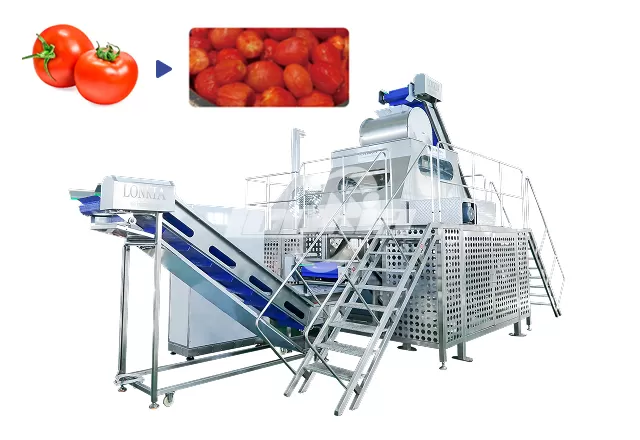
In food processing, warehousing and logistics, and industrial manufacturing, pallets vary in size, material, contamination level, and turnover frequency across factories. Standard-configuration washing equipment may not fully meet the requirements of every production line. Therefore, when selecting an automatic pallet washer, in addition to considering the equipment's price and processing capacity, you must confirm whether the machine's configuration can be adjusted to suit actual production conditions.
What Determines the Customization of an Automatic Pallet Washer?
1. Pallet Dimensions and Structure
The length, width, height, weight, and bottom structure of pallets affect the automatic pallet washer's conveying method and spray coverage. For plastic pallets with grids, grooves, or complex support legs, it is crucial to verify that the nozzles can reach areas prone to dirt accumulation.
Before purchasing, it is recommended to provide the pallet washer manufacturer with drawings of the pallet dimensions or photographs of the actual pallets to confirm that the conveying channel, pallet spacing, and cleaning area are compatible, thereby avoiding issues such as material jams or inadequate cleaning.
2. Cleaning Requirements and Types of Contamination
Grease, dust, mud, and food residue require different cleaning parameters. For general surface dirt, preliminary cleaning can be achieved through pre-washing and high-pressure spraying; for more stubborn grease, a combination of hot water, appropriate detergents, and a longer cleaning cycle may be necessary.
When customizing pallet cleaning equipment, the actual contamination level of the trays should be clearly identified, and water temperature, spray pressure, nozzle layout, and cleaning programs should be determined based on cleaning test results—rather than simply increasing the pressure.
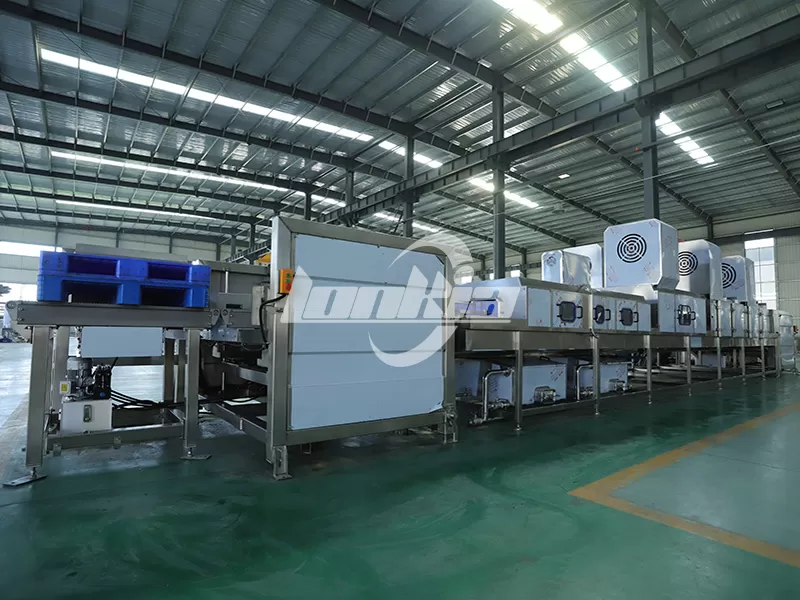
What Features Can Be Customized for Tray Washers?
1. Multi-stage washing and drying systems
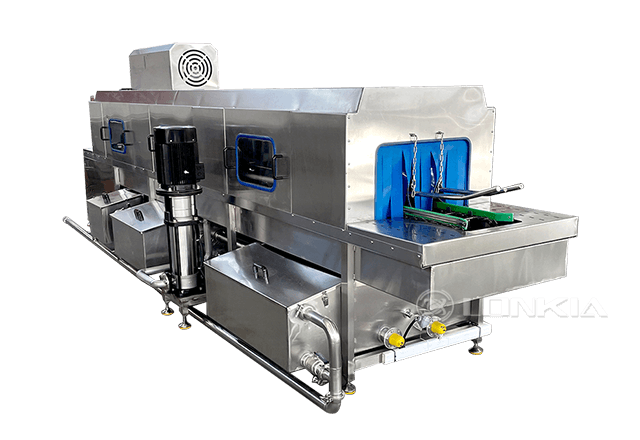
Depending on production requirements, the automatic pallet washer can incorporate processes such as pre-wash, main wash, clear-water rinse, and optional drying. The pre-wash removes easily dislodged impurities, the main wash further removes adhered dirt, and the rinse helps eliminate detergent residue.
If trays need to be quickly transferred to the next process after cleaning, consider adding a hot-air or room-temperature air drying system. The specific configuration should be determined based on the tray structure, residual moisture, and turnaround time.
2. Conveyor System and Automatic Control
An automatic conveyor system reduces manual handling and ensures trays move sequentially through different cleaning zones. A PLC control system coordinates the conveyor and cleaning processes; relevant parameters must be confirmed based on the actual equipment configuration.
If the facility already has conveyor lines, pallet stackers, or flipping equipment, the inlet and outlet heights, conveyor speeds, and control interfaces should be verified in advance to ensure the washer can integrate with existing production processes.
How to Select a Configuration Based on Production Capacity and Facility Conditions?
Equipment selection should not be based solely on the number of pallets washed per hour; it must also consider daily pallet throughput, work shifts, cleaning time, and production peaks. The reference processing capacity provided on the LONKIA pallet washer ranges from 200 to 800 pallets per hour; actual capacity should be confirmed based on pallet specifications, degree of contamination, and the final configuration.
In addition, prior to purchase, verify the facility's voltage, power requirements, heating conditions, equipment installation space, and drainage requirements. Providing this information in advance helps minimize repeated revisions to the design and improves the accuracy of the quote.
What Should Be Prepared Before Customizing a Pallet Washing Machine?
To ensure the pallet cleaning equipment solution better meets actual needs, we recommend that customers provide the following information when requesting a quote:
- Tray Information: Length, width, height, material, weight, and bottom structure.
- Cleaning Requirements: Type of dirt, cleaning standards, and whether drying is required.
- Production Requirements: Number of trays to be washed per hour or per day.
- Factory Conditions: Power specifications, heating method, installation space, and existing conveyor equipment.
- Procurement Requirements: Target delivery time, required certification documents, and packaging and shipping requirements.
LONKIA can evaluate equipment configurations based on the tray specifications and production requirements provided by the customer. By clarifying key parameters in advance, customers can more effectively compare supplier proposals and verify whether the features included in the quote meet their actual needs.
Conclusion
Selecting the right automatic pallet washer hinges on ensuring a proper match between tray specifications, the washing process, processing capacity, and facility conditions. Only by clearly defining actual needs and then determining the spray system, heating method, drying configuration, and automation interfaces can you obtain an equipment solution that best suits your production line.
If you are looking for custom tray washing equipment, please provide LONKIA with your tray dimensions, washing requirements, and target production capacity so we can further confirm the equipment configuration, technical specifications, and quotation.