In food processing operations, pallets must be continuously loaded, transported, retrieved, and reused. If tasks such as depalletizing, washing, and palletizing are performed manually, they not only disrupt production rhythms but can also lead to pallet backlogs, reducing the operational efficiency of the entire production line. As a result, an increasing number of companies are adopting comprehensive pallet handling systems that integrate automatic de-stacking, tray washers, conveyors, and automatic stacking into a single, continuous solution. This automates pallet handling and ensures a smoother production process.
Compared to purchasing a standalone tray washer, a complete tray handling system focuses on the coordinated operation of various pieces of equipment, creating a closed-loop process from the moment trays enter the production line until they are reused, thereby providing food companies with a more stable and efficient tray management solution.
What Equipment is Included in a Complete Tray Handling System?
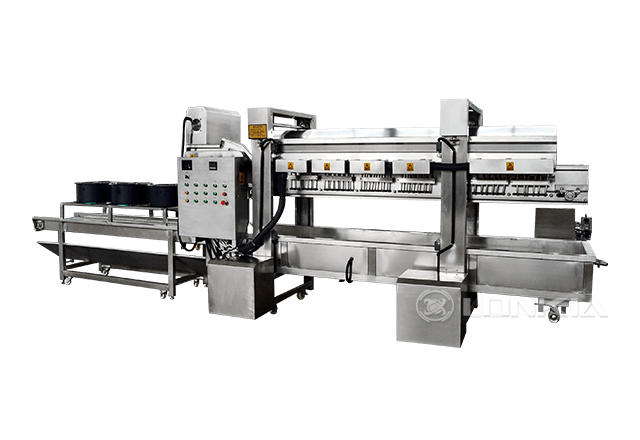
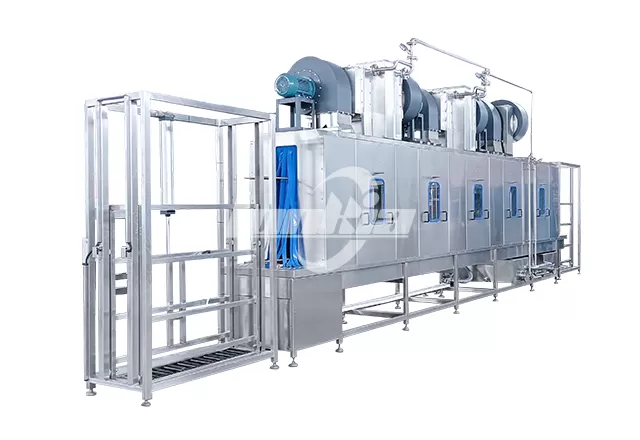
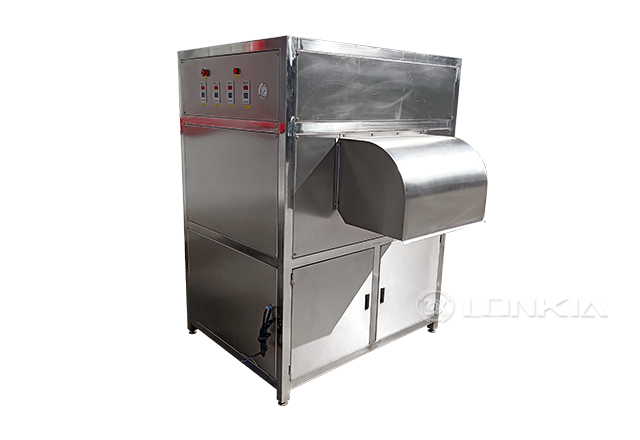
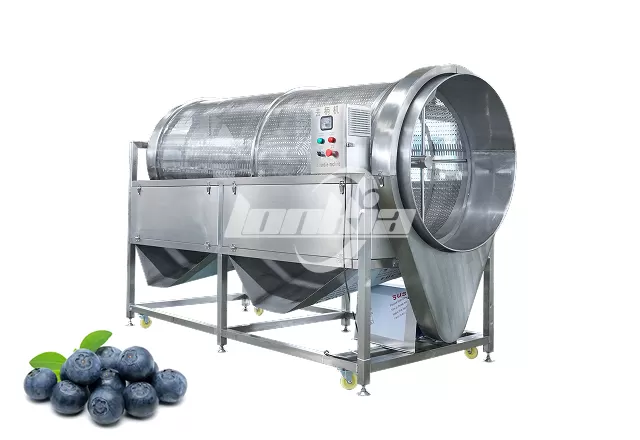
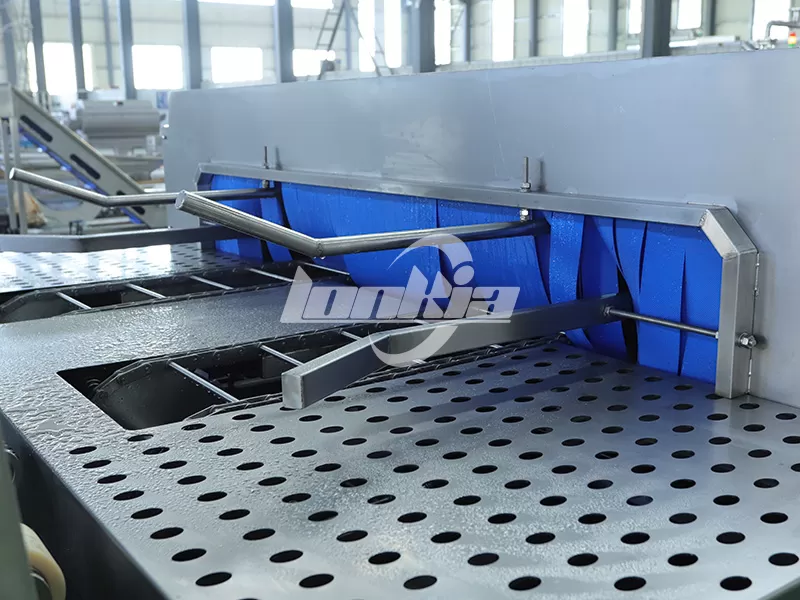
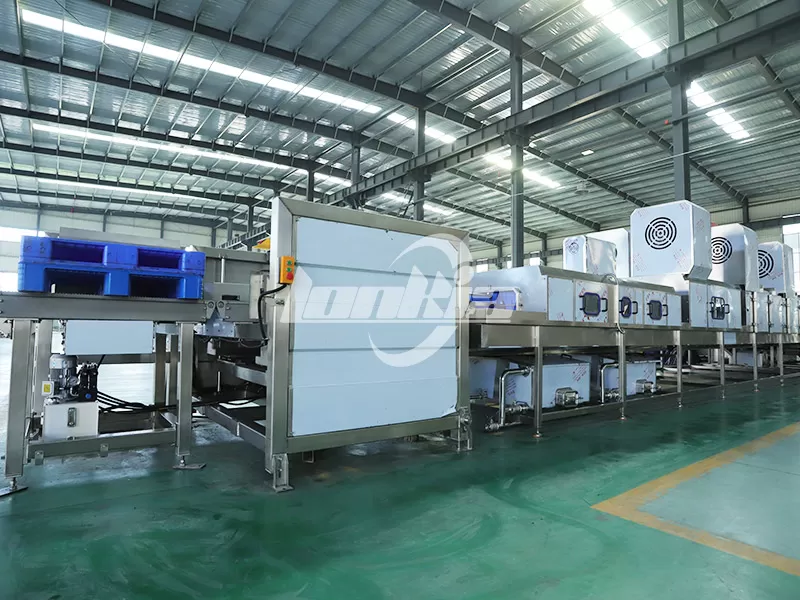
A complete tray handling system typically consists of an automatic depalletizing machine, a conveyor system, a tray washer, an automatic stacking machine, and a centralized control system. Each module performs a different task while maintaining synchronized operation.
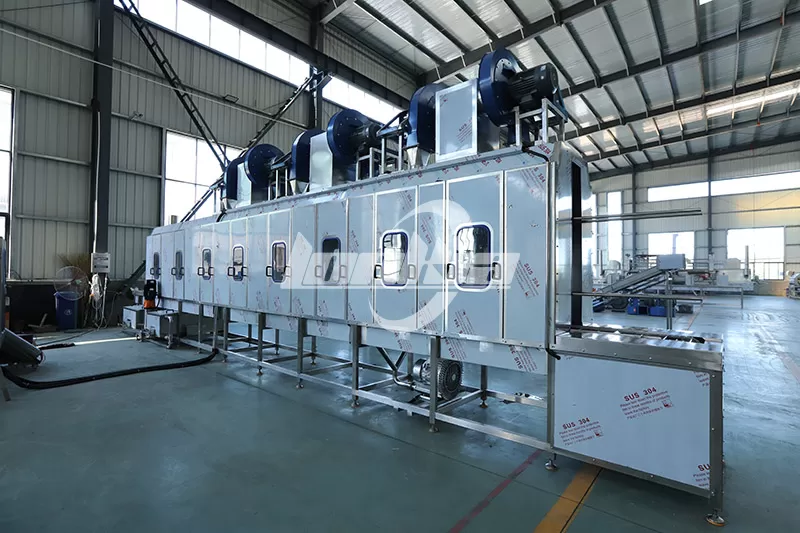
At the start of production, stacked trays first enter the automatic destacking machine. The system separates the trays layer by layer according to a preset program and uses the conveyor system to steadily feed the trays into the tray washer. Depending on the cleaning requirements of different products, the system can be configured with multiple cleaning stages—including pre-wash, main wash, and rinse—to ensure the tray surfaces are thoroughly cleaned. After washing, the trays proceed to a drainage or air-drying area and are finally neatly stacked by the automatic stacking machine, facilitating subsequent storage, transportation, or return to production.
The entire process requires minimal manual intervention, and all equipment operates continuously, ensuring orderly tray handling.
Why Are More and More Customers Choosing a Complete Tray Handling System?
Many customers initially focus only on the tray washer itself during the early stages of a project. However, as production demands increase, they gradually realize that what truly impacts efficiency is not just the washing equipment, but the throughput speed of trays throughout the entire production process.
If trays still require manual depalletizing, handling, and stacking, even with a sufficiently fast washing speed, bottlenecks are likely to form in preceding and subsequent processes, affecting the continuous operation of the entire production line.
A complete tray handling system synchronizes the cycle times of each process step, ensuring that depalletizing, conveying, washing, and palletizing work in stable coordination. This reduces manual handling and improves tray turnover efficiency. At the same time, automated operation keeps trays neatly arranged, facilitating subsequent conveying and reuse, and providing a stable foundation for continuous production.
How to Choose the Right Tray Handling System for Your Needs?
When purchasing a complete tray handling system, it is not advisable to focus solely on the tray washer price; it is more important to ensure that the system meets actual production requirements.
- Confirm the dimensions, material, weight, and stacking method of the trays, as the de-stacking mechanisms, conveying structures, and stacking methods will vary depending on the tray specifications.
- Determine the equipment's processing capacity based on the production cycle to ensure that de-stacking, cleaning, and stacking speeds are consistent, thereby preventing any single stage from becoming a bottleneck for the entire production line.
- Consider whether the tray washing machine supports integration with existing conveyor lines, packaging lines, or processing equipment, as well as whether it will be easy to maintain and adjust parameters in the future—these factors directly impact the equipment's long-term operational performance.
Customized Design Ensures the System Better Meets Production Needs
Production processes, plant layouts, and tray specifications vary across different food factories. Therefore, a mature tray handling system typically employs a modular design that can be configured according to actual needs.
For example, the depalletizing mechanism can be adjusted according to tray dimensions, washing stations can be added to increase processing capacity, conveyor directions can be optimized based on available space, and automatic stacking equipment can be integrated to accommodate varying numbers of stacked trays. By appropriately configuring each functional module, the entire system can better integrate into existing production processes, reduce installation and retrofitting work, and improve overall operational efficiency.
Based on a customer's tray dimensions, production capacity, and process flow, Lonkia can provide integrated solutions—including automatic de-stacking, tray washers, conveying, and automatic stacking—to help companies establish more efficient and stable automated tray handling systems.
Conclusion
For food processing companies that need to continuously handle large volumes of trays, the complete tray handling system is a critical component for enhancing production continuity. Through the coordinated operation of automatic depalletizing, the tray washer, conveying, and automatic palletizing, the system effectively optimizes the tray handling process, reduces manual intervention, and improves equipment utilization and production efficiency.
When planning a tray washing project, it is recommended to take the entire production line into account and comprehensively consider tray specifications, processing capacity, floor layout, and future expansion needs. Selecting a comprehensive solution that best aligns with the process flow will ensure more stable and reliable long-term operation.