When building a French fries making machine factory, in addition to production capacity and equipment prices, water consumption is another parameter that customers often need to confirm in advance. Water is primarily used for washing, peeling, and blanching potatoes, as well as for cleaning equipment; different equipment configurations and production conditions can all affect actual water usage. Therefore, water consumption cannot be determined simply based on hourly output but should be calculated in conjunction with the entire production line.
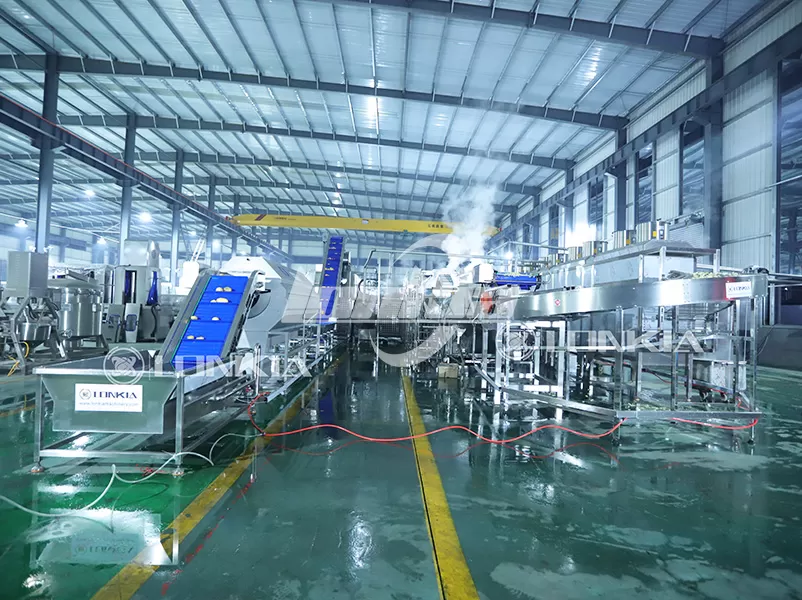
Where Is Water Used in a French Fries Processing Plant?
1. Potato Washing and Peeling
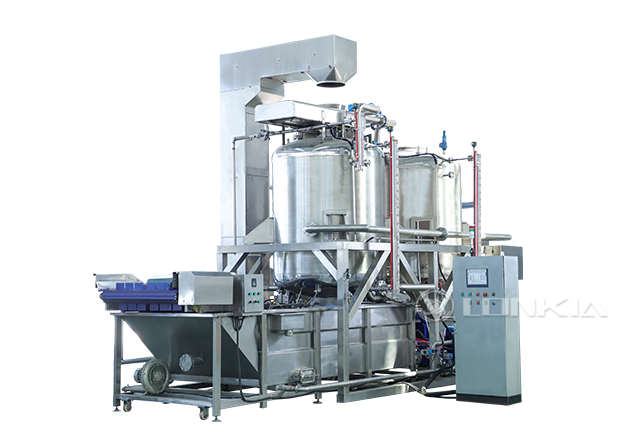
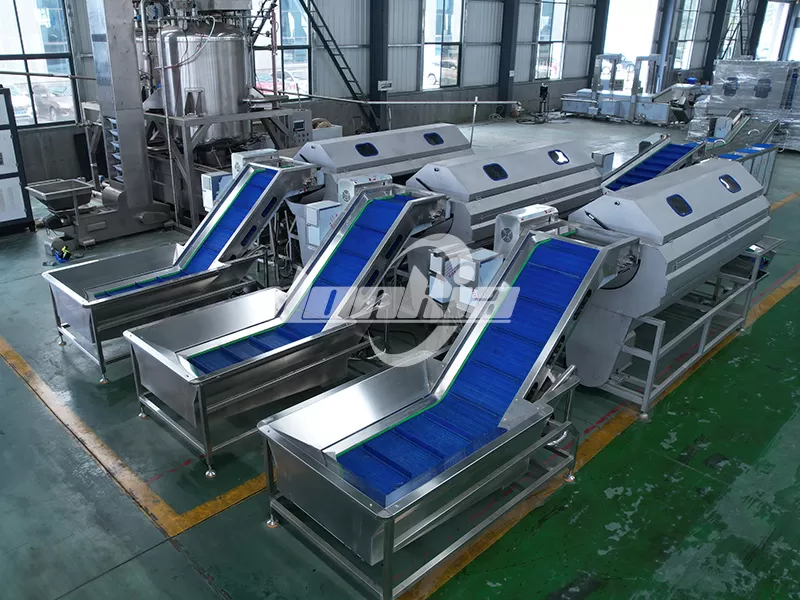
Once potatoes enter the French fries making machine factory, the first step is to remove soil and impurities from their surfaces. Washing and peeling equipment is one of the primary water-consuming stages at the beginning of the process. Equipment design, the amount of soil in the raw material, washing time, and water recirculation methods all affect actual water consumption.
For continuous-production French fries processing plants, special attention should be paid to ensuring a proper match between washing capacity and tank volume, as well as between the spray system and filtration equipment. A well-designed equipment configuration can make the washing process more stable and facilitate subsequent maintenance.
2. Blanching Process
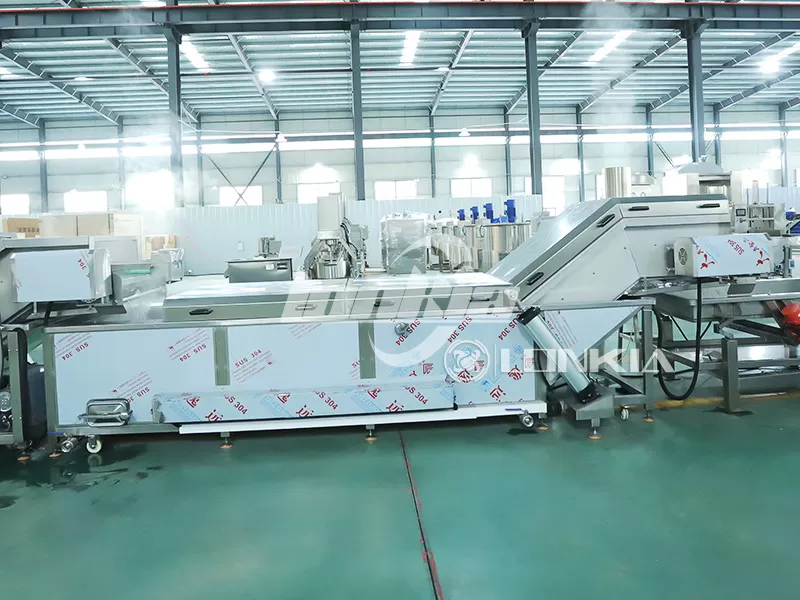
Blanching is a critical step in French fry processing. The blanchers in LONKIA automatic French fries production lines can treat French fries briefly with hot water or steam and are equipped with temperature control systems. The blanching temperature range for existing solutions is 60–95°C.
If hot water blanching is used, the amount of water replenished, the circulation method, and the production time will all affect total water consumption. Therefore, when requesting a quote, you should clarify the process used by the blanching equipment and the water circulation configuration, rather than simply asking about the water consumption of a single piece of equipment.
What Factors Affect Water Consumption?
Production Capacity Is Not the Only Factor
Higher production capacity typically requires processing more raw materials, but capacity does not directly equate to a fixed water consumption rate. For example, when raw potatoes have a heavy layer of soil on their surfaces, the initial washing stage may require more water; differences in the design and circulation methods of various washing equipment can also lead to variations.
Equipment Configuration Matters
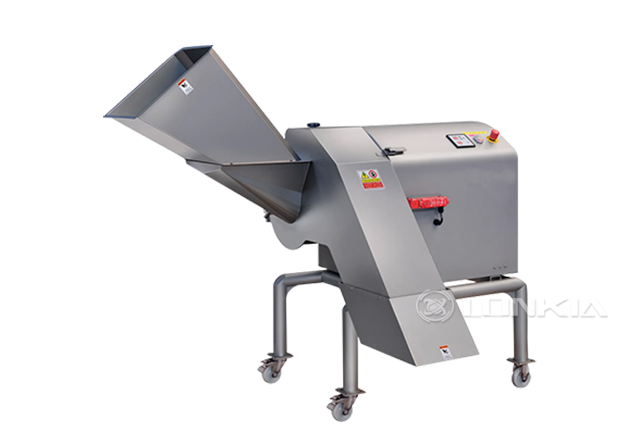
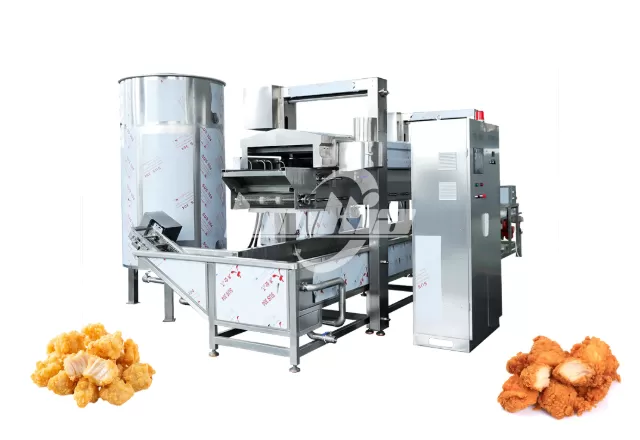
A complete French fries making machine factory typically includes processes such as washing and peeling, cutting into strips, blanching, dehydration, frying, oil removal, quick-freezing, and packaging. Not all equipment continuously consumes large amounts of fresh water; therefore, water consumption should be calculated on a per-unit basis for each specific piece of equipment, rather than simply estimated based on the total line capacity.
Cleaning Water Should Be Included
In addition to water used in the production process, water required for equipment flushing and routine cleaning must also be considered. Cleaning frequency, the number of units, production hours, and hygiene requirements all affect actual daily water consumption.
How to Estimate Water Consumption Before Purchasing?
We recommend that customers provide equipment suppliers with their target production capacity, potato raw material specifications, product specifications, daily operating hours, production processes, and facility conditions prior to purchasing. The supplier will then perform a detailed calculation based on the washing machines, blanching machines, and related water system configurations.
LONKIA can customize French fries production line configurations based on the customer's production capacity, product specifications, and production processes, and provide corresponding technical parameters in conjunction with the actual equipment solution.
Final Considerations
If you are planning a French fries making machine factory, the most accurate approach is to separately verify the water usage for washing, blanching, equipment cleaning, and water replenishment, while also identifying which tanks support water recirculation. This ensures that water consumption data closer to actual production conditions is obtained during the equipment procurement phase and allows for proper preparation of the facility's water supply system.