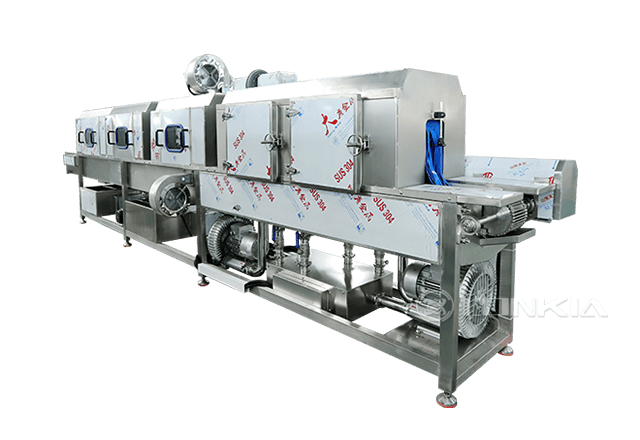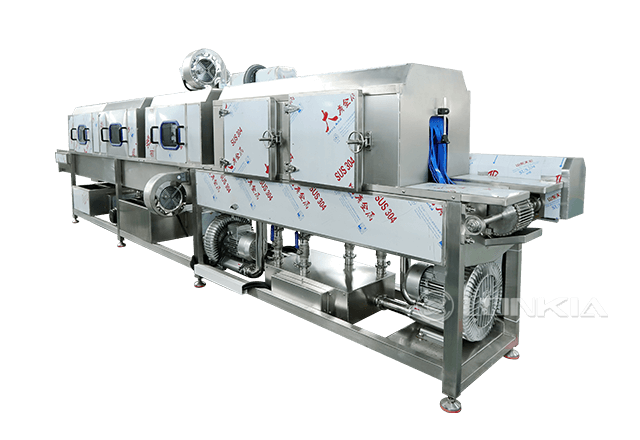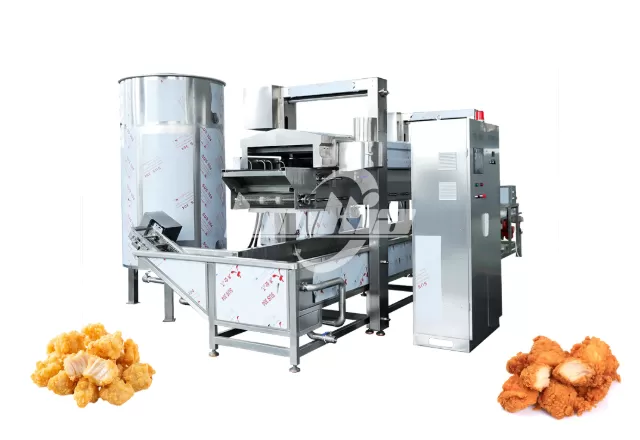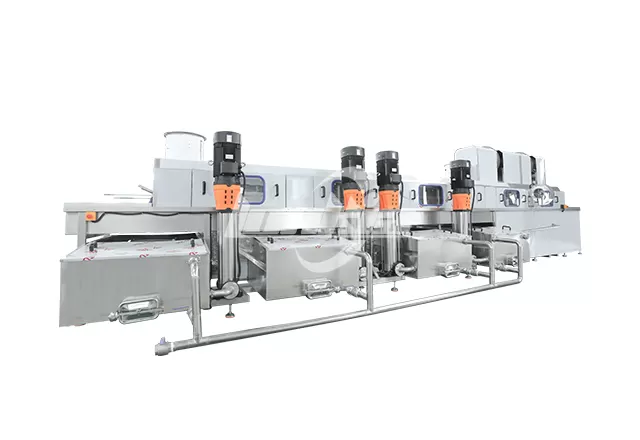
In industries such as beverages, dairy products, and condiments, the efficiency of glass bottle washing directly impacts the stable operation of subsequent filling, labeling, and packaging processes. When purchasing equipment, many factories often focus solely on the glass bottle washing machine itself, while overlooking the importance of the upstream bottle sorting and conveying systems. In reality, a stable glass bottle washing production line typically requires the coordinated operation of a bottle unscrambler, conveying system, glass bottle washing machine, and drying module.
This article will provide a detailed overview of the workflow of a glass bottle washing production line and the key considerations for equipment configuration.
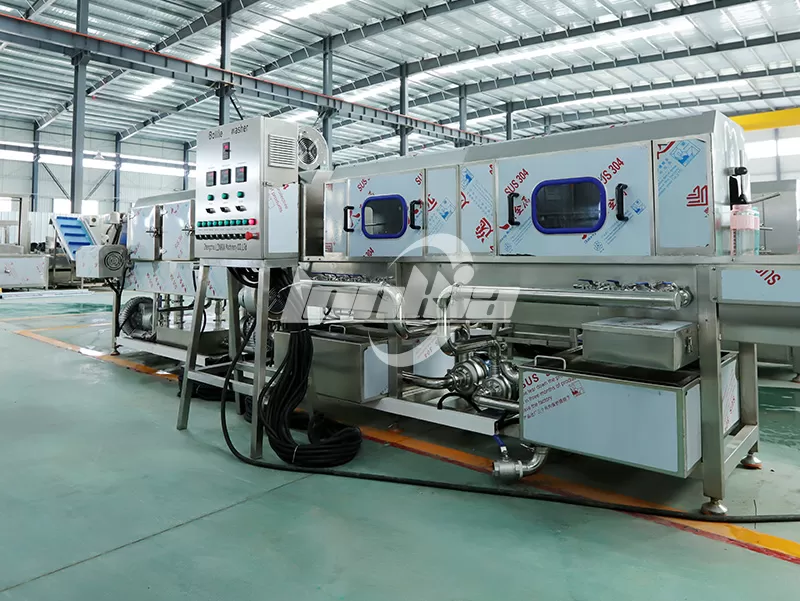
Why is a Bottle Unscrambler Required Before the Glass Bottle Washing Machine?
Many glass bottles are stacked haphazardly before entering the production line. Relying solely on manual bottle arrangement is not only inefficient but also prone to issues such as bottles tipping over, getting stuck, or being conveyed unstably.
The primary functions of a bottle unscrambler are:
- Automatically organizing disordered glass bottles
- Adjusting bottle orientation
- Ensuring continuous and stable feeding
- Reducing manual intervention
- Minimizing bottle collisions and breakage
For factories operating on a continuous production basis, a bottle unscrambler significantly enhances the overall stability of the production line.
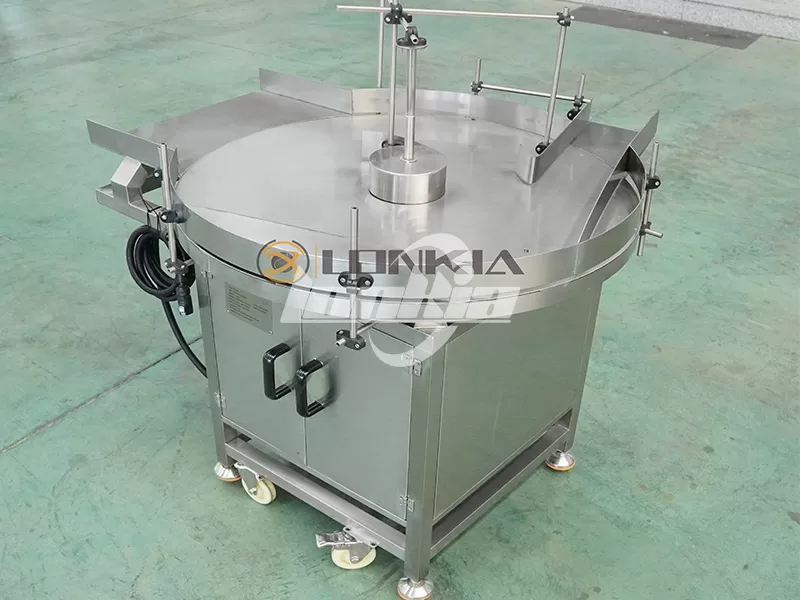
How Does the Bottle Unscrambler Work in Conjunction with the Glass Bottle Washer?
Glass bottles first enter the bottle unscrambler, where a rotating mechanism and guide devices automatically align them. The sorted bottles then enter the conveyor system in a uniform orientation and are transported steadily into the glass bottle washing machine.
This process addresses several of the most common customer challenges:
- Preventing bottle jams: If bottle necks are misaligned or spacing between bottles is uneven, jams are likely to occur during conveyance. The sorting system maintains a steady rhythm, improving overall line efficiency.
- Improved cleaning consistency: When glass bottles enter the equipment in a uniform orientation, the spray system can cover both the interior and exterior of the bottles more evenly, preventing incomplete cleaning in certain areas.
- Reduced manual labor intensity: Compared to manual bottle arrangement, the automatic bottle sorting system reduces the need for continuous manual loading, making the production line more continuous and stable.
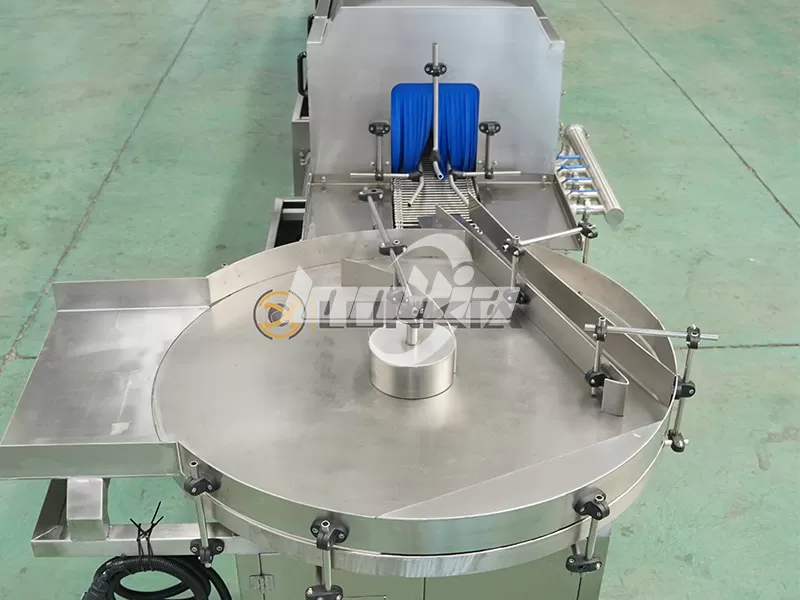
Core Cleaning Process of the Glass Bottle Washing Machine
1. Bottle Alignment and Feeding
Glass bottles first enter the bottle alignment system. Through turntables, guiding mechanisms, and conveyor structures, the equipment automatically aligns randomly oriented bottles into a uniform orientation and continuously conveys them to the next process.
This step effectively eliminates efficiency fluctuations caused by manual bottle orientation.
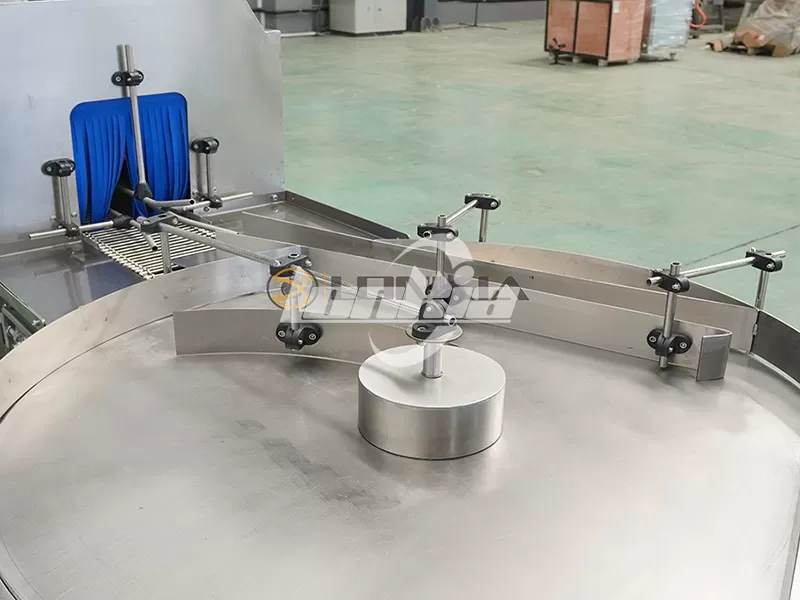
2. Conveying and Positioning
Bottles enter the glass bottle washer machine via the conveying system. A stable conveying structure minimizes bottle sway, reducing the risk of glass bottle collisions.
Some production lines also incorporate positioning mechanisms tailored to specific bottle shapes to ensure stability during the washing process.
3. High-Pressure Spray Washing
Upon entering the washing zone, the machine uses a high-pressure spray system to simultaneously rinse both the interior and exterior of the bottles.
For stubborn residues, the machine employs multi-angle nozzle designs to enhance coverage. Some glass bottle washing machines also feature a recirculating filtration system to ensure consistent cleaning performance during continuous operation.
4. Rinsing
Some plants incorporate a rinsing stage to further reduce the risk of residue and improve stability during subsequent filling operations.
5. Air-Drying System
After washing, the glass bottles enter the air-drying zone, where high-pressure air knives or hot air systems remove surface moisture, facilitating subsequent labeling and packaging.
Advantages of Automated Glass Bottle Washing Production Lines
Compared to standalone glass bottle washing machine, a complete production line enables continuous operation from bottle sorting, conveying, and washing through to drying, making it more suitable for long-term, stable production.
Currently, an increasing number of factories are opting for glass bottle washing production lines equipped with bottle sorting systems to improve production continuity and equipment operational stability.
Lonkia provides customized glass bottle washing solutions tailored to different bottle types, production capacities, and process requirements, including bottle unscramblers, conveying systems, glass bottle washing machines, and downstream air-drying configurations, helping customers establish more stable and efficient glass bottle washing processes.