In the fruit and vegetable processing industry, the washing stage directly impacts product quality, subsequent processing efficiency, and the market competitiveness of the final product. When selecting a fruit and vegetable washer, many customers often face a dilemma: which type should they choose—a bubble washer or a vortex washer?
In fact, both types of equipment can effectively wash fruits and vegetables, but there are significant differences in their operating principles, suitable materials, and cleaning results. Understanding these differences helps businesses select the washing solution that best suits their products.
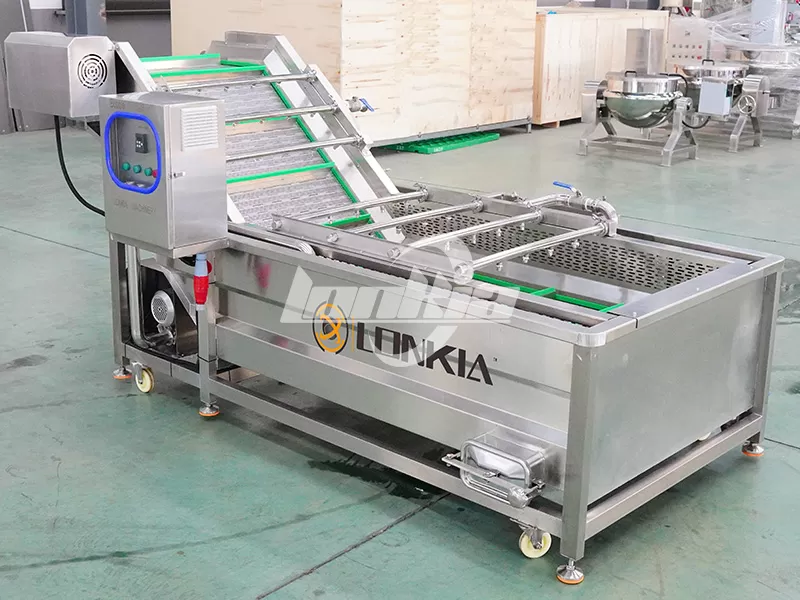
Operational Characteristics of Bubble Washing Machines
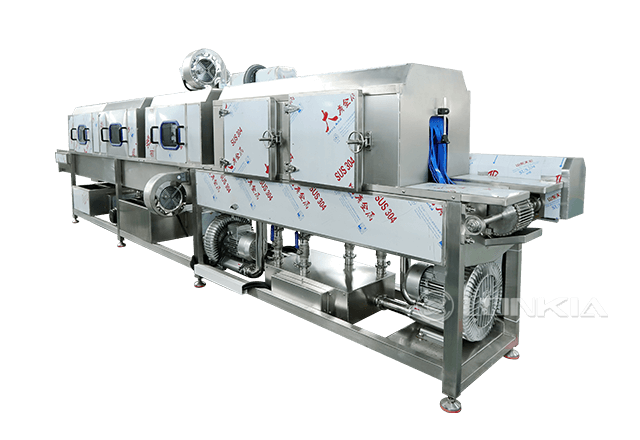
Bubble washers primarily use a high-pressure blower to continuously inject air into the bottom of the tank, creating a large volume of bubbles. As the bubbles rise and burst, they generate a gentle tumbling action that keeps the produce constantly moving within the water flow, thereby achieving the cleaning effect.
This design offers the following features:
- Moderate cleaning intensity, suitable for most fruit and vegetable raw materials
- Effectively removes mud, dust, and surface impurities
- Continuous conveyor design, suitable for assembly line production
- Can be paired with a spray system for secondary rinsing
- Simple equipment structure, easy to maintain
For produce with relatively firm surfaces, such as potatoes, carrots, ginger, apples, and citrus fruits, the bubble-type fruit and vegetable washer often delivers consistent cleaning results.
Operating Characteristics of the Vortex-Type Fruit and Vegetable Washer
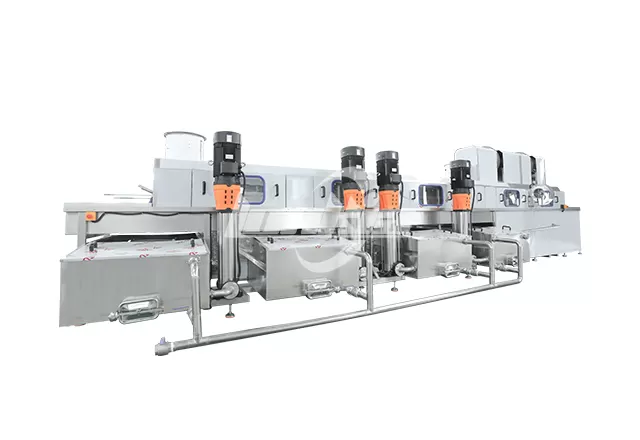
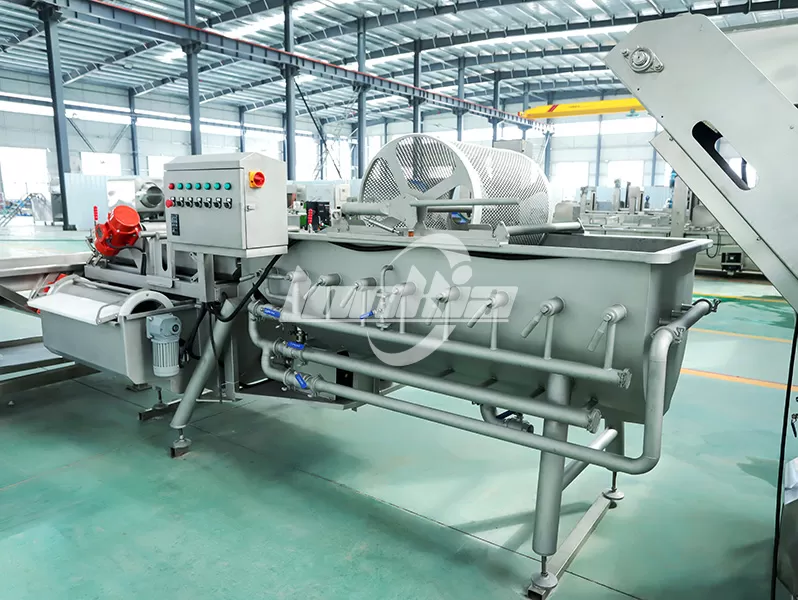
The vortex-type fruit and vegetable washer uses a special water circulation system to create stable vortices and oscillating water flow, causing the produce to move while suspended in the water.
Compared to traditional tumbling methods, vortex washing offers a gentler processing effect.
Its main advantages include:
- Reduced leaf impact and compression
- More uniform material tumbling
- Helps maintain the integrity of leafy greens
- Lower leaf damage rate
- Suitable for high-value-added fruit and vegetable products
For leafy vegetables such as lettuce, spinach, cilantro, parsley, and kale, vortex-type fruit and vegetable washers typically achieve better product appearance and cleaning results.
Which Equipment Is More Suitable for Leafy Vegetable Processing?
For leafy vegetable processing companies, the primary concern is usually not whether the produce can be cleaned thoroughly, but whether damage can be minimized while ensuring effective cleaning.
Conventional leafy vegetables are prone to the following issues after vigorous tumbling:
- Leaf damage
- Blackened edges
- Deteriorated appearance
- Lower product grades
In contrast, vortex washing systems use gentle water currents to move the produce, effectively reducing mechanical damage. Therefore, a vortex-type vegetable and fruit cleaner machine is generally preferred in the processing of pre-washed vegetables, ready-to-eat salads, and high-quality leafy greens.
Which Equipment Is Better Suited for Root Vegetables and Fruit Processing?
For raw materials with significant surface soil, appropriate tumbling and flushing can actually improve cleaning efficiency.
For example:
- Potatoes
- Sweet potatoes
- Carrots
- Radishes
- Apples
- Pears
These raw materials are more resistant to mechanical action, so bubble-type fruit and vegetable washers often achieve higher cleaning efficiency and offer a more cost-effective solution.
How to Choose Based on Production Needs?
In actual projects, equipment selection should prioritize the following factors:
Raw Material Type
- Vortex-type fruit and vegetable washer is preferred for leafy vegetables.
- Bubble cleaning machine is typically preferred for root vegetables and fruits.
Product Value-Added
- High-value pre-washed vegetable products place greater emphasis on visual integrity.
- Standard pre-processed products prioritize cleaning efficiency.
Subsequent Processing Steps
If subsequent steps such as cutting, dehydration, or packaging are required, it is recommended to consider a comprehensive line integration solution.
Production Line Expansion Needs
Selecting fruit and vegetable washer machine with continuous conveying, spray washing, and automatic residue removal capabilities facilitates future production upgrades.
Conclusion
Whether bubble-type or vortex-type fruit and vegetable washers, each has its own suitable application scenarios. For leafy vegetables, vortex-type equipment offers a clear advantage in preserving the integrity of the raw materials; for fruits and root vegetables, bubble-type equipment effectively balances cleaning performance with production efficiency.
As a manufacturer of fruit and vegetable washing equipment, Lonkia provides tailored washing solutions based on the characteristics of different raw materials, production capacity requirements, and processing needs, helping businesses achieve more consistent product quality and more efficient production processes.