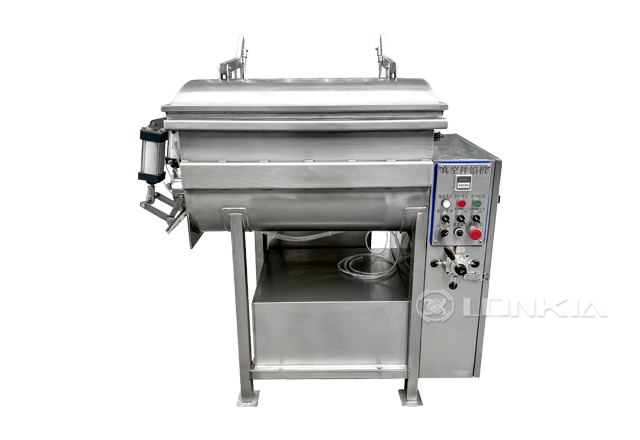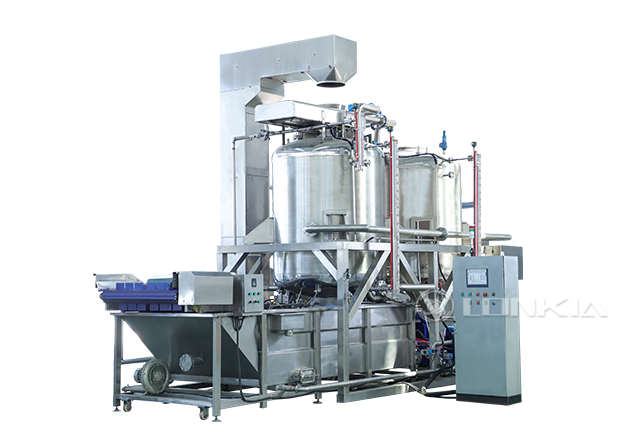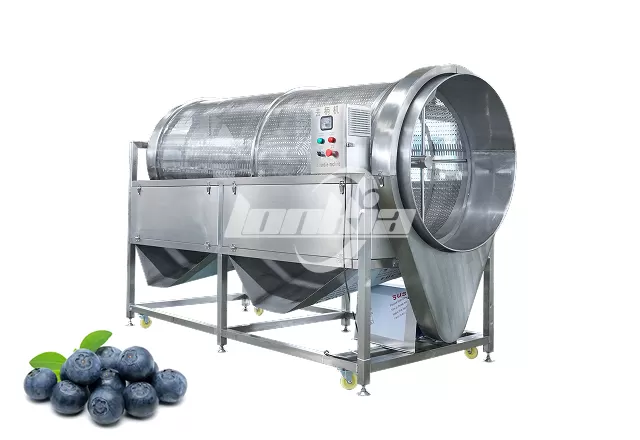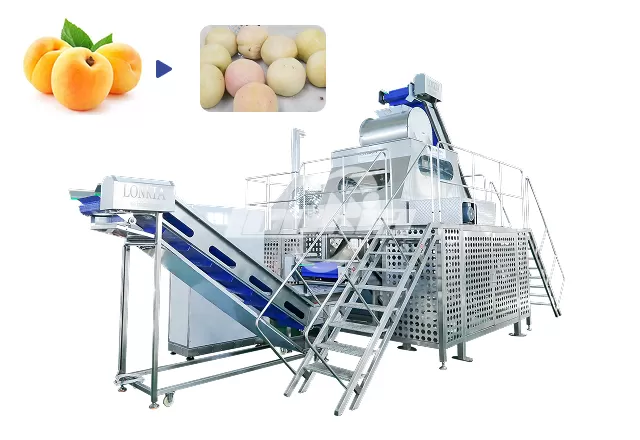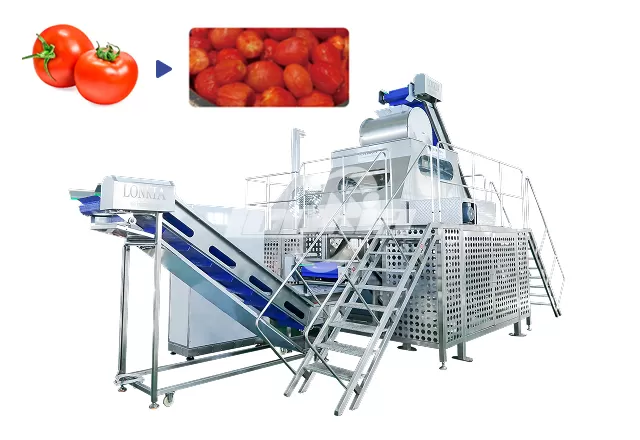
For customers planning to build a potato chips manufacturing plant, understanding the complete workflow of a potato chip making machine allows them to more intuitively determine whether the equipment configuration meets actual production needs. A complete set of potato chips making machine does not rely on a single machine to complete production; rather, it involves the continuous coordination of equipment for washing, peeling, slicing, blanching, dehydrating, frying, oil-draining, and seasoning to process fresh potatoes into finished potato chips with consistent specifications.
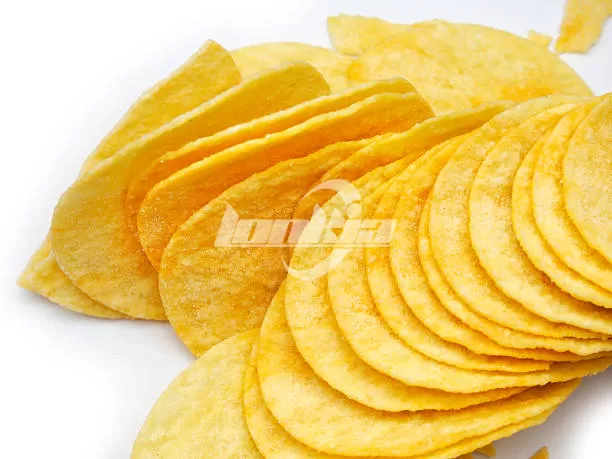
The Complete Processing Workflow of Potato Chip Making Machine
1. Potato Washing and Peeling
Fresh potatoes first enter the potato washing and peeling equipment to remove surface dirt, impurities, and the outer skin, providing clean, consistent raw material for subsequent slicing.
Washing and peeling not only affect the hygiene of the finished product but also impact the operation of subsequent slicing equipment. If the raw material surface contains excessive impurities, it may increase the workload for equipment cleaning and maintenance; therefore, consistent pretreatment is the foundation for the normal operation of the entire potato chips processing line.
2. Potato Slicing
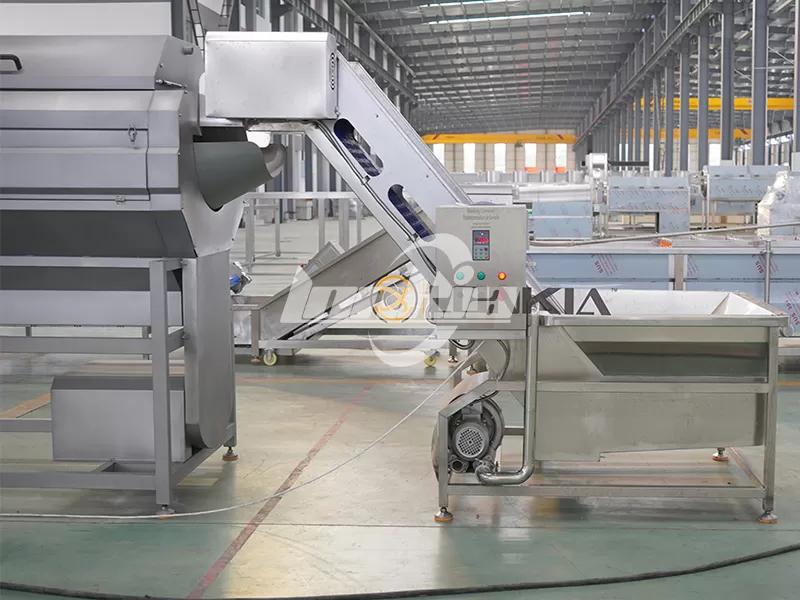
The peeled potatoes enter the potato slicer, where they are cut into uniform potato chips according to product specifications.
Slice thickness is a critical factor affecting potato chip quality. If there is significant variation in chip thickness, chips will fry at different rates once they enter the frying equipment, which can easily result in some chips becoming too dark while others lack crispness.
Therefore, when selecting potato chips making machine, appropriate slicing equipment should be configured based on the final product's thickness and specifications, rather than focusing solely on the line's overall production capacity.
3. Blanching and Dehydration
The sliced potatoes are fed into the blanching equipment for further processing, then passed through the dehydration equipment to remove excess surface moisture.
These two steps are closely related to the subsequent frying results. Proper blanching and dehydration ensure that the potato chips enter the frying system in a more stable condition, while minimizing the impact of raw material state changes on the frying process.
The Frying System Determines the Stability of Potato Chips Processing
Continuous Frying and Temperature Control
Frying is a core stage in a potato chips production line. Pre-treated potato slices enter the continuous frying equipment and are fried at a preset oil temperature and conveyor speed.
Oil temperature, frying time, and conveyor speed must be properly coordinated. If oil temperature control is unstable, it may result in significant variations in the color, crispness, and oil content of the potato chips. Therefore, continuous frying equipment must not only possess stable heating capabilities but also ensure proper control of oil temperature and the conveying process.
LONKIA's potato chips making machine uses a continuous frying system and includes oil filtration and oil management mechanisms, ensuring the oil is continuously treated during production and helping maintain stable frying conditions.
Why Is the Oil Filtration System Important?
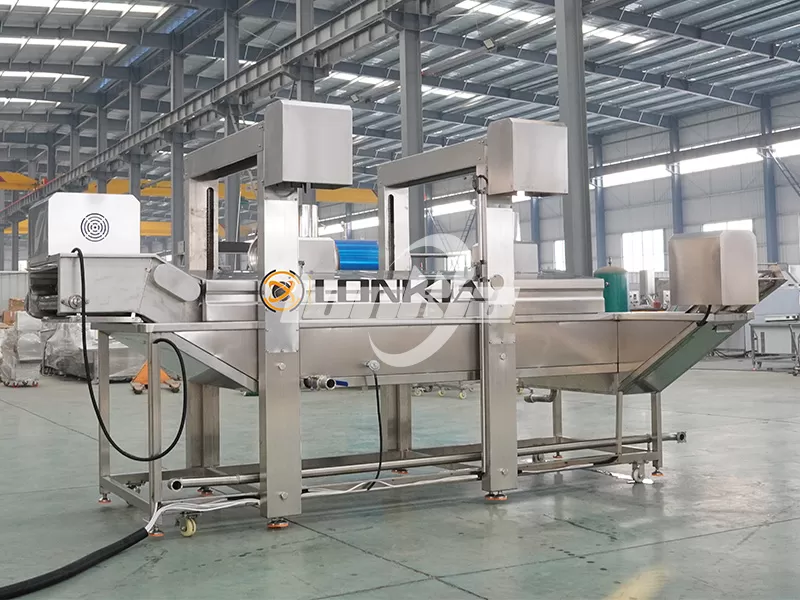
During continuous production, potato chip debris gradually enters the oil. If these residues are not removed promptly, they can affect the condition of the oil and, in turn, impact the color and frying results of the potato chips.
Therefore, the oil filtration system is a critical component of continuous frying equipment. LONKIA's production line is equipped with an automatic filtration system that filters the oil during processing, helping to maintain the stable operation of the frying system.
What Equipment Is Needed After Frying?
Oil Drainage and Seasoning
After the potato chips are fried, they must undergo an oil-draining process to remove excess oil from the product's surface. They then proceed to the seasoning equipment, where salt, seasoning powders, and other ingredients are applied more evenly to the surface of the potato chips.
Different markets have varying requirements for potato chip flavors and packaging specifications; therefore, seasoning equipment and subsequent packaging equipment can be configured according to actual product needs.
How to Choose the Right Potato Chips Making Machine?
When purchasing potato chips processing line, we recommend that customers provide more than just a single production capacity figure. A more accurate equipment solution typically requires consideration of target production capacity, potato chip specifications, raw potato characteristics, product type, and production process.
LONKIA's potato chips processing line can be used to process products such as potato chips, crispy snacks, and French fries, offering a production capacity range of 100–1000 kg/h, with equipment configurable to meet specific production requirements.
For customers requiring stable, continuous production, a well-matched potato chips making machine does more than just process potatoes; more importantly, it ensures seamless coordination between each production stage, thereby improving the consistency of the finished potato chips and the overall operational efficiency of the entire production line.