In the blueberry processing industry, customers' primary concerns typically center on high fruit damage rates, inadequate cleaning, high labor costs, and inconsistent quality. To build a truly efficient blueberry processing plant, the key lies in whether the equipment configuration is appropriate and whether the plant's design aligns with the characteristics of blueberries.
Identifying the Core Challenges of Blueberry Processing
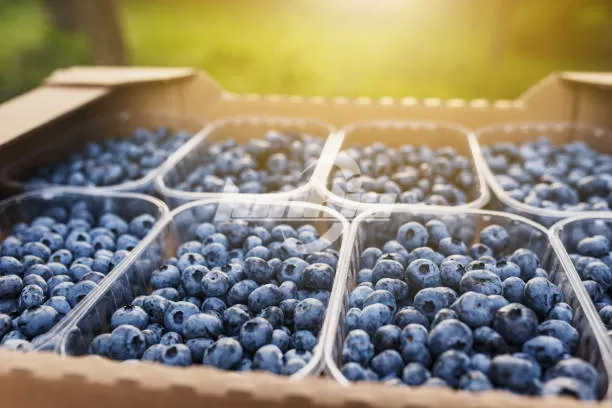
Blueberries are a classic example of "high-value-added but fragile fruit," characterized by thin skins, small size, and susceptibility to damage. Traditional manual handling or standard equipment can easily cause crushing and impact, leading to increased wastage.
Additionally, blueberries are prone to accumulating dust, pesticide residues, and impurities on their surfaces. They must be washed without damaging the fruit's natural coating, which places higher demands on the equipment.
👉 Therefore, the core objectives of efficient processing are:
- Reduce damage rate (≤3%)
- Improve cleanliness
- Achieve continuous production
The Core Equipment Configuration Determines Production Outcomes
1. Blueberry Destemmer and Pre-processing Equipment
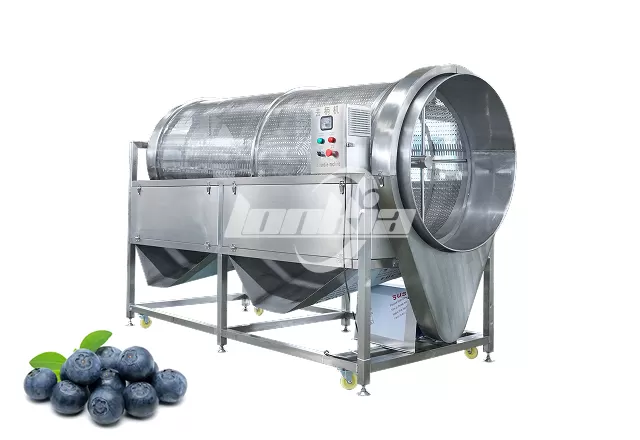
Blueberry destemmer typically employs a low-speed drum structure, using tumbling and screening to separate the fruit from the stems while simultaneously removing leaves and light impurities.
Key points include:
- Low-speed operation prevents crushing
- Uniform tumbling to improve separation efficiency
- Seamless integration with downstream equipment
👉 This stage directly determines the foundational quality of raw materials for the entire line.
2. Washing System: The Core of Efficiency and Quality
Modern blueberry washing machines typically employ a combination of bubble washing and spray rinsing, achieving gentle cleaning through water turbulence and microbubbles.
High-quality equipment should feature:
- Bubble tumbling to ensure even force distribution on the blueberries
- Secondary spray rinsing to remove residual impurities
- A recirculating filtration system to maintain stable water quality
👉 This configuration achieves high-standard cleaning results without damaging the fruit skin.
3. Soft-Brush and Precision Cleaning Modules
In certain high-demand processing applications, soft-bristle brush cleaning structures are added to remove stubborn impurities while ensuring fruit integrity.
👉 This module is particularly suitable for export-grade or high-end markets.
4. Sorting System: The Key to Enhancing Commercial Value
Sorting equipment uses roller or vibrating screen structures to grade blueberries by size or weight, achieving product standardization.
Advantages of automated sorting:
- Improved product consistency
- Higher market selling price
- Reduced errors from manual sorting
👉 The more precise the grading, the greater the profit margin.
A Rational Process Flow Is Key to Blueberry Processing Plant Efficiency
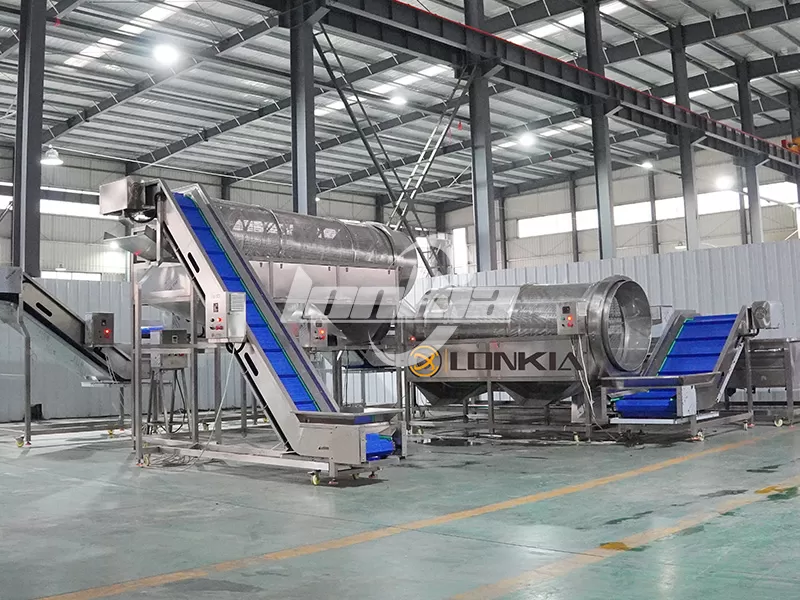
A mature blueberry processing plant typically adopts an integrated process flow:
Feeding → Stemming → Washing → Fine Washing → Sorting → Conveying
Equipment is automatically linked via a conveying system to enable continuous production and minimize manual intervention.
The advantages of this structure include:
- Reduced labor costs
- Increased overall production capacity
- Ensured product consistency
👉 Automation is not an "option"—it is the core of efficiency.
Key Decision Points for Equipment Selection
- Capacity Matching: Equipment processing capacities must be consistent; otherwise, material jams or idle time may occur, affecting the efficiency of the entire line.
- Structural Materials: Food-grade stainless steel (such as SUS304) is not only corrosion-resistant but also ensures hygiene and durability.
- Adjustable Parameters: Given the significant variations in blueberry size and ripeness, equipment must support functions such as variable speed control and gap adjustment.
- Automatic Control Systems: Modern blueberry production lines are typically equipped with control systems to enable equipment coordination and status monitoring, thereby improving operational stability.
The Shift from Individual Equipment Purchases to Complete Line Solutions
An increasing number of customers are shifting from "purchasing individual machines" to "complete line solutions."
The reason is simple:
- Difficulty in matching individual machines
- Long commissioning cycles
- Higher failure rates
Modular blueberry processing solutions, such as those provided by Lonkia, integrate various equipment through standardized design, reducing on-site adjustment time while improving overall operational stability.
👉 For customers, this means faster startup and lower risk.
Conclusion: Efficiency Stems from Systematic Design
Building an efficient blueberry processing plant is not simply a matter of stacking equipment; it is a systematic engineering endeavor.
A truly efficient processing plant must possess three core elements:
- Equipment design tailored to the characteristics of blueberries
- Continuous and stable processing flow
- Automated control to enhance efficiency
Only by fulfilling all three of these requirements can a plant minimize waste while achieving stable output and long-term profitability.
If you are planning a blueberry processing project, we recommend prioritizing the design of the entire production line and equipment compatibility, as these factors will directly determine the project’s ultimate success.