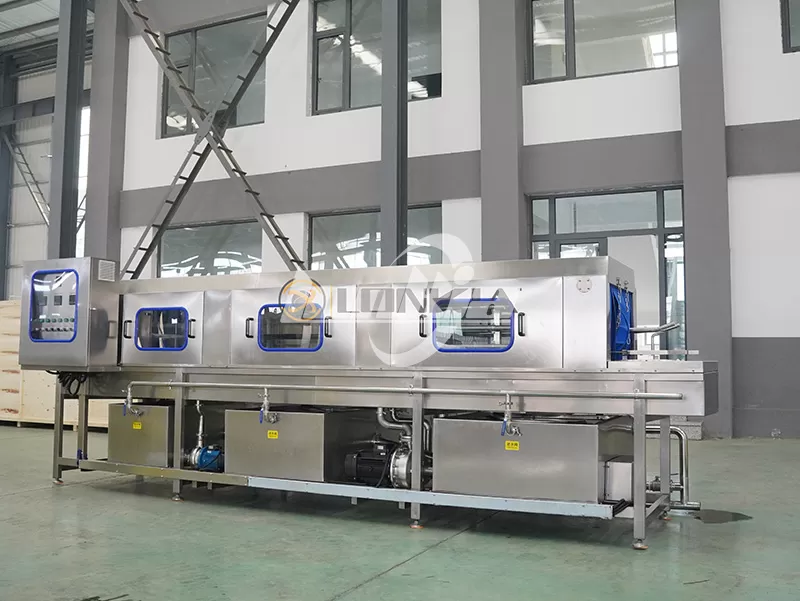
Industrial crate washers are widely used in the food processing, meat processing, fruit and vegetable processing, and logistics industries, primarily for cleaning reusable plastic crates. During continuous operation, the operating conditions of the spray system, conveyor mechanism, water circulation system, and heating unit all affect cleaning effectiveness and equipment stability. Issues such as insufficient spray water pressure, crate conveyor jams, or abnormal water temperature not only compromise cleaning quality but may also reduce overall production efficiency. Understanding the causes of common malfunctions and their solutions helps operators identify problems promptly and minimize equipment downtime.
Common Malfunctions and Solutions for Industrial Crate Washers
1. Insufficient Spray Water Pressure, Resulting in Incomplete Cleaning of Containers
Insufficient spray pressure is a common issue that affects cleaning effectiveness and may lead to food residue remaining on the inner walls, bottoms, and corners of the containers.
Possible Causes:
- Nozzles are clogged with food residue or debris.
- The water pump is malfunctioning, or the water supply is insufficient.
- Excessive debris has accumulated in the filter.
- There are leaks at pipe connections.
Solutions:
First, check the water tank level and water supply status to confirm that the water pump is operating normally. Next, check whether the nozzles are clogged, and clean them and the filter promptly. If a pipe leak is detected, inspect the connection points and perform repairs. For issues with uneven cleaning results, also check the nozzle angles and spray coverage.
2. Abnormal Conveyor Chain Operation or Jammed Containers
The conveyor system is responsible for continuously feeding containers into the pre-wash, main wash, and rinse zones. If conveyance is unstable, it may cause containers to shift, pile up, or result in equipment shutdown.
Possible Causes:
- Inappropriate chain tension.
- Misalignment of the guide rails or limit stops.
- Foreign objects in the conveying area.
- Abnormal operation of the gearbox or drive components.
Solutions:
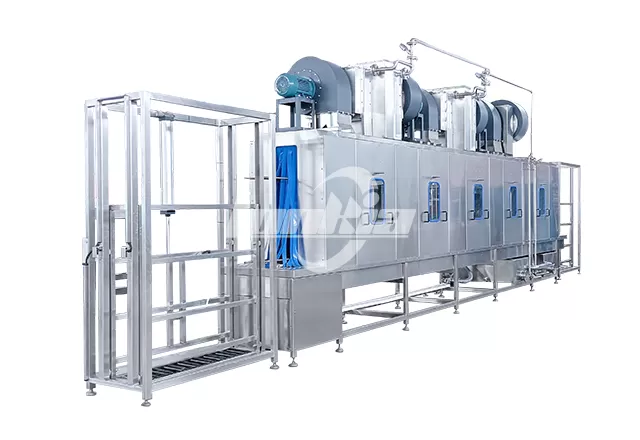
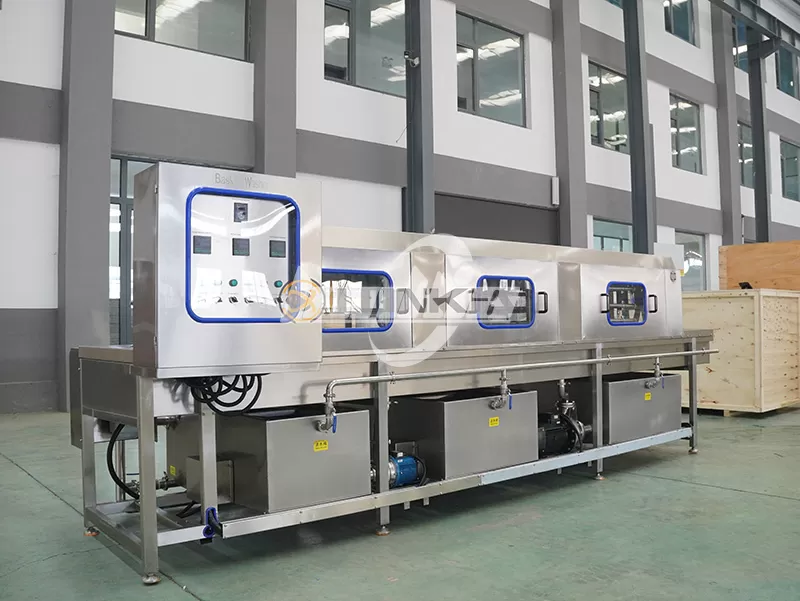
After shutting down the industrial crate washer and disconnecting the power supply, check the tension of the conveyor chain, the position of the guide rails, and the limit stops, and remove any foreign objects from the conveying area. If wear or abnormalities are found in the drive components, repair them promptly. LONKIA employs a chain conveyor structure equipped with guide rails and limiters to help maintain stable transport of the turnover baskets.
3. Water Temperature Fails to Meet Set Requirements
For processes requiring heated cleaning, water temperature directly affects the effectiveness of grease and certain stubborn stain removal.
Possible Causes:
- Abnormal operation of electric heating elements.
- Insufficient steam supply pressure.
- Inaccurate temperature sensor readings.
- Faults in the heating system.
Solutions:
Inspect the heating elements, power connections, and temperature sensors. If steam heating is used, also check the steam supply and related piping. Verify that the temperature settings in the control system are correct; if necessary, contact technical personnel to inspect the heating equipment.
4. Decreased Filtration Efficiency in the Circulating Water System
After prolonged operation of the circulating filtration system, food residues and impurities may accumulate in the filtration unit, affecting water flow and spray performance.
Solution:
Regularly clean the filtration unit and water tank, and check that the circulating water pump and piping are unobstructed. Replace the cleaning water promptly based on the actual level of contamination to prevent impurities from continuously entering the spray system.
How to Reduce Equipment Failures and Maintain Stable Operation?
In addition to promptly addressing malfunctions, routine maintenance is equally important. Operators should regularly inspect the nozzles, conveyor chains, water tanks, filtration units, and heating systems, and remove any residual debris from inside the industrial crate washer. At the same time, adjust the conveyor speed and wash cycle duration appropriately to prevent improper parameter settings from affecting cleaning performance.
For an industrial crate washing machine equipped with a PLC control system, operators should also monitor the operating status and error alerts displayed on the touchscreen and promptly troubleshoot any issues that arise. The LONKIA industrial crate washer features a SUS304 stainless steel structure, a multi-angle spray system, and a multi-stage washing design. It also allows for customization of the washing area based on pallet dimensions and production requirements, helping food processing companies establish a more stable pallet washing process.
Selecting the Right Equipment Configuration to Minimize Future Maintenance Issues
Equipment malfunctions are not only related to daily operations but are also closely tied to the appropriateness of the initial configuration. Before purchasing, clearly define the returnable container dimensions, hourly throughput, types of stains, and cleaning requirements, and verify that the nozzle layout, conveyor structure, filtration system, and heating method meet actual production conditions.
If further reduction of residual moisture after cleaning is required, air knife water-blowing or drying modules can be selected based on the production process.
LONKIA can provide customized crate cleaning equipment solutions based on customers' returnable container specifications, cleaning requirements, and factory layouts, helping customers select the appropriate configuration and minimize unnecessary operational issues.