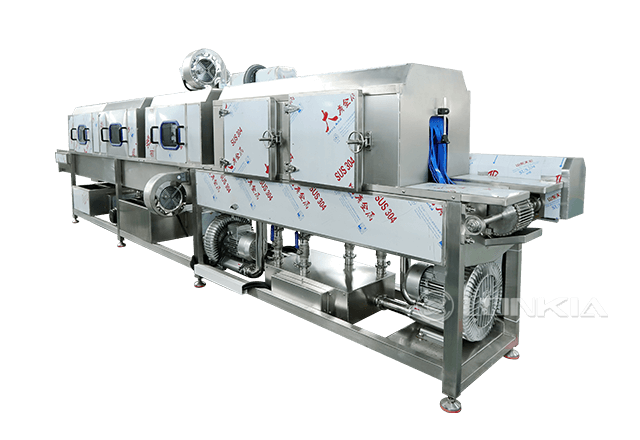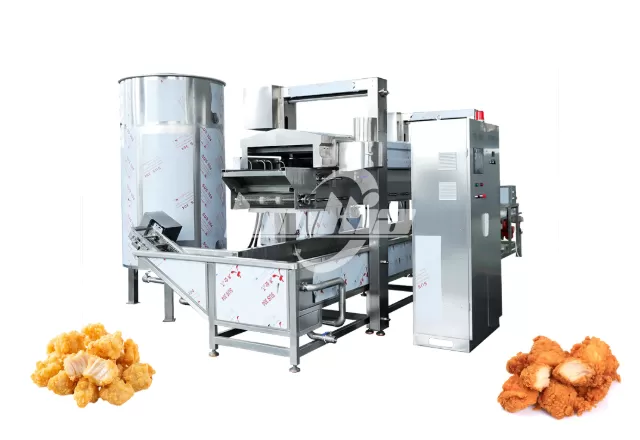
For food processing companies, cleaning capacity is typically one of the most important factors to consider when selecting an industrial tray washer. Customers not only want the equipment to clean trays effectively, but they are also concerned with how many trays the equipment can process per hour, whether it can keep pace with their current production rhythm, and whether it will remain suitable as future production needs change.
The production capacity of an industrial tray washer is not determined by a single parameter, but is influenced by a combination of factors, including tray size, conveyor speed, cleaning process design, equipment structure, and the customer's actual usage patterns. Therefore, when selecting equipment, a comprehensive assessment based on actual production needs is required, rather than a simple comparison of equipment models.
Key Factors Affecting the Cleaning Capacity of Industrial Tray Washers
1. Tray Dimensions and Arrangement
Tray dimensions directly affect the number of trays the equipment can process in a single pass. For example, food trays, baking pans, and plastic returnable trays of different specifications occupy varying amounts of space, which affects the number that can enter the washing zone per unit of time.
When finalizing an equipment solution, customers need to provide the trays' length, width, height, and material information. Manufacturers can use these parameters to design an appropriate conveying system, ensuring the equipment achieves consistent cleaning efficiency.
2. Conveying Speed Determines Continuous Cleaning Capacity
Industrial tray washers typically use a continuous conveying system, where trays pass through different cleaning zones to complete the process.
The more appropriate the conveying speed, the more stable the number of trays passing through the equipment per unit of time. However, faster is not necessarily better; if trays do not remain in the cleaning zone long enough, cleaning effectiveness may be compromised.
Therefore, professional tray washing equipment design must strike a balance between cleaning time and processing capacity, enabling the equipment to operate continuously while maintaining cleaning quality.
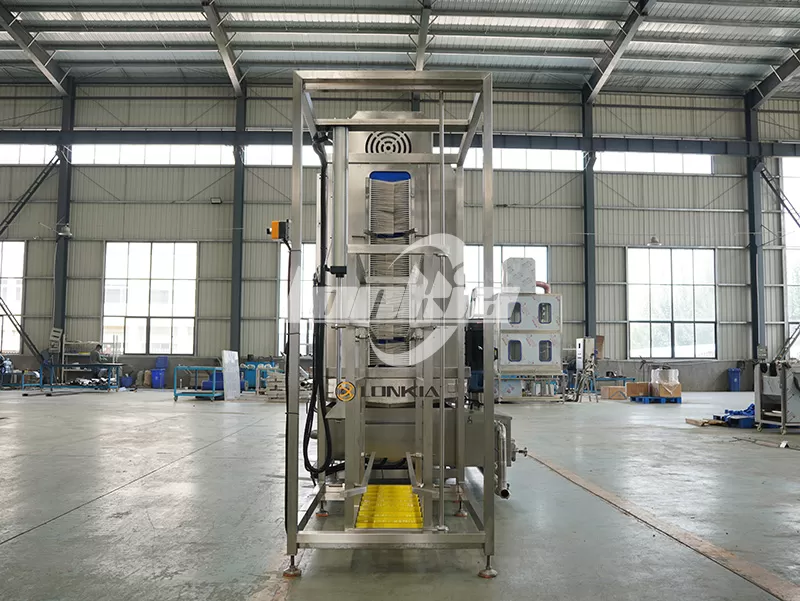
3. The Cleaning Process Affects Actual Equipment Throughput
Plastic tray washing machines typically include multiple processing stages, such as:
- Pre-wash to remove surface residues
- High-pressure spray wash
- Deep rinse
- Clean water rinse
- Subsequent conveying and output
Trays with varying degrees of contamination require different cleaning times. If trays are contaminated with grease, food residues, or other substances, the spray system, water temperature control, and length of the cleaning zones must be properly configured to ensure the equipment meets production requirements.
How to Select a Tray Washer That Meets Your Production Capacity Needs?
When selecting a tray washer machine, it is recommended to focus on the following information:
- How many trays need to be washed per hour? This is a key factor in determining the manufacturer's recommended equipment model. Customers can calculate the required hourly throughput based on daily production hours, the number of tray cycles, and the production line speed.
- What is the extent of tray contamination? Different types of contamination affect the cleaning configuration. If trays are primarily used in food processing, factors such as grease and food residue must be considered, and an appropriate cleaning system selected.
- Does the tray washer machine need to be integrated with an existing production line? If the equipment is to be connected to other processing machinery, the inlet and outlet heights, conveyor direction, and installation space must be confirmed in advance to ensure the smooth operation of the entire production process.
How Does the Lonkia Tray Washer Help Customers Improve Cleaning Efficiency?
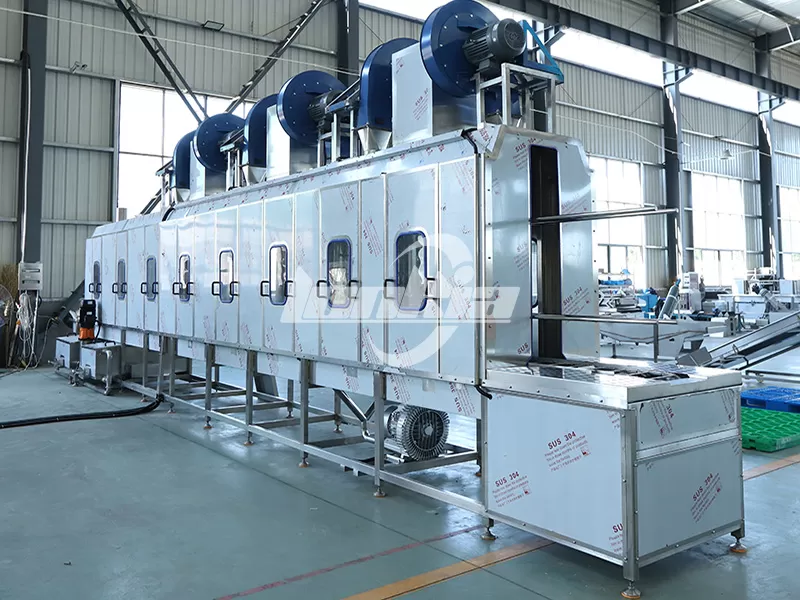
Designed to meet the practical needs of the food processing industry, the Lonkia industrial tray washer achieves consistent tray throughput through continuous conveying, multi-stage spray washing, and an optimized equipment layout. The equipment can be configured based on the tray specifications and production requirements provided by the customer, helping them select a cleaning solution that best fits their needs.
During the procurement process, providing accurate tray specifications and production volume requirements ensures that the equipment solution better aligns with the factory's operational needs, avoiding issues such as insufficient capacity or mismatched configurations.
Summary
The cleaning capacity of an industrial tray washer depends on multiple factors, including tray specifications, conveyor speed, the cleaning process, and equipment configuration. For food processing companies requiring stable, continuous production, selecting a tray washer with the appropriate capacity is more important than simply pursuing maximum throughput.
By clearly defining their production needs and discussing equipment parameters with professional manufacturers, customers can choose an industrial tray washer that better suits their production processes, improve tray cleaning efficiency, and ensure the long-term, stable operation of the equipment.