In food processing and baking operations, trays are reused repeatedly. Manual cleaning not only takes up employees' time but can also affect tray turnover and subsequent production due to inconsistent cleaning speeds. Industrial tray washers use mechanical conveyance, spray washing, and automated controls to transform repetitive cleaning tasks into a continuous, manageable equipment-driven process.
So, exactly what manual tasks can automated cleaning reduce? And how can you determine if the equipment is right for your factory?
What Are the Main Issues with Manual Cleaning?
1. The cleaning process consumes a significant amount of labor hours
Manual cleaning typically involves collecting, transporting, scrubbing, rinsing, and organizing trays. As the number of trays increases, employees must repeatedly perform the same operations, leading to a corresponding increase in cleaning hours. During peak production periods, cleaning tasks may also compete with other work for manpower.
2. Cleaning speed and quality are prone to fluctuations
Differences in employees' work habits, scrubbing pressure, and cleaning duration can lead to inconsistencies. For trays coated with grease, dough, or baking residue, relying solely on manual scrubbing often results in areas that are not thoroughly cleaned.
Therefore, improving the tray cleaning process involves not only reducing the number of scrubbing staff but also increasing processing throughput and ensuring consistent cleaning results.
How Do Industrial Tray Washers Reduce Labor Input?
1. Automated Conveyance Reduces Repetitive Handling
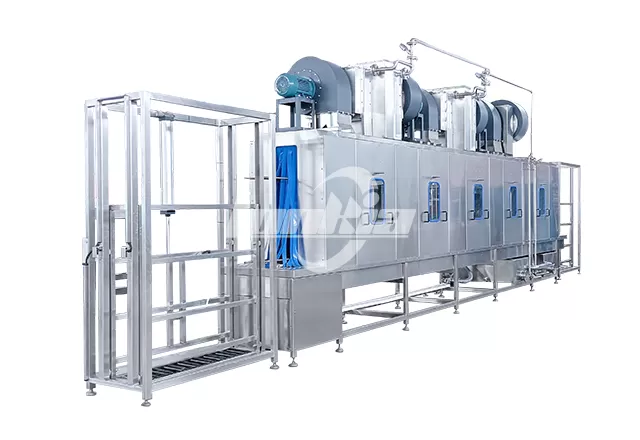
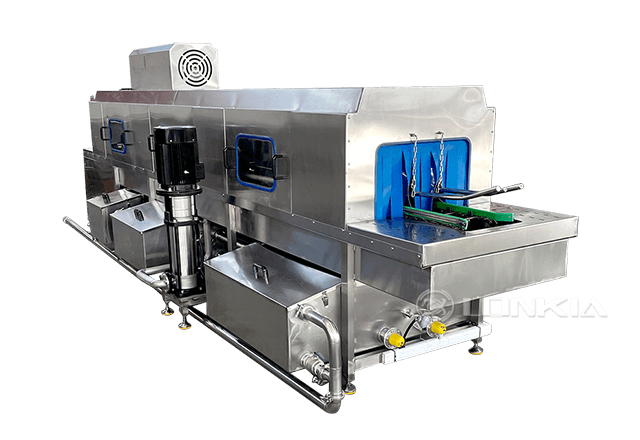
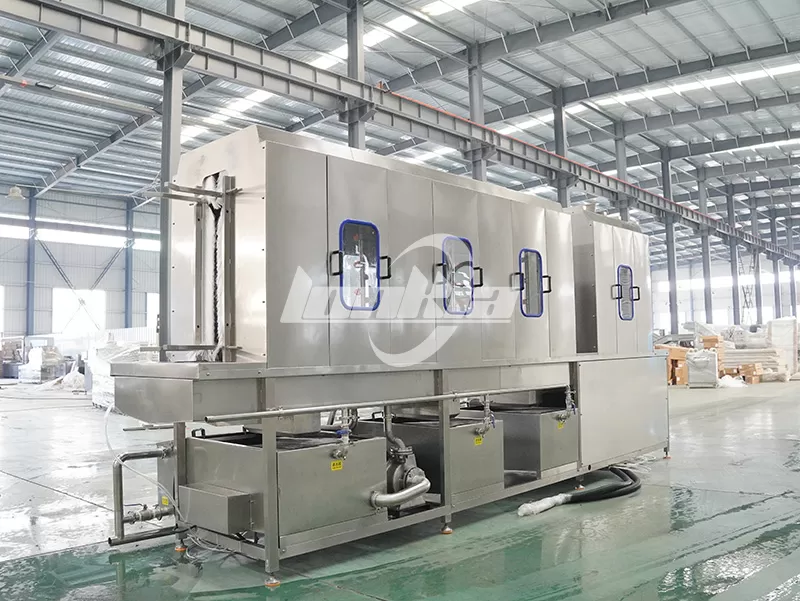
Industrial tray washers use a conveyor system to transport trays into the washing area, reducing the need for manual handling and rinsing. Proper planning of the infeed and outfeed locations also allows cleaned trays to return more smoothly to the production line.
2. Mechanical Spraying Replaces Part of Manual Scrubbing
The industrial tray washer uses a spray system to clean the pallets, configuring detergent, cleaning time, and spray conditions based on the actual level of soiling. Separating the cleaning zone from the rinsing zone helps address dirt and detergent residue at different stages.
For factories that need to clean a variety of pallets, it is also important to verify the guidance structure, spray coverage, and whether the equipment can accommodate the actual pallet specifications.
3. Automated Control to Reduce Operational Burden
By setting cleaning programs, operators can run the equipment according to standardized procedures, eliminating the need for manual judgment of cleaning times and repetitive operations for each pallet. If a drying module is installed, it can further streamline the post-cleaning process.
How to Assess Labor Savings from the Equipment?
The extent of labor reduction depends on the existing cleaning process, the number of pallets, the plastic tray washing machine's capacity, and the level of automation. It is recommended to record the following data before purchasing:
- The number of pallets cleaned per shift, along with their specifications and the severity of soiling.
- The number of employees required for manual cleaning and the number of man-hours spent per shift.
- After the equipment is operational, the manpower required for loading, unloading, inspection, and maintenance, respectively.
- Whether the cleaned pallets can meet production line turnover requirements in a timely manner.
For example, you can compare the total man-hours spent on pallet cleaning per shift before and after the upgrade. The calculation should include equipment operation, loading/unloading, and necessary inspections; it should not be limited to comparing only the brushing phase.
What Should Be Verified When Selecting an Industrial Tray Washer?
Before finalizing an equipment solution, provide the supplier with pallet dimensions, material, types of soiling, hourly cleaning requirements, and on-site layout. Also, verify the equipment's actual production capacity, cleaning effectiveness, water and electricity consumption, installation conditions, and maintenance requirements.
LONKIA industrial tray washers can be configured based on specific pallet cleaning requirements. By clarifying process conditions and conducting actual pallet cleaning tests, you can more accurately determine whether the equipment is suitable for your existing production workflow.
The value of automated cleaning lies not only in reducing repetitive labor but also in transforming pallet cleaning into a production step with a defined cycle time and controllable quality.