Mango grading is a critical step in the fruit packaging and processing workflow. The accuracy of grading results not only affects the consistency of product specifications but also impacts subsequent packaging, order fulfillment, and product quality. For mango processing companies, selecting the right mango grading machine and properly configuring its parameters are key to improving grading efficiency and reducing misgrading.
So, what factors affect the accuracy of a mango grading machine? What should be prioritized during equipment selection and daily operation?
Define Mango Grading Standards to Avoid Specification Confusion
Mangoes can be graded according to fruit size, weight, or other specific commercial standards. Since requirements for mango specifications may vary across different markets and customers, the criteria for each grade should be established before using the grading machine.
If size grading is used, the measurement method, size range, and boundaries between adjacent grades must be clearly defined; if weight grading is used, it is necessary to confirm whether the equipment is equipped with the corresponding weighing and sorting systems.
It is important to note that the length, width, and weight of mangoes do not always maintain a fixed ratio. Only by clearly defining grading standards can discrepancies between mango grading machine settings and actual order requirements be avoided.
Inspecting Equipment Structure and Grading Parameters
1. Grading Range and Adjustment Methods
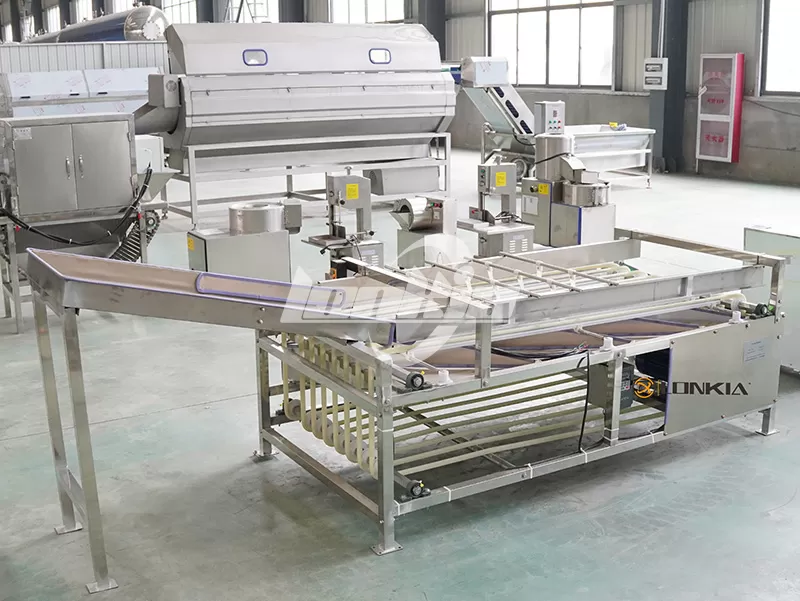
Track-type mango graders distinguish fruit sizes through their grading mechanisms. The accuracy of the grading process depends primarily on whether the equipment's effective grading range covers the dimensions of the mangoes to be processed.
Taking LONKIA's mango grading machine as an example, the product design incorporates adjustable grading specifications and a flexible contact structure. When purchasing, further confirm the specific model's adjustment range, grading principle, and applicable mango sizes, and verify the grading results through sample testing.
2. Conveying Conditions and Fruit Arrangement
Uneven arrangement of mangoes on the mango sorting machine, mutual compression, or unstable conveying can all affect the grading process. During feeding, ensure that fruits enter the grading area as evenly as possible to avoid concentrated pileups.
The mango sorter's operating speed must also match the feeding rhythm. Excessive speed may increase fruit collisions, while insufficient feeding may affect actual throughput. Properly adjusting the conveying conditions helps ensure stable equipment operation.
Verifying Grading Results Through Sampling Tests
1. Checking Actual Grading Results at Each Outlet
After equipment commissioning is complete, take mango samples from different grading outlets, measure their size or weight, and compare them against the pre-established grading standards.
If significant grade mixing occurs at a particular outlet, check the grading parameters, fruit arrangement, and equipment operating status rather than simply increasing the conveyor speed. Through repeated sampling, you can determine whether the issue persists.
2. Monitor Misgrading Rates and Fruit Damage
Sizing accuracy is not only reflected in whether the specifications meet requirements but also in whether the fruit sustains scratches, bruises, or other damage during conveying and sizing.
It is recommended to record the spot-check results, mis-sizing incidents, and equipment operating parameters for each outlet to gradually establish operating standards suited to your specific mango varieties and order requirements.
Routine Maintenance Helps Maintain Consistent Sizing
During production, regularly inspect the tracks, contact parts, drive system, and sizing adjustment mechanisms. Component wear, residue buildup, or changes in parameters can all affect equipment performance.
Cleaning and maintenance should be performed in accordance with the equipment manual. After switching mango varieties or adjusting grading specifications, grading results should be re-evaluated to ensure equipment settings align with current production requirements.
Conclusion
Improving mango grading accuracy requires a combination of clear product standards, appropriate equipment design, stable conveying conditions, and regular sampling inspections. When purchasing a mango grading machine, it is recommended to provide actual mango samples, target grade specifications, and expected processing capacity so that the equipment supplier can confirm the appropriate model and test conditions.
Through proper model selection and standardized operation, LONKIA can provide tailored grading equipment solutions based on customers' mango processing needs, helping enterprises improve grading consistency and providing a stable size foundation for subsequent packaging processes.