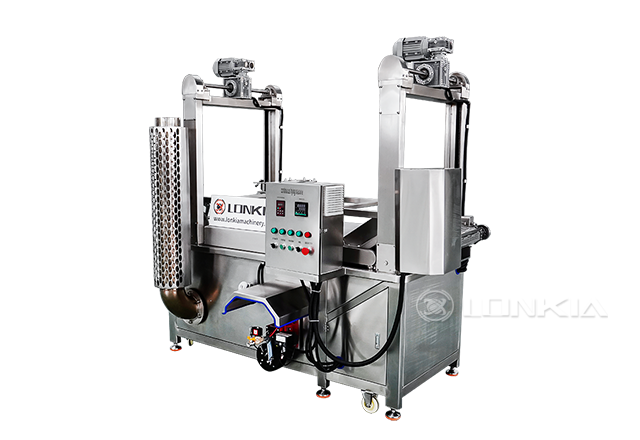
Processing fresh plantains into crispy, uniform plantain chips requires more than just frying equipment. A well-designed processing system should be configured with appropriate equipment based on raw material handling, slicing specifications, frying results, oil-draining requirements, and subsequent packaging methods.
For companies planning to establish a plantain chip processing project, clearly identifying the machinery needed for each process step can help avoid issues such as incomplete equipment configurations, mismatched production capacity, and inconsistent finished product quality. Lonkia's plantain chips processing solution centers on steam peeling and seamlessly integrates processes such as washing, slicing, frying, oil drainage, air drying, quick-freezing, and packaging.
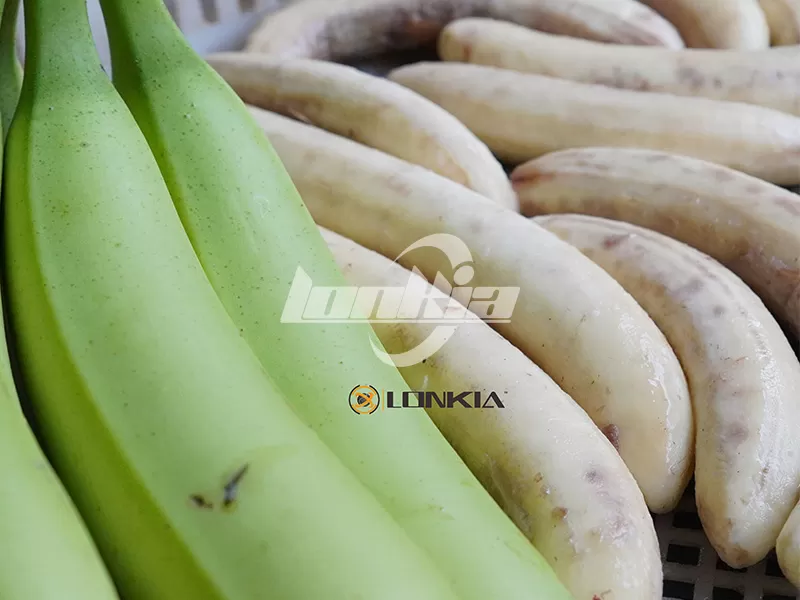
What Machines Are Included in a Complete Plantain Chips Production Line?
1. Plantain Steam Peeler
Peeling is the first critical step in plantain chips production line. The steam peeler uses high-temperature steam to soften the plantain's skin, after which mechanical means are used to remove it. Compared to purely mechanical peeling, this method minimizes damage to the flesh and accommodates plantains of varying sizes and ripeness levels.
For raw materials with significant skin residue, a brush peeler can be added for secondary processing, ensuring a cleaner surface and preparing the plantains for subsequent washing and slicing.
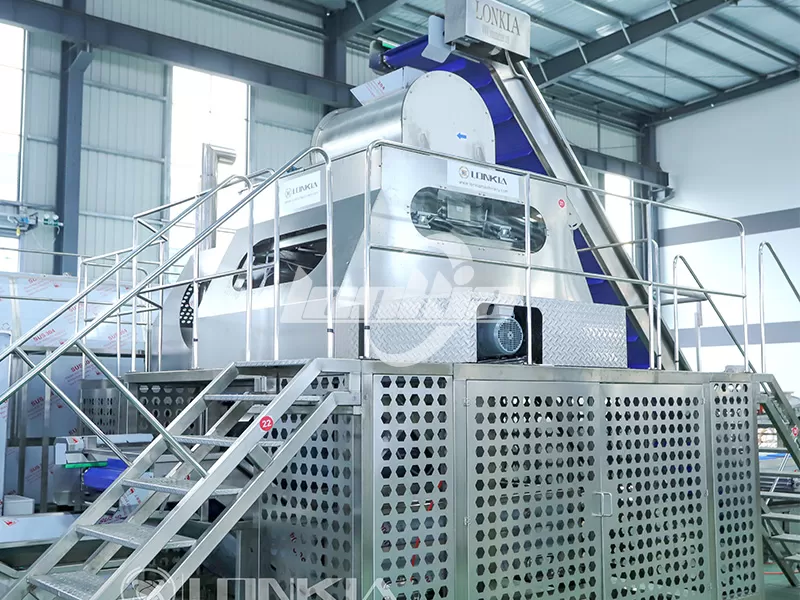
2. Plantain Washer
After peeling, the plantains must be fed into a washing machine to remove residual skin, impurities, and debris. A continuous fruit and vegetable washer can be integrated with upstream and downstream processes to ensure a more stable washing operation.
The washing capacity should match the slicer's processing capacity to prevent a continuous feed at the front end from outpacing processing capacity at the back end.
3. Plantain Slicer
The slicer directly determines the thickness and uniformity of the chips. The equipment uses blades to continuously slice the washed plantains into strips, and the slice specifications can be adjusted according to product requirements.
The more consistent the slice thickness, the easier it is to control the subsequent frying process. Plantain slices of inconsistent thickness are prone to uneven color and crispness when fried at the same oil temperature and for the same duration; therefore, the slicer is a critical piece of equipment that affects the quality of the finished product.
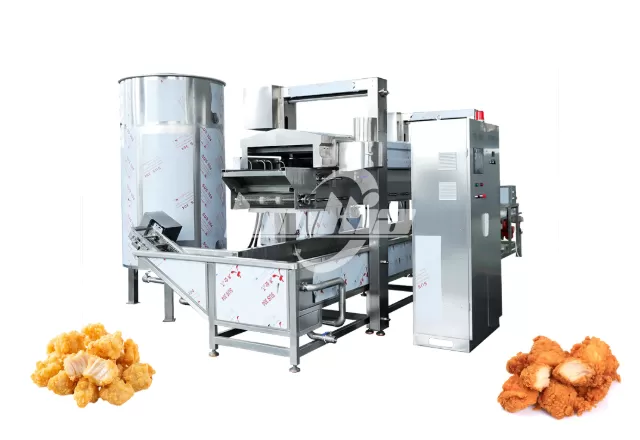
4. Plantain Chips Fryer
The sliced plantains are fed into the fryer, where oil temperature and frying time are controlled to achieve the ideal color and crisp texture.
A continuous frying machine allows processing parameters to be adjusted based on slice thickness and product requirements. It can also incorporate oil filtration and recirculation systems to ensure a more stable frying process.
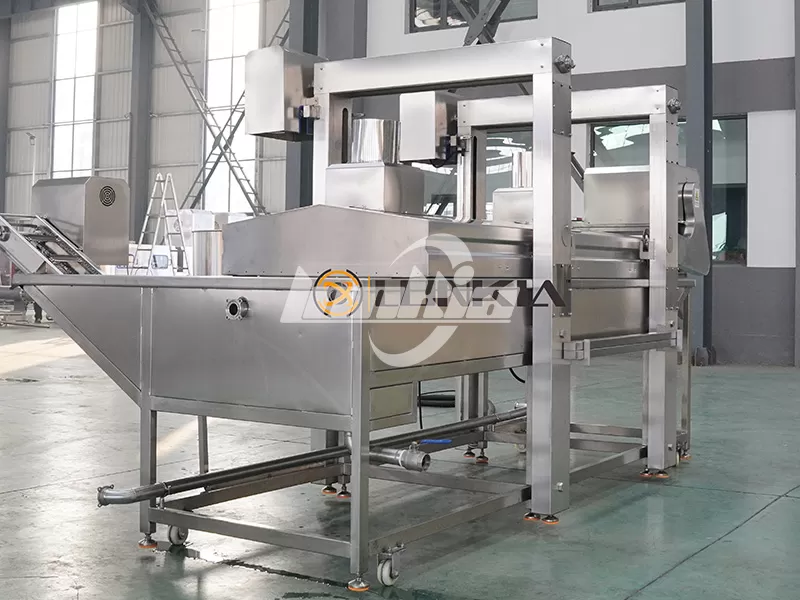
5. Oil-Removal Machine
After the plantain chips are removed from the fryer, a certain amount of oil typically remains on their surface. The oil-removal machine uses vibration or other methods to remove excess oil, making the product drier and facilitating subsequent seasoning.
The processing capacity of the oil-removal equipment must also match that of the fryer; otherwise, product backlogs are likely to occur on the production line.
6. Air Dryer
For plantain chips that require further reduction of surface moisture and oil content, an air dryer can be installed. By cooling and drying the product with an adjustable airflow, this equipment helps achieve a more consistent final product quality.
How should seasoning and packaging equipment be configured?
7. Seasoning Machine
After frying and de-oiling, the plantain chips can be fed into a seasoning drum. The equipment continuously tumbles the product, ensuring that seasonings such as salt and spices adhere more evenly to the surface of the chips.
The capacity of the seasoning machine should match the continuous processing capacity of the upstream de-oiling equipment.
8. Packaging Machine
Finally, automatic packaging equipment can be configured according to the sales format to weigh, bag, and seal the finished products. For different specifications of retail packaging, bulk packaging, or export packaging, appropriate equipment can be selected based on packaging requirements.
How to Choose the Right Plantain Chip Equipment for Your Needs?
When purchasing plantain chips machine for sale, it is not recommended to compare only the price of individual machines; instead, focus on confirming the following parameters:
- Raw material type and ripeness
- Hourly raw material throughput
- Target slice thickness
- Frying and heating methods
- Actual processing capacity of each piece of equipment
- Materials of food-contact parts
- Voltage, power, and motor configuration
- Equipment dimensions and overall line layout
- Subsequent seasoning and packaging requirements
It is particularly important to note that the production capacity of the entire plantain chips production line is not equivalent to the maximum capacity of any single machine. The washing, slicing, frying, oil-draining, and packaging equipment must be properly matched to form a stable, continuous production process.
Lonkia Plantain Chips Processing Solution
Based on different raw material conditions, product specifications, and production requirements, Lonkia can configure equipment combinations centered on steam peeling, washing, slicing, frying, oil drainage, air drying, and packaging, and adjust equipment configurations according to actual production needs.
For companies seeking plantain chips machine for sale, it is generally easier to obtain an accurate and feasible technical solution by first determining the target production capacity, slice specifications, and finished product form, and then finalizing the equipment configuration, rather than simply asking, "How much does the entire line cost?"