In the potato chip production process, seasoning not only determines the flavor of the finished product but also affects product consistency and subsequent packaging efficiency. For food processing companies planning to build new or upgrade existing potato chip production lines, how to properly integrate the potato chip seasoning machine with frying, oil-draining, cooling, and packaging equipment is a key consideration in equipment selection and production line planning.
Properly configuring seasoning equipment requires not only focusing on the potato chip seasoning machine's processing capacity but also comprehensively considering the state of the raw materials, conveying methods, seasoning processes, and the overall potato chips production line's operating rhythm.
Where Should a Potato Chip Seasoning Machine Be Installed?
A typical potato chip production process is as follows: washing and peeling → slicing → blanching (as required by the process) → dehydration → frying → oil draining → seasoning → cooling and packaging.
After the potato chips have been fried and drained of oil, they enter the seasoning stage. At this stage, the surface condition of the product affects how well the seasoning adheres; therefore, the timing of seasoning must be determined based on the product formula and process requirements.
If there is excessive residual oil on the surface of the potato chips, it may affect the distribution of powdered seasoning; if the product temperature or surface condition is unsuitable, it may also affect the final seasoning result. When planning the production line, trial runs should be conducted with actual products to determine the appropriate conditions for process sequencing.
How to Choose the Right Potato Chip Seasoning Machine?
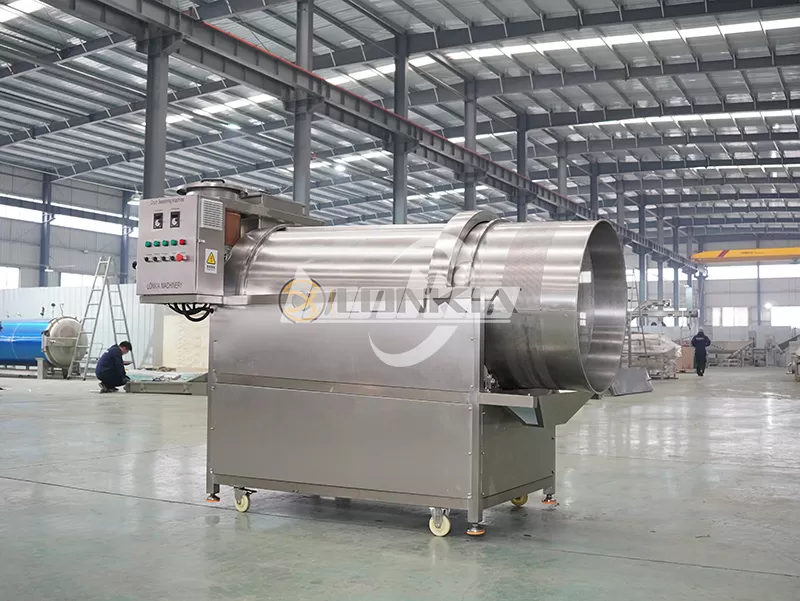
Common potato chip seasoning machines primarily include octagonal seasoning machines and drum seasoning machines, which differ in structure and operating methods.
- Octagonal seasoning machines rotate the equipment to continuously tumble potato chips, helping distribute seasoning powder evenly across the product's surface. Depending on the specific configuration, different discharge methods and numbers of seasoning heads can be selected, making them suitable for scenarios requiring the processing of multiple flavors or batch production.
- Tumbler seasoning machines use rotating drums to tumble the material, and the rotation speed can be adjusted depending on the model, making them suitable for applications requiring continuous integration into a production line. Some dual-drum configurations can also be paired with a liquid spraying system to enable the combined application of liquid seasonings and powdered seasonings.
When making a selection, it is important to carefully evaluate actual production capacity, product types, seasoning methods, and automation requirements, rather than basing the decision solely on the equipment's name.
How to Match the Seasoning Machine with Other Equipment?
Verify the Processing Capacities of Upstream and Downstream Processes
The seasoning machine must operate in coordination with upstream oil-draining equipment and downstream cooling and packaging equipment. If the feed rate from the upstream process exceeds the seasoning machine's processing capacity, material backlogs may occur; if the seasoning machine's discharge rate is too fast and the packaging equipment's capacity is insufficient, the rhythm of the entire production line may be disrupted.
Therefore, prior to procurement, confirm the actual processing capacity, conveyor speed, feed and discharge heights, and connection methods for each piece of equipment, and allow for the necessary space for operation and maintenance.
Verify Conveying and Control Methods
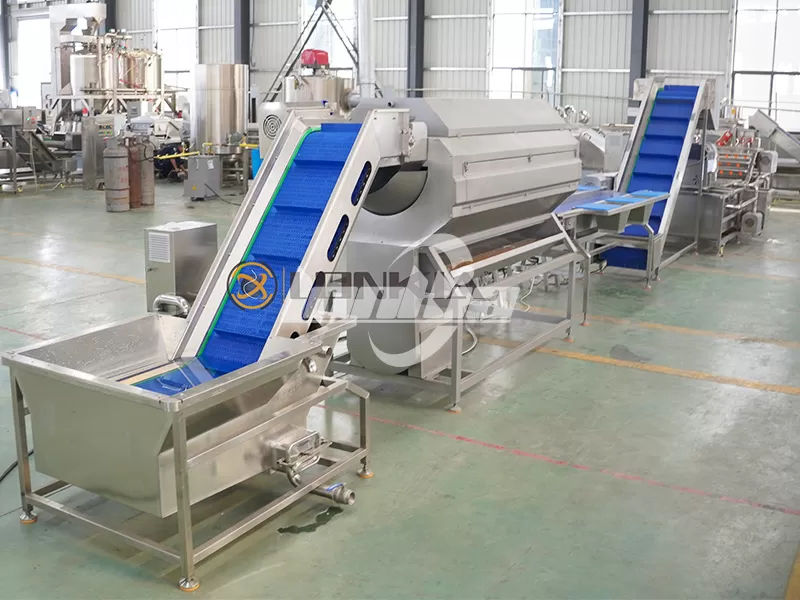
For continuous potato chips processing lines, also check the conveyor belt width, material drop height, equipment interfaces, and coordination between control systems. A well-designed conveying structure helps reduce potato chip buildup and unnecessary collisions, thereby lowering the risk of breakage.
How to Improve Seasoning Consistency During Production?
Seasoning results are typically related to drum rotation speed, material load, seasoning application rate, and processing time. If these parameters are not properly adjusted, issues such as under-seasoned potato chips, localized powder buildup, or product breakage may occur.
It is recommended to first conduct trial runs using actual potato chips and the specified recipe, gradually adjusting relevant parameters and recording the results of each test. By comparing seasoning uniformity, product integrity, and actual throughput, you can more precisely determine the optimal operating conditions.
At the same time, regularly inspect the powder feeder, the interior of the drum, and the discharge port, and promptly remove any residue to maintain stable equipment operation.
What Should You Confirm Before Installing the Production Line?
Before formal installation, it is recommended to prepare the following information:
- Production Requirements: Target production capacity, potato chip specifications, and planned flavor varieties.
- Equipment Parameters: Seasoning machine model, power rating, voltage, dimensions, and feed/discharge methods.
- Factory Conditions: Equipment layout, installation space, conveyor direction, and power supply conditions.
- Supporting Equipment: Whether automatic powder feeding, liquid spraying, conveying, cooling, and packaging equipment are required.
- Commissioning and Service: Clarify requirements for trial runs, operator training, spare parts supply, and after-sales technical support.
Confirming these details in advance helps minimize layout adjustments and interface compatibility issues once the equipment arrives at the factory.
Conclusion
To properly integrate a potato chip seasoning machine into a potato chips making plant, it is necessary to comprehensively consider equipment type, production capacity matching, conveying methods, and seasoning processes. Only when all process steps operate in coordination can the seasoning effect be better controlled and a stable supply of materials be ensured for subsequent packaging.
LONKIA can assist in evaluating star-shaped or drum-type seasoning equipment and related configurations based on the customer's product type, production requirements, and on-site conditions. By confirming technical parameters in advance and conducting actual trial runs, customers can plan their production lines with greater confidence and select seasoning solutions that meet their specific process needs.