Continuous blanching machines play a critical role in the processing of vegetables, fruits, and certain pre-treated foods. Precise control of temperature and time directly determines product color, texture, nutrient retention, and finished product stability. For food processing plants, correctly adjusting blanching time and temperature not only impacts final quality but also affects output, energy consumption, and operational costs.
Therefore, this article will help users clearly understand the core control logic of continuous blanching machines and resolve practical issues encountered during daily operation. Lonkia's continuous blanching equipment features high precision in both its temperature control system and conveying structure, delivering more stable production performance for processing enterprises.
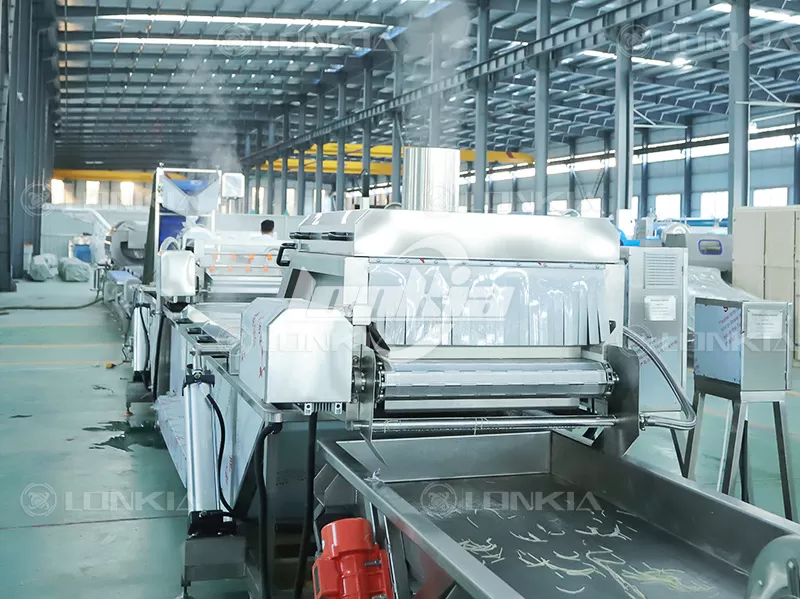
Why Are Blanching Temperature and Time Critical?
Blanching aims not only to soften produce or inactivate enzymes but crucially to preserve vibrant color and enhance stability for subsequent processing. Excessive temperatures cause softening, discoloration, or damage, while insufficient time may lead to incomplete enzyme inactivation, inadequate peeling, or dull coloration in later stages.
Key Temperature Control Points for Continuous Blanching Machines
1. Precise Water or Steam Temperature Control System
Most food processing plants prioritize minimizing temperature fluctuations. High-quality blanching machines employ real-time temperature feedback systems that automatically correct deviations within seconds, maintaining temperatures within set ranges. This directly enhances product consistency.
2. Reference Temperatures for Different Raw Materials
- Tomatoes: 90–95°C
- Leafy vegetables: 80–90°C
- Root vegetables: 95–98°C
Greater temperature precision minimizes color changes and softening risks.
3. Importance of Temperature Stability
Customers often report inconsistent water temperatures in batch blanchers. Continuous blanching machine continuously replenishes heat, minimizing temperature variations throughout the blanching zone. This ensures uniform heating of every ingredient, reducing complaints and returns.
Practical Time Control Techniques for Continuous Blanchers
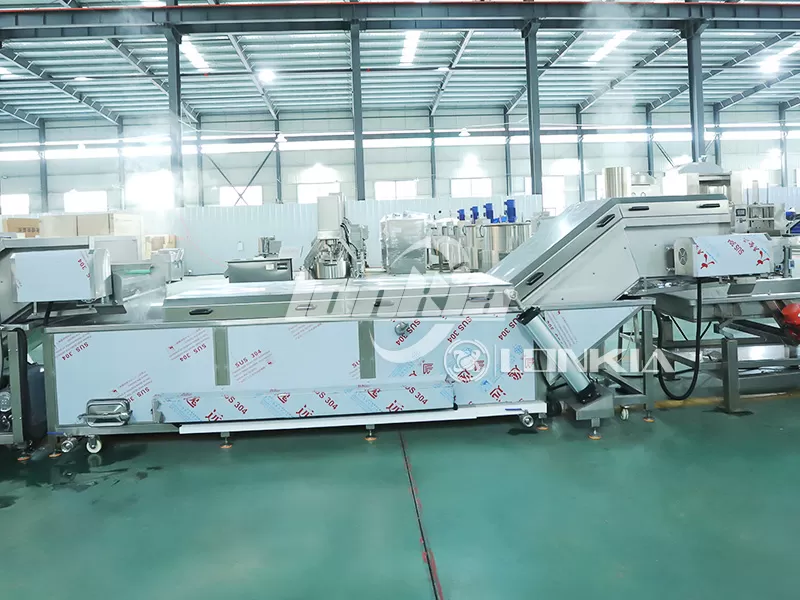
1. Conveyor Speed = Blanching Duration
Continuous blanchers regulate blanching time by adjusting conveyor chain speed. Precise time management is achieved solely through speed adjustment, making it ideal for switching between diverse products.
2. Reference Blanching Times for Different Materials
- Tomatoes: 30–60 seconds
- Green beans: 90–120 seconds
- Asparagus: 60–90 seconds
Use these values as initial settings. Factories may fine-tune based on product size and moisture content.
3. Effects of Insufficient or Excessive Time
- Insufficient: Incomplete enzyme inactivation, dull color, impacts peeling or cutting processes
- Excessive: Nutrient loss, softened texture, reduced yield
Therefore, precise time control directly leads to higher yield rates and reduced raw material loss—a core benefit highly valued by customers.
How to Identify Optimal Temperature and Time Settings During Production?
1. Small-batch Testing Is the Most Critical Step
Before formal production begins, conduct 2–3 small-batch tests to gradually adjust temperature and speed, identifying the most suitable combination.
2. Fine-tune Parameters Based on Seasonal Variations
Factors like fluctuating tomato moisture content or bean ripeness can affect blanching results, necessitating periodic recalibration.
3. Use Automated Recording Systems to Prevent Errors
Equipment like Lonkia's continuous blanching machines can save parameter programs, preventing operator misadjustments and ensuring consistent quality.
Summary
Temperature and time settings are pivotal for ensuring product quality in continuous blanching machines. Through precise temperature control, adjustable conveyor speeds, and stable continuous processing, factories achieve higher output, reduced waste, and more consistent finished product quality. Lonkia's continuous blanching machines excel in temperature control accuracy and structural design, empowering customers to master blanching processes more easily and achieve more reliable production outcomes.