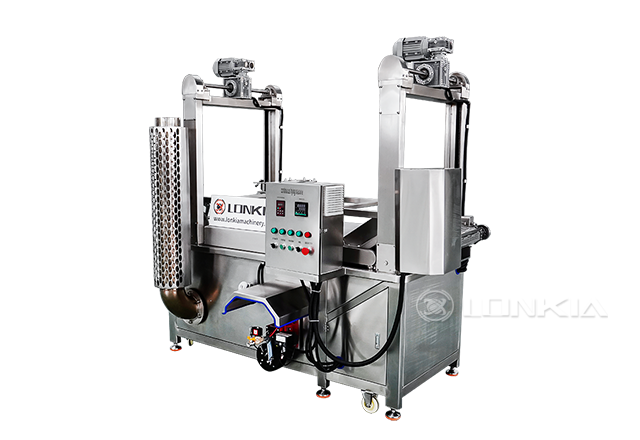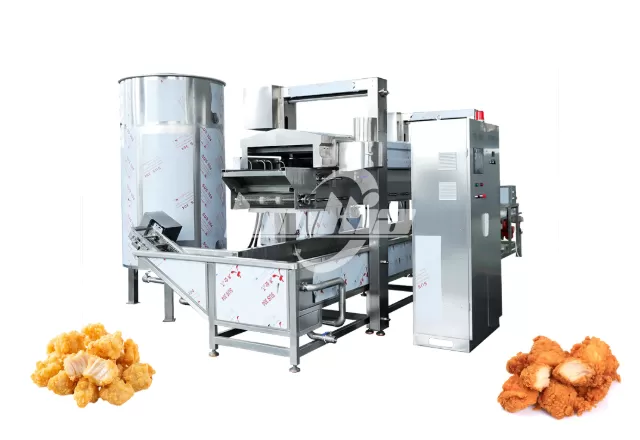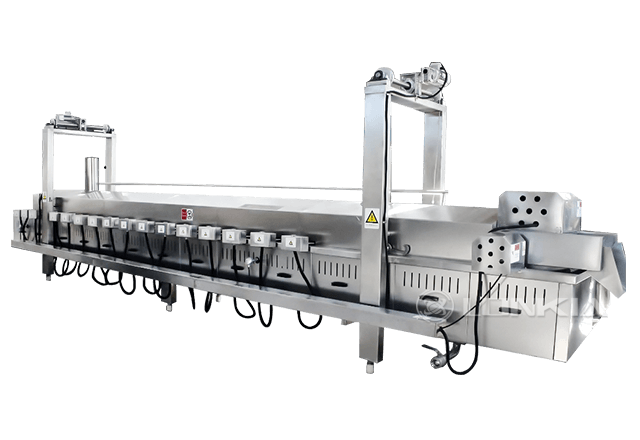
When purchasing a continuous fryer, "How much does it cost?" is usually the first question customers ask. However, continuous fryer machine prices don't have a fixed price that applies to every production project. Differences in production capacity, heating systems, frying configurations, conveyor systems, oil filtration, and control configurations affect the final quote.
For snack food pellets, molded foods, and other continuous-frying products, determining whether an industrial continuous fryer is a worthwhile purchase requires more than just comparing the total equipment price; it is essential to understand the equipment configuration behind the quote.
Factors Affecting Continuous Fryer Machine Price
1. Production Capacity Is a Key Factor Affecting Price
Continuous fryers require the oil tank, conveyor system, and heating capacity to be designed based on hourly throughput. The higher the target production capacity, the greater the requirements for the equipment's overall processing capacity, which in turn affects the equipment configuration and price.
The production capacity of LONKIA continuous fryers can be configured according to production line requirements, with parameters ranging from 50 to 1,500 kg/h.
Therefore, when requesting a quote, you should specify:
- Product name and raw material type
- Target hourly output
- Product dimensions and weight
- Desired frying results
- Planned daily operating hours
This information helps manufacturers determine the most suitable equipment specifications.
2. Heating Methods Affect the Continuous Fryer Price
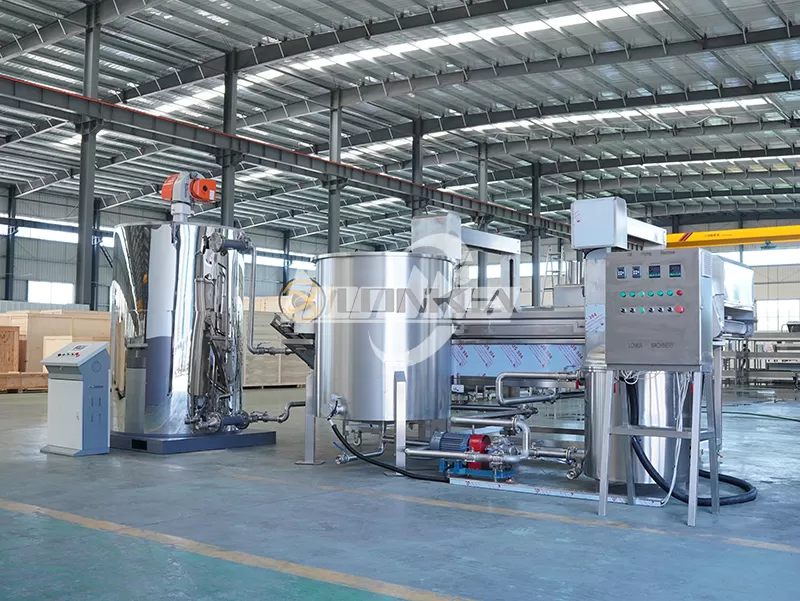
The heating system directly affects the establishment and maintenance of oil temperature. Depending on factory conditions, continuous fryers can be configured with different heat sources, such as electricity, diesel, or natural gas. LONKIA also offers corresponding customizable solutions.
When purchasing, one should not simply assume that a particular heating method is necessarily cheaper; rather, the decision should be based on local energy conditions, target production capacity, and production requirements.
3. The Oil Filtration System Affects Price
When continuously frying snack foods, debris from the product surface may enter the oil. If residue continues to accumulate in the oil, it will not only increase cleaning efforts but may also affect the frying results of subsequent products.
Therefore, industrial continuous fryers typically require consideration of oil circulation and filtration configurations. The structure of the filtration system, its processing capacity, and how it interfaces with the oil tank all influence equipment costs.
For products prone to generating debris—such as food pellets and battered foods—it is especially important to verify the specific configuration of the oil filtration system during procurement.
4. Conveyor Systems Affect Equipment Costs
Continuous fryers use conveyor systems to control the product's movement through the hot oil, so the conveyor belt speed is closely related to frying time.
LONKIA continuous frying equipment features a conveyor belt speed adjustable within the range of 0–15 m/min, allowing it to be tailored to the frying process of different products.
5. Temperature Control Systems Affect Equipment Configuration
Higher frying temperatures are not necessarily better. Different food ingredients have varying moisture content, sizes, and desired final texture, each requiring corresponding oil temperatures and residence times.
Continuous fryer machines typically require real-time control of oil temperature. LONKIA equipment supports digital temperature control with operating temperature parameters ranging from 0–200°C.
6. The Degree of Customization Affects the Final Quote
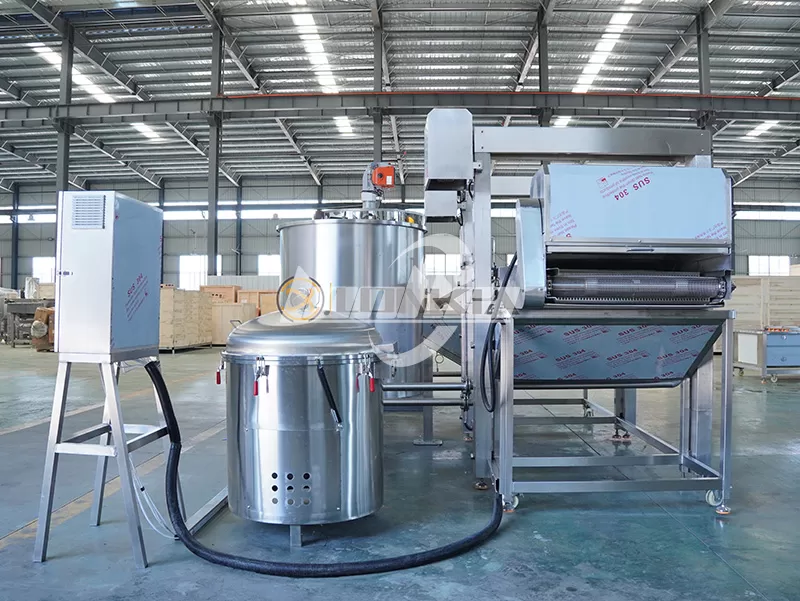
Continuous fryer machine is rarely manufactured strictly to a fixed size. Differences in product type, production capacity, frying time, factory floor space, and how the equipment connects to upstream and downstream machinery may all require adjustments to the equipment's structure.
For example, integrating the fryer into an existing snack food production line may involve adjustments to feed height, discharge height, conveyor direction, and equipment dimensions.
Consequently, there will naturally be a price difference between a standard configuration quote and a solution customized to fit a specific production line.
How to Determine if a Quote for an Industrial Continuous Fryer Is Reasonable?
When inquiring about the continuous fryer machine price, it is recommended to confirm the following details with the supplier:
1. Equipment Parameters
- What is the production capacity?
- What is the operating temperature range?
- Is the conveyor speed adjustable?
- How are the oil tank dimensions configured?
- What is the heating method?
2. Core Configuration
- Does it include an oil circulation system?
- Is an oil filtration system included?
- What is the structure of the conveyor system?
- What is the temperature control method?
- What materials are used for food-contact parts?
3. Production Line Compatibility
If the continuous fryer machine needs to be connected to upstream forming and conveying equipment or downstream oil-draining, seasoning, and packaging equipment, you should also confirm that the production capacities and interfaces of each piece of equipment are compatible.
Conclusion
The continuous fryer machine price is essentially determined by a combination of the equipment's production capacity, frying process, and configuration. For snack food pellets and other products requiring continuous frying, rather than simply seeking the lowest quote, it is better to first define the product and production requirements and then compare equipment configurations from different suppliers.
LONKIA can provide configuration solutions for continuous fryers based on product type, target production capacity, and production line layout, helping customers determine suitable equipment specifications based on their actual production needs.