When selecting food processing equipment, the continuous deep fryer is a key piece of equipment that many customers focus on. Whether producing potato products, meat products, or snack foods, how to improve efficiency while ensuring quality is a common challenge faced by businesses.
This article will provide a systematic analysis of continuous deep fryers from the perspectives of equipment structure, operating principles, and practical applications, helping you determine whether they are suitable for your production needs.
What Is a Continuous Deep Fryer?
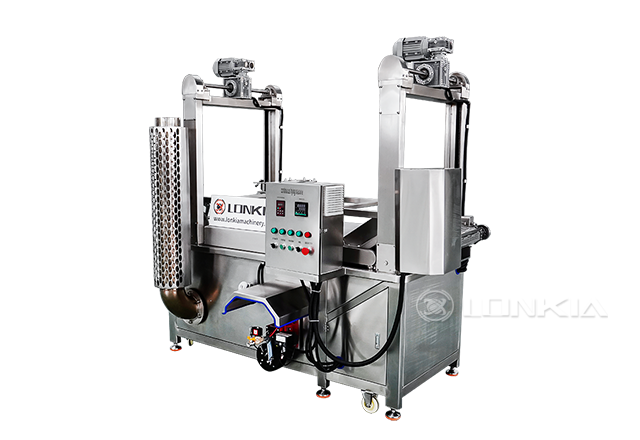
A continuous fryer is an automated piece of equipment designed for continuous deep-frying of food. It uses a conveyor system to ensure the steady movement of products through the oil tank, thereby achieving uniform frying.
Compared to traditional batch-type fryers, its main features include:
- Continuous feeding and discharge
- Automatic temperature control
- Adjustable frying time
- Suitable for high-volume production
This continuous frying equipment is widely used in the processing of products such as potato chips, chicken nuggets, nuts, and fish, and is an essential component of modern food production lines.
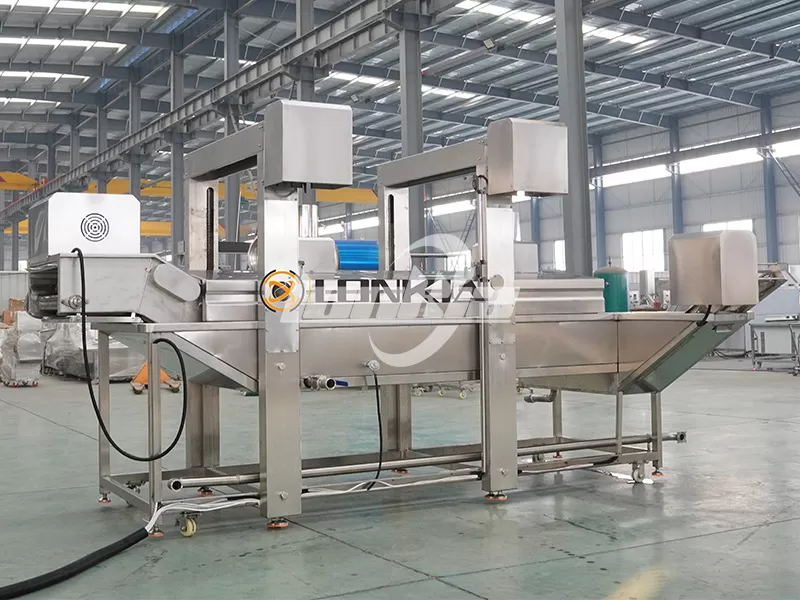
Core Structure of the Continuous Fryer
To ensure stable and efficient operation, a continuous deep fryer typically consists of the following key systems:
1. Conveyor System
A stainless steel mesh belt serves as the conveying medium, with operating speed controlled via variable frequency drive (VFD).
This system directly determines frying time, thereby influencing product doneness and texture.
2. Heating and Temperature Control System
The continuous fryer equipment can be configured with either electric or gas heating as required and is equipped with automatic temperature control devices to ensure precise oil temperature regulation.
Stable oil temperature is crucial for food quality and helps prevent:
- Localized over-frying
- Uneven coloring
- Excessive oil absorption
3. Oil Circulation and Filtration System
During operation, the oil circulation system continuously filters the cooking oil, effectively removing residues.
This design helps to:
- Extend the oil's service life
- Maintain oil cleanliness
- Reduce production costs
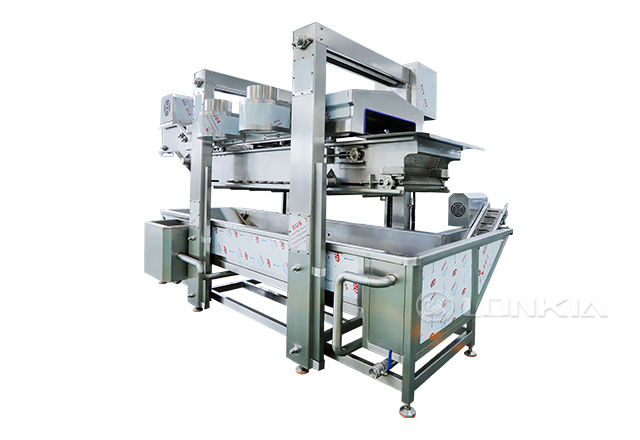
4. Oil Tank and Structural Design
The entire continuous frying machine is typically constructed from food-grade stainless steel, with a structural design that facilitates cleaning and maintenance. Additionally, some models feature a "cold zone" design to minimize oil residue buildup and oil degradation.
Working Principle of the Continuous Fryer Machine
The operation of a continuous deep fryer can be divided into three consecutive stages:
- Automatic Feeding: Raw materials enter the frying zone via a conveyor system and are evenly spread across the mesh belt.
- Constant-Temperature Frying: The products move into the oil tank with the mesh belt and complete the frying process at a set temperature. Precise control of frying time is achieved by regulating the conveyor speed and oil temperature.
- Automatic Discharge: Once fried, the products are conveyed to the discharge end, where they can be connected to subsequent equipment such as oil-draining and cooling units to achieve continuous production.
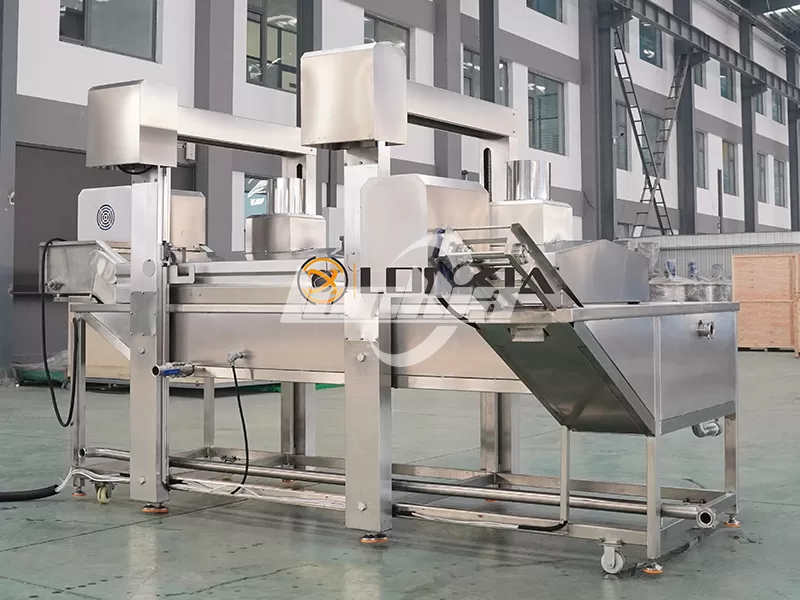
Advantages of Continuous Food Fryers
- Improved Production Efficiency: Continuous operation reduces waiting time, making it suitable for stable, high-volume production needs.
- Reduced Labor Costs: High automation reduces manual intervention and enhances production stability.
- Enhanced Product Consistency: Precise control of temperature and time ensures consistent color and texture in the final product.
- Lower Oil Consumption Costs: The oil recirculation and filtration system minimizes oil waste, improving economic efficiency.
Applications of the Continuous Deep Fryer
The continuous frying machine is suitable for a wide range of food processing scenarios, such as:
- Potato products (e.g., potato chips, French fries)
- Meat products (e.g., chicken nuggets, meat patties)
- Peanuts and other nut products
- Fish and seafood
Optimal frying results can be achieved for different products by adjusting the temperature and conveyor speed.
How to Select the Right Continuous Deep Fryer?
When purchasing food frying equipment, we recommend focusing on the following aspects:
- Production Capacity Requirements: Select an appropriate processing capacity based on production scale
- Product Type: Different foods have varying frying requirements
- Heating Method: Choose a configuration based on local energy costs
- Level of Automation: Impacts labor costs and production efficiency
As a food processing equipment manufacturer, lonkia prioritizes structural stability and operational convenience in the design of continuous fryers. We provide tailored solutions based on the characteristics of our customers' products to help achieve stable production.
Summary
A continuous deep fryer is not merely a piece of frying equipment; it is a vital tool for achieving continuous and standardized food production.
Through the coordinated operation of the conveyor system, temperature control system, and oil circulation system, it enhances production efficiency and reduces operating costs while ensuring product quality.
For food companies seeking to boost production capacity and product consistency, selecting the right continuous food fryers will directly impact overall production performance and market competitiveness.