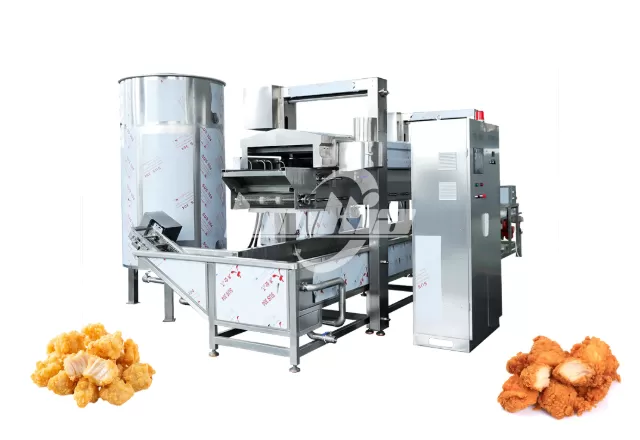
When selecting a continuous deep fryer, the heating method is one of the core specifications that customers care about most. It not only affects the equipment's operating costs but also directly determines oil temperature stability, product consistency, and production efficiency. Different heating methods are suitable for different production scenarios, and making the right choice can significantly improve the performance of the entire production line.
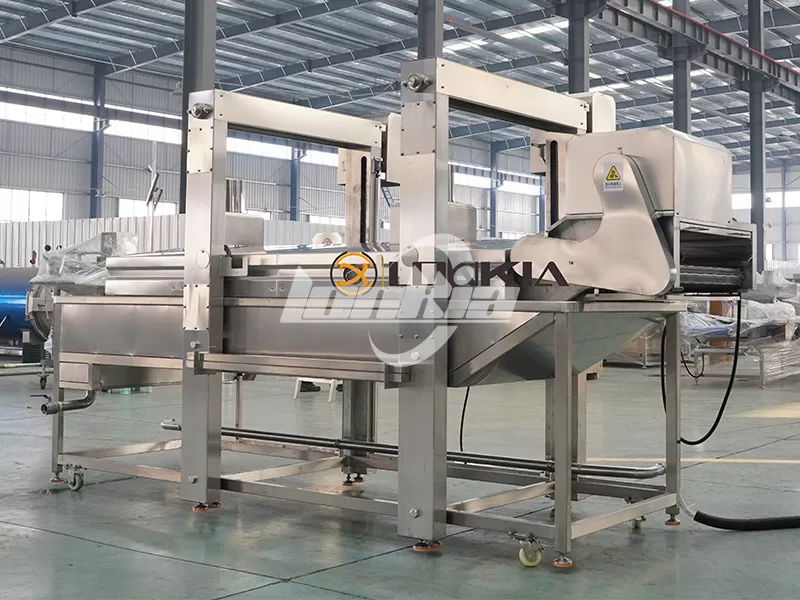
Common Heating Methods for Industrial Deep Fryers
Currently, industrial deep fryers primarily use three heating methods: steam heating, electric heating, and gas heating.
1. Steam Heating
Steam heating generates high-temperature steam via a boiler, which then indirectly heats the oil tank through a heat exchange system. It is a relatively stable heating method.
Features:
- Uniform heating with high oil temperature stability
- Gentle heat exchange that minimizes localized overheating
- Suitable for long-term continuous operation
Steam systems typically rely on existing boiler energy within the facility, making them more common in large-scale food processing plants.
Suitable Applications:
- Food processing plants already equipped with steam boilers
- Products requiring high frying stability, such as potato chips and meat products
👉 For customers seeking consistent quality, steam heating delivers excellent temperature control consistency in continuous fryers.
2. Electric Heating
Electric heating converts electrical energy into thermal energy via heating elements to directly heat the oil tank, with precise temperature regulation achieved through a temperature control system.
Features:
- Precise temperature control and responsive adjustment
- Relatively simple equipment structure and easy operation
- Quick startup and low maintenance costs
Electric heating is very common in medium-scale production lines and is particularly suitable for products requiring consistent quality output.
Suitable Applications:
- Products requiring high consistency in color and texture
- Production environments with a stable power supply
👉 In the design of continuous deep fryers like the Lonkia, electric heating is typically paired with an intelligent temperature control system to keep oil temperature fluctuations within a narrow range, thereby improving product consistency.
3. Gas Heating
Gas heating generates heat by burning natural gas or liquefied petroleum gas (LPG) to heat the oil tank, making it a highly efficient energy solution.
Features:
- Fast heating speed and high thermal efficiency
- Suitable for high-volume continuous production
- Stable performance in large-scale processing
Gas heating systems offer significant advantages in production environments requiring rapid oil temperature recovery, making them particularly suitable for continuous-feed frying processes.
Applications:
- Large-scale continuous production of potato chips, chicken nuggets, etc.
- Food processing plants with high production capacity requirements
Impact of Different Heating Methods on Equipment Performance
1. Impact on Oil Temperature Stability
Stable oil temperature is a key factor affecting frying quality:
- Steam heating: Most uniform overall temperature
- Electric heating: Highest control precision
- Gas heating: Fastest heating and recovery rates
During continuous frying, stable oil temperature effectively ensures consistent product color and texture.
2. Impact on Production Efficiency
Different heating methods each have their own advantages in terms of efficiency:
- Gas: Suitable for high-intensity continuous production
- Electric heating: Suitable for production at a steady pace
- Steam: Suitable for long-term stable operation
Additionally, industrial deep fryers are typically equipped with variable-frequency conveyor systems, allowing different products to be adapted to production demands by adjusting frying times.
3. Impact on Operating Costs
Operating costs primarily depend on the type of energy source:
- Electric heating: Depends on electricity rates
- Gas heating: Affected by natural gas or LPG prices
- Steam heating: Depends on the overall energy consumption of the boiler system
Therefore, selecting the appropriate energy source requires a comprehensive assessment based on local energy conditions, rather than focusing solely on the price of the equipment.
How to Choose the Right Heating Method for Your Needs?
1. Consider Production Scale
- High-volume continuous production → Gas heating is more suitable
- Stable, medium-volume production lines → Electric heating offers more balanced performance
- Existing boiler systems in the factory → Steam heating is more economical
2. Consider Product Type
- Potato chips, puffed snacks → Require stable oil temperature (steam or electric)
- Meat products → Require rapid heating (gas is preferable)
3. Consider Energy Availability
- Stable power supply → Prioritize electric heating
- Abundant natural gas → Gas heating is more efficient
- Existing steam system → Prioritize steam utilization
How to Optimize Heating Performance Through Equipment Configuration?
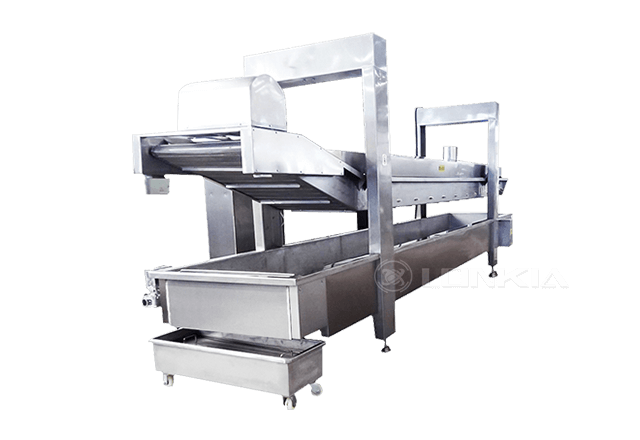
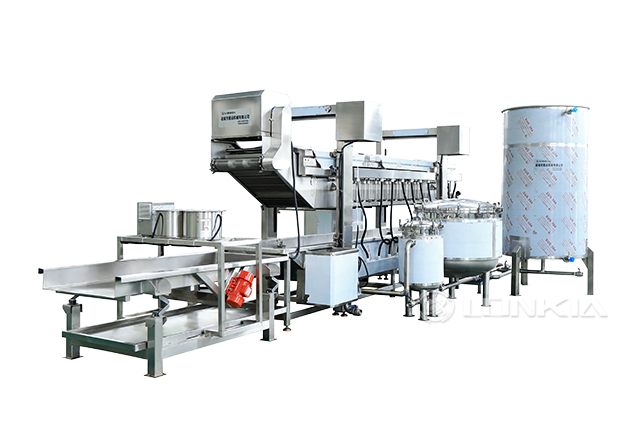
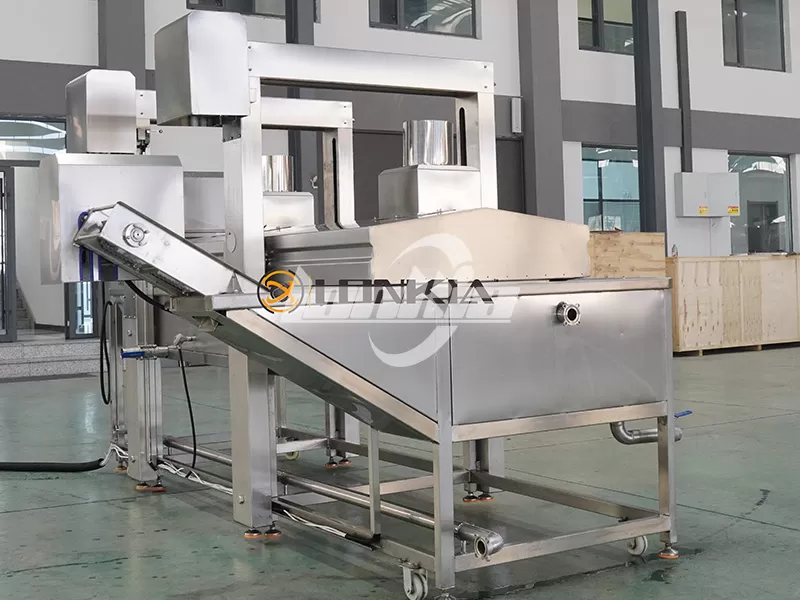
A high-performance continuous deep fryer depends not only on the heating method but also on the overall system design, including:
- Automatic temperature control system (maintains stable oil temperature)
- Dual-layer conveyor belts (to prevent products from floating)
- Oil filtration and circulation system (to extend oil lifespan)
- Variable frequency drive system (to control frying time)
These systems work together to ensure the industrial deep fryers maintain stable performance across different heating methods.
Summary
The three heating methods for continuous fryers—steam, electric, and gas—are each suited to different production needs. There is no absolute superiority; the key lies in matching your actual operating conditions.
- Seeking consistent quality → Steam or electric heating
- Seeking high throughput → Gas heating
- Seeking a balanced approach → Flexible selection based on plant conditions
For food processing companies, choosing the appropriate heating method for industrial deep fryers essentially involves balancing efficiency, cost, and product quality. Only through proper configuration can the entire production line achieve maximum value.