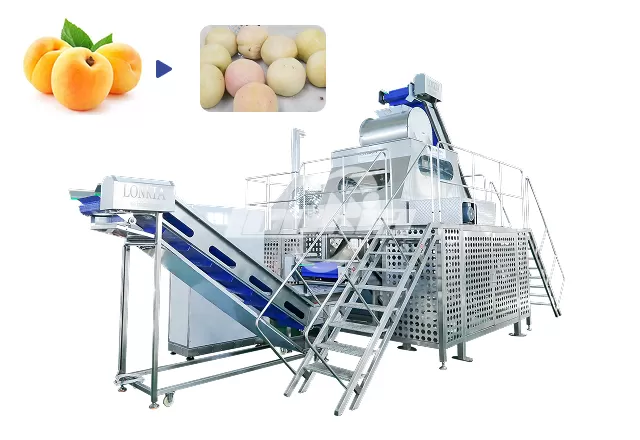
When purchasing a carrot processing line, the key consideration is not merely the effectiveness of washing or peeling, but rather how to establish a continuous and stable processing workflow that transforms raw carrots into finished products. Depending on specific product requirements, the production line can be configured with equipment for de-silting, washing, peeling, sorting, trimming ends, and slicing, with a conveyor system linking the various processing steps.
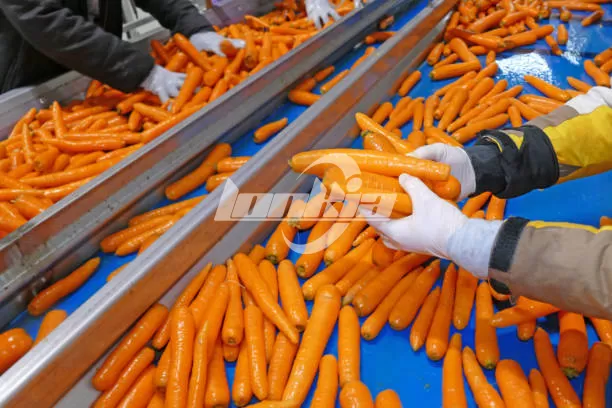
The Complete Processing Flow of a Carrot Processing Line
Carrot processing typically begins with raw material pretreatment, followed by the selection of subsequent equipment based on the final product. A well-designed combination of equipment reduces the need for manual handling while ensuring a consistent processing rhythm across different stages.
1. Dirt Removal and Washing
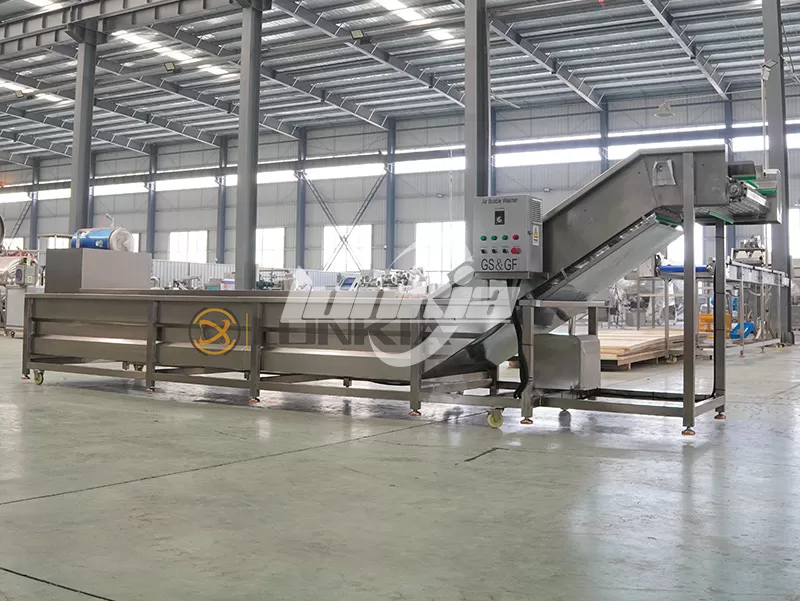
Freshly harvested carrots typically have soil and impurities adhering to their surfaces, making the initial washing stage a critical part of the entire production line. A bubble washer agitates the carrots using a combination of water flow and air bubbles, supplemented by spray nozzles, to provide a continuous cleaning process that ensures the carrots are sufficiently clean for subsequent peeling and cutting.
2. Carrot Peeling
The washed carrots then proceed to the carrot peeling equipment. A brush-roller peeler removes the skin through friction between the brush rollers and the carrots, making it suitable for processing lines requiring continuous operation; for different raw materials and product specifications, a steam peeling solution may also be selected. The peeling method should be determined based on the condition of the raw material, processing speed, and final product requirements.
Configure Downstream Equipment Based on the Final Product
Washing and peeling are only part of the pre-processing. If the final product is whole, peeled carrots, the process can proceed to dehydration and packaging; if carrot slices, sticks, or dice are to be produced, sorting, trimming, and cutting equipment must be added.
Sorting and Trimming Ends
Sorting prior to cutting removes raw materials that do not meet processing requirements and minimizes the impact of size variations on downstream equipment. For products requiring slicing, trimming the ends ensures the raw material's length and shape are better suited for subsequent cutting, thereby helping to improve the consistency of the finished product.
Carrot Slicing
When slicing carrots, the slice thickness, dimensions, and processing speed should be determined based on the final product. The slicer must not only meet the target production capacity but also be synchronized with the upstream conveying equipment to prevent discontinuous feeding or material buildup between machines.
How to Choose the Right Production Line Configuration?
Before purchasing a carrot processing line, it is recommended to first clarify three core parameters: raw material throughput, the final product, and the processing steps.
For example, the equipment configuration requirements differ significantly between simply producing washed and peeled carrots and producing standard-sized carrot slices. Based on the customer's raw material characteristics, target production capacity, and finished product requirements, Lonkia can combine washing, peeling, sorting, and cutting equipment to provide production line solutions tailored to different processing needs.
Compatibility Among Equipment Is Equally Important
The actual performance of a carrot processing line depends on the compatibility between each process step, rather than the individual specifications of a single piece of equipment. Washing speed, peeling capacity, conveyor speed, and slicing capacity must be coordinated to minimize waiting times and material backlogs, ensuring that carrots can flow continuously into the next process step.
Summary
A practical carrot processing line should be planned in reverse, starting with the final product: first determine the desired finished carrot product, then identify the necessary processing steps, and finally configure the appropriate equipment.
From de-silting, washing, and peeling to sorting, trimming the ends, and slicing, each process step serves a specific purpose. Only by clearly defining raw material specifications, target production capacity, and finished product requirements before configuring the equipment can a carrot processing solution be developed that best meets actual production needs.