For companies planning to invest in a French fry processing project, the first question to clarify is: Will they produce fresh French fries or frozen French fries? Although both products use the same raw material, there are significant differences in the requirements for production processes, equipment configuration, and the level of automation. Understanding these differences will help companies select a French fry making machine that best suits their needs, thereby improving production efficiency and product quality.
Fresh French Fries Production Line: Simpler Equipment Configuration
Fresh French fries are primarily intended for the foodservice industry and central kitchens—scenarios that require rapid processing and immediate sale—so the production process is relatively simple. It typically includes steps such as potato washing, peeling, cutting, and rinsing. Some customers may add air-drying equipment based on product requirements to reduce surface moisture.
For fresh French fry processing, equipment focuses more on continuous operation capability and cutting precision. A high-quality French fries cutting machine ensures uniform French fry dimensions and reduces breakage rates; potato washing and peeling equipment reliably removes dirt and skin, providing a solid foundation for subsequent processing. Proper equipment integration also reduces manual handling and improves the overall line efficiency.
Frozen French Fry Production Line: More Comprehensive Process, More Consistent Quality
Compared to fresh french fries, frozen french fries require a more comprehensive processing workflow. After washing, peeling, and cutting, they must undergo key processes such as blanching, air-drying, pre-frying, oil-draining, quick-freezing, and packaging. Each process requires corresponding specialized equipment working in tandem to ensure the product retains good color, texture, and shape during transportation, storage, and after refrying.
For example, continuous blanching equipment inhibits enzyme activity and improves color; continuous fryers precisely control oil temperature to create a uniform outer layer on the fries; and IQF equipment rapidly locks in moisture, prevents the fries from sticking together, and enhances product consistency. The entire production process places higher demands on the equipment's automated control capabilities.
How to Choose the Right French Fry Making Machine?
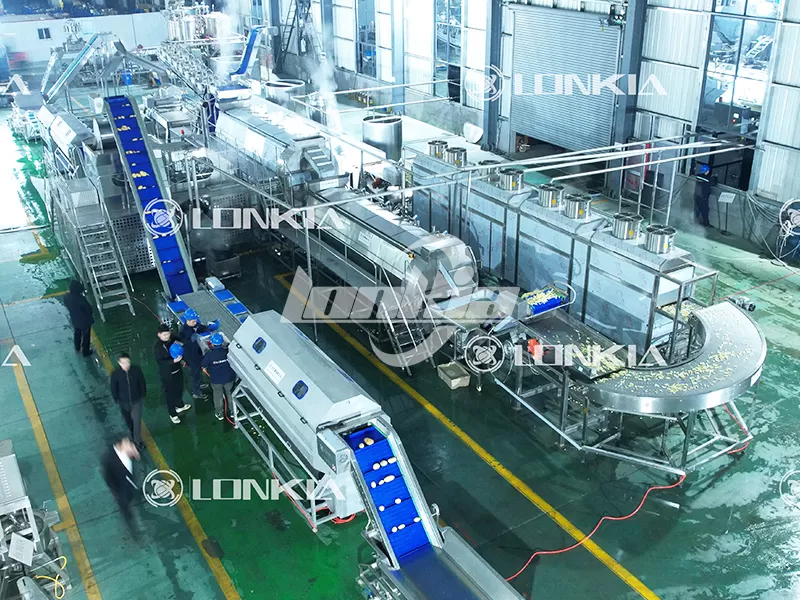
When purchasing a French fry making machine, one should not focus solely on a single piece of equipment but should comprehensively consider whether the configuration of the entire production line aligns with the product's market positioning. If the plan is to supply supermarkets, cold-chain distribution, or export markets, priority should be given to a complete production line that includes processes such as blanching, continuous frying, and quick-freezing; if the product is primarily intended for on-site processing and short-term sales, equipment can be configured according to actual production needs to avoid unnecessary investment.
Additionally, equipment materials, automatic control systems, conveying methods, ease of cleaning and maintenance, and the compatibility between different pieces of equipment are also key factors affecting production stability. A well-designed production line not only reduces the difficulty of manual operations but also minimizes material waste and improves overall processing efficiency.
Choose Reliable Equipment to Ensure Stable Production
Whether producing fresh or frozen French fries, equipment performance directly impacts the quality of the final product. A mature French fries production line should feature stable operation, high processing precision, and ease of operation and maintenance, while also allowing for flexible configuration based on different product processes. Lonkia specializes in French fry making machine and complete production line solutions. We provide customized configuration recommendations based on customers' actual process requirements, helping companies build more stable and efficient French fry production lines and offering reliable support for long-term production and market competitiveness.