In the fresh-cut vegetable and salad processing industry, many customers need to consider whether the production capacity of fruit and vegetable processing equipment truly meets their specific production needs when making purchases. If the equipment is under-specced, it can lead to issues such as insufficient feed rates, inadequate cleaning efficiency, and unnecessary labor downtime; conversely, over-specced equipment may result in lower utilization rates and increased operational pressure.
Therefore, selecting the right fruit and vegetable processing equipment based on actual processing requirements has become a key concern for many food processing companies.
Why Is Capacity Matching So Important?
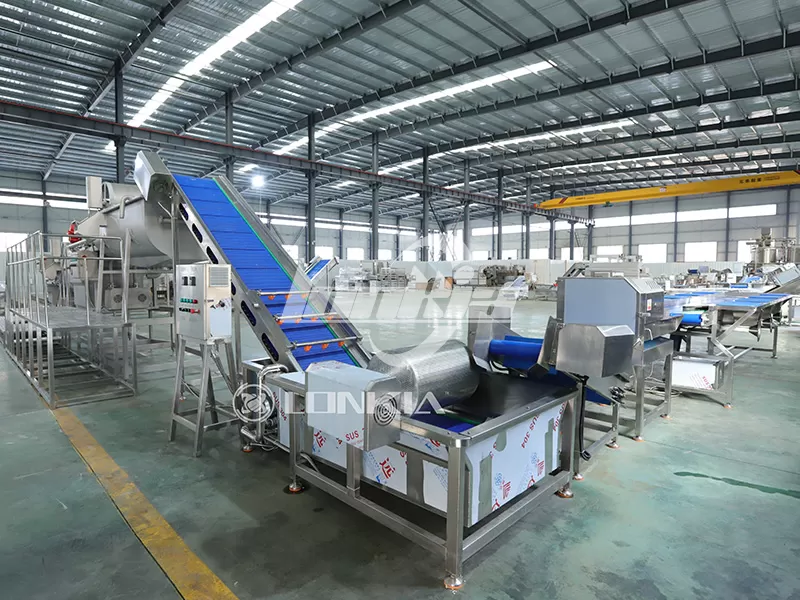
In the salad processing workflow, the entire salad processing line typically includes multiple stages such as raw material conveyance, bubble washing, cutting, rinsing, dehydration, and conveyance. If the processing capacity of any single piece of equipment is insufficient, it can easily cause line blockages or unstable production rhythms.
For example:
- Insufficient processing speed in the washing machine affects subsequent cutting efficiency.
- Low production capacity in cutting equipment can easily cause raw material backlogs.
- Insufficient capacity in dewatering equipment extends the overall processing time.
- An ill-matched conveying system may lead to increased damage to leafy vegetables.
Therefore, proper throughput design not only affects production efficiency but also directly impacts finished product quality and equipment operational stability.
How is Production Capacity Typically Configured for Salad Processing Equipment?
Different vegetables require different processing methods, and equipment configurations will vary accordingly. Leafy vegetables such as lettuce, spinach, and red cabbage demand higher standards for gentle washing and stable conveying, whereas raw materials like cucumbers and carrots prioritize cutting efficiency and continuous processing capacity.
In practical configurations, fruit and vegetable processing equipment typically focuses on the following aspects:
- Raw Material Processing Speed: Equipment must be matched to the feed rate of raw materials to prevent fluctuations in downstream equipment load caused by uneven feeding at the front end.
- Washing Capacity: Bubble washers and vortex washing systems are usually critical components of the entire line. A well-designed water circulation system helps vegetables tumble more evenly while minimizing leaf damage.
- Cutting Efficiency: Vegetable cutters require different blade discs depending on the product type, such as shredding, slicing, or dicing. A stable cutting speed enhances the consistency of the finished product.
- Dewatering capacity: Dewatering equipment directly affects the condition of vegetables prior to packaging. Unstable moisture content control can easily compromise subsequent preservation effectiveness.
How to Determine if Equipment Is Suitable for Long-Term Production?
Many customers focus solely on current needs when selecting fruit and vegetable processing machine, but in reality, stability during continuous operation is equally important.
High-quality fruit and vegetable processing equipment typically features the following characteristics:
- 304 stainless steel construction
- Adjustable conveyor speed
- Modular design
- Easy to clean and maintain
- Stable continuous operation
- Easy blade installation and removal
These design features not only improve processing efficiency but also reduce maintenance time.
Take Lonkia's salad processing equipment as an example: the entire line can be configured to accommodate different vegetable types, forming a continuous processing flow from washing to dehydration, capable of meeting the stable processing needs of various fresh-cut vegetables.
Common Oversights When Selecting Equipment
Many companies tend to focus solely on the specifications of individual machines during procurement, while neglecting the overall salad processing line compatibility.
In reality, factors that truly impact production efficiency often include:
- Conveyor coordination between machines
- Stability of the water circulation system
- Continuity of equipment operation
- Ease of maintenance
- Efficiency of blade replacement
- Control of cleaning blind spots
Only when the entire line is properly configured can fruit and vegetable processing equipment truly deliver its advantages in stable processing.
Conclusion
For fresh-cut vegetable and salad processing companies, selecting fruit and vegetable processing equipment with the appropriate production capacity requires a reasonable match based on their product characteristics, processing workflows, and continuous production needs.
Stable cleaning results, consistent cutting quality, continuous conveying capacity, and a reliable dehydration system are the key factors that truly impact production efficiency and product quality. A well-designed equipment configuration can also help companies reduce downtime and manual intervention during subsequent production processes, thereby improving overall processing stability.