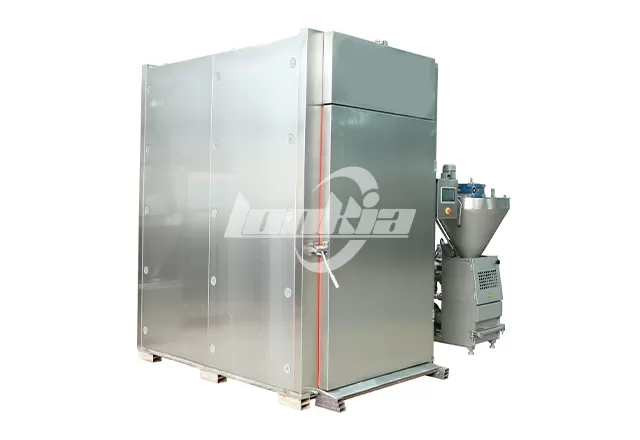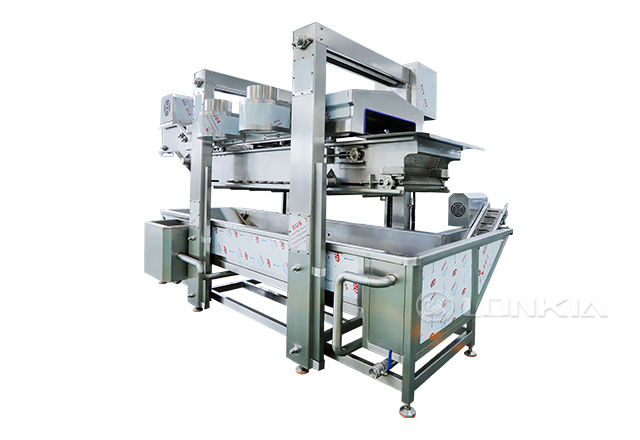
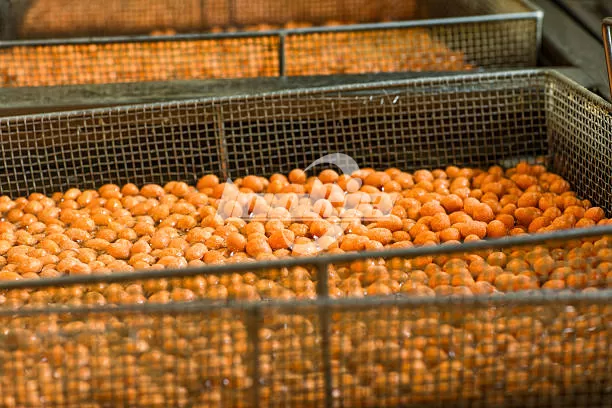
Due to their crispy texture and rich flavor, fried peanuts are widely used in snack foods, nut processing, and seasoned foods. For food processing companies that require stable production, selecting the right peanut oil fryer is not simply a matter of choosing a specific model; rather, it involves ensuring that the frying equipment is compatible with the raw materials, production capacity, processing methods, and subsequent production stages.
Therefore, when purchasing peanut oil frying equipment, a well-designed customization plan is often more important than simply comparing equipment prices.
Determining Peanut Oil Fryer Configuration Based on Production Needs
Peanut processing requirements vary from customer to customer. If the peanut oil fryer configuration does not align with the actual process, issues such as insufficient production capacity, uneven frying, or low operational efficiency may arise.
Selecting Equipment Based on Target Production Capacity
First, it is necessary to clarify the planned hourly processing volume of peanuts. Production capacity directly affects the size of the oil tank, the conveyor system, heating capacity, and the overall equipment configuration.
For continuous production, it is not enough to focus solely on the peanut frying machine's nominal output; one must also consider the feed rate at the front end and whether downstream de-oiling, cooling, flavoring, and packaging equipment can keep pace. LONKIA can design a peanut frying solution tailored to the customer's production requirements.
Adjusting Frying Parameters Based on Product Process
The moisture content, size, and final product requirements of the peanuts all influence frying conditions. The equipment should feature adjustable frying times and stable temperature control, enabling operators to adjust processing parameters based on the actual product.
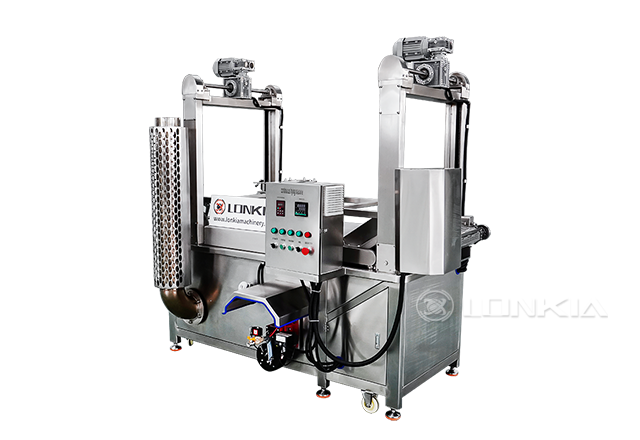
This peanut oil fryer utilizes temperature sensors to automatically regulate the heating system; combined with adjustable frying times, this helps minimize uneven frying caused by fluctuations in oil temperature.
Selecting Equipment Features Based on Plant Conditions
In addition to production capacity and process requirements, customers must also consider how the peanut oil fryer will integrate into their existing production workflow.
Heating Methods and Automation Configurations
The appropriate heating method can be selected based on the facility's existing energy conditions. The groundnut frying machine can also be configured with features such as automatic discharge, automatic filtration, variable-frequency speed control, and automatic oil level control according to production requirements.
If a company wishes to reduce manual intervention, it should prioritize continuous conveying, automatic discharge, and automatic control functions to ensure a smoother transition between frying, oil drainage, and cooling stages.
Oil Circulation and Filtration System
The peanut frying process generates a certain amount of debris. If this residue remains in high-temperature oil for an extended period, it can easily affect the oil's condition. Therefore, oil circulation and filtration are key configurations worth prioritizing when customizing a peanut oil fryer.
This peanut fryer equipment employs a water-oil mixed frying structure, allowing the fried residue to sink into the water and reducing continuous carbonization of the residue. Combined with oil circulation and filtration, this helps maintain the oil's cleanliness.
Adapting the Peanut Oil Fryer to Your Production Line
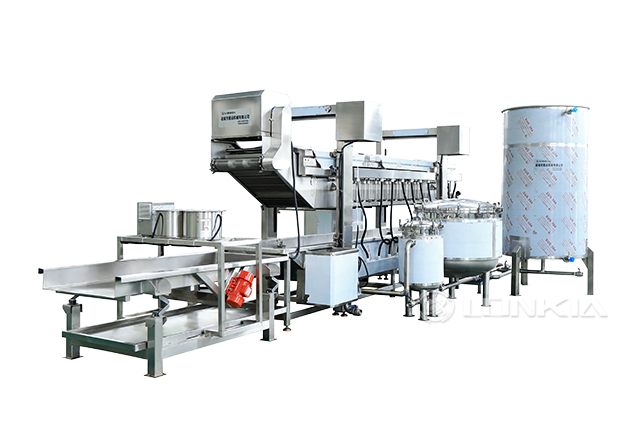
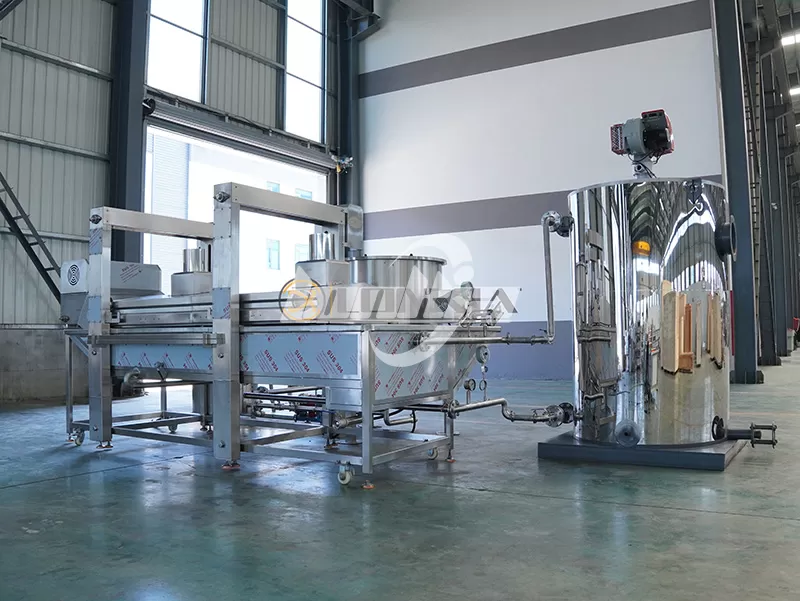
Truly effective customization goes beyond simply adjusting machine dimensions; it involves ensuring the equipment aligns with the entire processing workflow. For example, after frying, peanuts can proceed to de-oiling, cooling, flavoring, and packaging stages. Therefore, when selecting a fryer, factors such as feed method, discharge direction, conveyor speed, and integration with upstream and downstream equipment should be considered simultaneously.
LONKIA can provide customized solutions based on the customer's production capacity, processing technology, and factory layout, matching everything from single-machine configurations to complete frying production lines to help customers minimize integration issues between equipment.
What Information Is Needed Before Purchasing a Peanut Frying Machine?
To obtain a more accurate equipment proposal, we recommend that customers provide the following information when requesting a quote:
- Target output, e.g., kg/h;
- Peanut raw material and product specifications;
- Desired frying results;
- Heating energy requirements;
- Desired level of automation;
- Existing production line and factory layout;
- Whether you require functions such as filtration, automatic discharge, oil removal, and cooling.
The more specific this information is, the easier it will be to match the equipment configuration to actual production needs.
Summary
A suitable peanut oil fryer does not need every feature; its configuration should be based on the actual production process. For customers planning a peanut processing project, it is generally easier to obtain a practical solution by first clarifying production capacity, process requirements, and plant conditions before determining the equipment configuration.
If you are looking for a peanut oil fryer that suits your production needs, please provide LONKIA with your peanut production volume, processing requirements, and plant conditions. Our engineering team will then determine the equipment configuration based on your specific circumstances.