During egg processing, sorting, and packaging, plastic egg trays come into repeated contact with eggs, and their surfaces are prone to accumulating egg liquid, eggshell fragments, feathers, and other contaminants. Dried egg liquid, in particular, is especially difficult to remove. When egg liquid remains on the surface of the egg tray for an extended period, it forms a hardened layer that is often difficult to thoroughly clean with plain water alone.
Therefore, when selecting an appropriate egg tray washer, it is essential to focus on the equipment's spray pressure, cleaning process, hot water system, and nozzle coverage—not just its processing speed.
Why Is Dried Egg Liquid so Difficult to Clean?
Egg Liquid Easily Adheres to the Grooves of Egg Trays
Plastic egg trays typically have multiple egg compartments and deep grooves, allowing egg liquid to easily seep into corners and crevices. Over time, components such as proteins in the liquid gradually dry and form deposits that are difficult to remove in a single rinse.
The Longer the Trays are Left to Sit, the Harder They Are to Clean
If soiled egg trays are not fed into the washing equipment promptly, the residue will harden further. Therefore, an egg tray washer must employ a continuous, multi-stage cleaning process to handle varying degrees of soiling.
How Does an Egg Tray Washer Remove Dried Egg Residue?
1. Pre-wash to Remove Loose Contaminants
The egg trays first enter the pre-wash zone via the feed conveyor. High-pressure water jets initially remove surface eggshell fragments, dust, and some loose contaminants, reducing the cleaning load on the subsequent main wash zone.
2. High-Pressure Spraying to Treat Stubborn Residues
Upon entering the main wash zone, multiple sets of nozzles spray the egg trays from various angles, focusing on the surface, grooves, and edges.
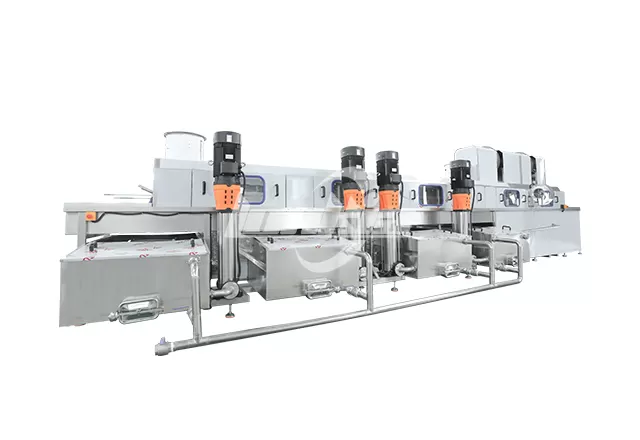
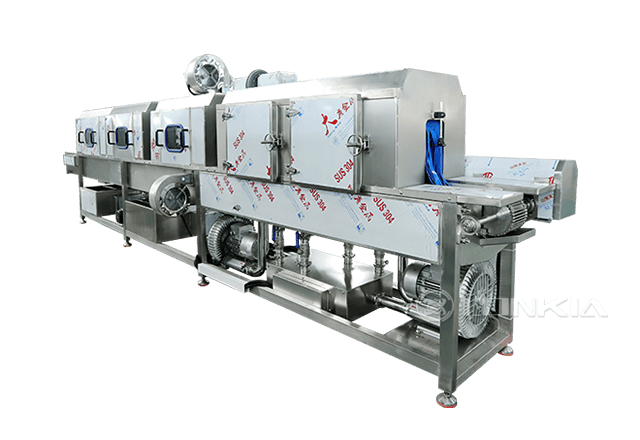
For dried egg residue, the high-pressure water jets continuously impact the adhered layer, gradually loosening it and dislodging it from the tray's surface. The LONKIA egg tray washing machine features a multi-stage cleaning structure, allowing configurations to be adjusted based on tray specifications and actual cleaning requirements.
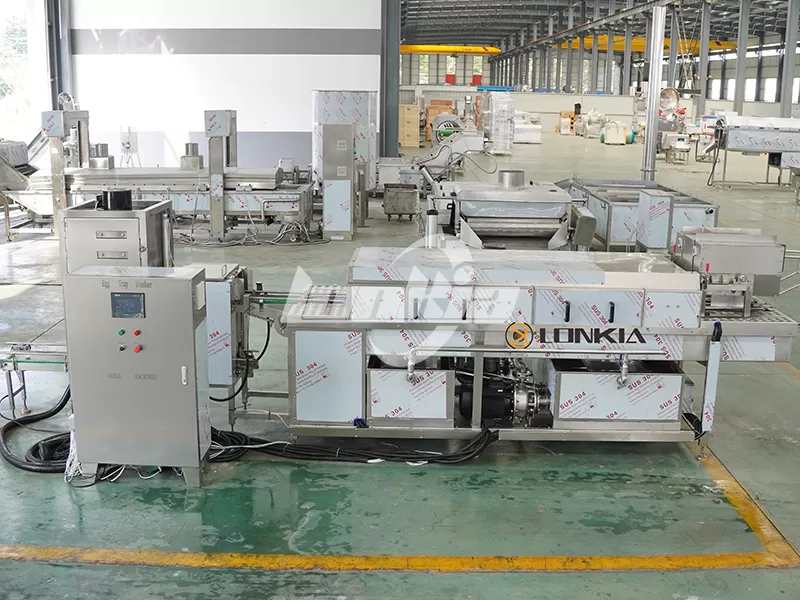
3. Hot Water Rinsing Further Enhances Cleaning Effectiveness
For difficult-to-remove stains such as egg residue, hot water helps soften the deposits, making it easier for subsequent spraying to flush away the residue. The plastic egg tray washer's hot water temperature can be adjusted according to actual process requirements, and a dedicated hot water rinsing zone can be configured.
Which Configurations Affect the Cleaning Effectiveness of Dried Egg Residue?
Nozzle Angles and Coverage Area
Egg trays have complex structures; if the spray direction is limited to a single angle, cleaning blind spots are likely to occur. Therefore, nozzle positions should be optimally configured based on the tray's dimensions and structure to ensure that the water flow covers all grooves and edges.
Filtration System
Eggshell fragments and other impurities are generated during the cleaning process. If these impurities enter the recirculating water system and clog the nozzles, they may compromise subsequent cleaning effectiveness. A filtration system helps minimize the entry of impurities into the spray system and is crucial for maintaining consistent cleaning performance.
What Information Is Needed Before Purchasing an Egg Tray Washer?
If customers primarily deal with egg trays contaminated with dried egg liquid, it is recommended to provide the following information when requesting a quote: the material of the egg trays, their length, width, and height, the number of egg slots, the type of stains, the drying time of the egg liquid, and the number of egg trays to be processed per hour.
This information helps equipment manufacturers properly configure the conveyor speed, spray zones, nozzle layout, and cleaning programs. LONKIA can configure the egg tray washer based on tray specifications, production volume, and on-site layout, and the equipment's capacity can be adjusted according to project requirements.
Summary
Cleaning trays contaminated with dried egg liquid is not a problem that can be solved simply by increasing water pressure. The key to consistently removing stubborn residues lies in the proper coordination of pre-wash, main wash, multi-angle spraying, hot water rinsing, and the filtration system.
For egg processing companies that need to continuously process plastic egg trays, selecting an Egg Tray Washer that matches the actual egg tray specifications and soil conditions can achieve more consistent cleaning results and reduce the need for manual re-washing. LONKIA can provide egg tray washing equipment configurations tailored to customers' specific process requirements.