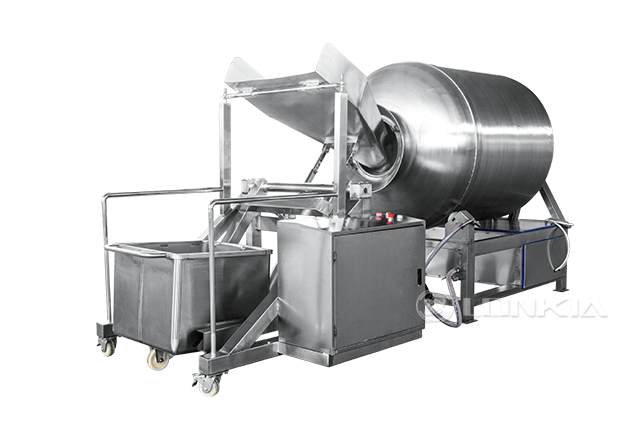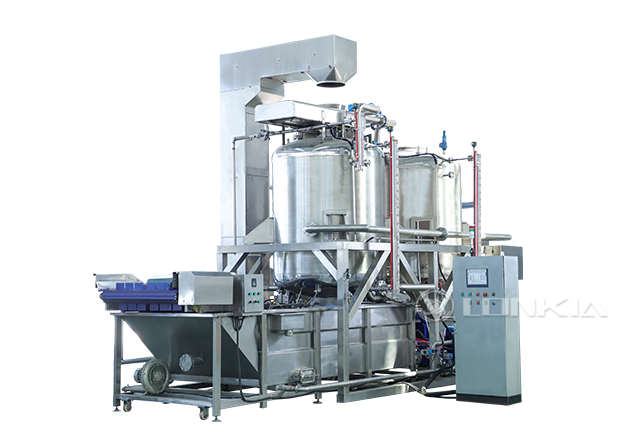
For food processing plants that require stable potato chip production, the ability of equipment to operate continuously is more important than simply increasing instantaneous output. The industrial potato chips making machine features a continuous sequence of equipment—including washing, peeling, slicing, dehydrating, frying, oil-draining, and post-processing—that ensures potatoes enter each process step at a consistent pace. This reduces manual handling and production delays, thereby improving the operational stability of the entire production line.
What Is the Core of Continuous Potato Chip Production?
Maintaining Alignment of Production Capacity Across All Process Stages
Continuous production is not simply a matter of connecting multiple machines. The processing capacities of the front-end slicing, dehydration, and frying equipment must be properly balanced; otherwise, material backlogs at the front end or insufficient feed at the back end are likely to occur.
Therefore, when configuring equipment, each process stage should be designed uniformly based on the target production capacity. LONKIA's potato chip production lines can be configured according to actual needs, with existing solutions covering production capacities ranging from approximately 100 to 800 kg/h.
A Stable Frying System
Frying is a critical stage in potato chip processing that affects the color, texture, and consistency of the final product. Continuous frying equipment must maintain a stable oil temperature and an appropriate material feed rate to ensure that potato chips from different batches are processed under similar conditions.
At the same time, the frying process generates debris and residue; if not promptly removed, these can affect the condition of the oil and the quality of the potato chips. Therefore, the oil filtration system is equally important in the equipment configuration.
How Does Automatic Filtration Support Continuous Production?
Reducing Processing Residue in the Oil
The industrial potato chips making machine employs oil-water management and automatic filtration technology to continuously process residue generated during frying, maintaining greater stability in the frying zone. According to the information on this page, this system reduces the need for frequent oil changes and helps maintain consistent product quality.
For continuously operating production lines, this means operators do not need to frequently interrupt production to address oil-related issues, allowing the frying equipment to maintain a more stable operating state.
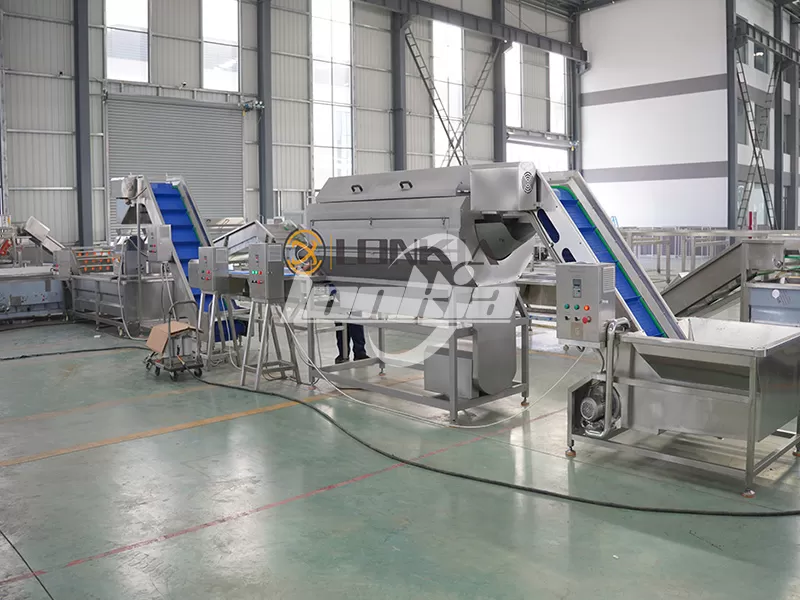
How to Improve the Stability of Continuous Production?
The conveyor speeds between equipment units, slice specifications, dehydration efficiency, and frying parameters must all be properly matched. Fluctuations in any single环节 may affect subsequent equipment.
Therefore, when selecting industrial potato chips making machine, we recommend that customers determine their target production capacity, potato specifications, finished product requirements, and planned daily production hours in advance. Configuring the entire production line based on this data makes it easier to achieve stable, continuous production than purchasing a single machine on its own.
LONKIA can configure potato chip production equipment according to customers' product and production capacity requirements, ensuring seamless integration across all processing stages and providing the necessary equipment support for stable potato chip production.
Conclusion
A suitable industrial potato chip production line not only increases production speed but, more importantly, ensures a stable rhythm for feeding, processing, frying, and conveying. For customers planning to establish a continuous potato chip production line, configuring equipment after clearly defining production capacity and product requirements can effectively reduce production issues caused by equipment mismatches.