When selecting a pallet washing machine, many customers tend to focus solely on whether the pallets are cleaned thoroughly, while overlooking a critical component: the drying system. In fact, if pallets retain significant moisture after washing, it not only affects their subsequent use but may also lead to new problems. Therefore, understanding the function and design of the drying system is crucial for selecting the right equipment.
Why Must Pallets Be Thoroughly Dried?
In actual production, pallets are commonly used in food processing, logistics, or warehousing. If they remain damp after washing, the following issues may arise:
- Residual moisture can easily breed bacteria or mold
- It affects the efficiency of subsequent packaging or loading
- It creates a risk of secondary contamination
- It increases handling weight and causes operational inconvenience
Industry practice shows that if washed pallets are not effectively dried, it directly affects hygiene standards and turnover efficiency. Therefore, washing and drying form an integrated system rather than two separate steps.
Working Principle of the Pallet Washing Machine Drying System
A standard pallet washing process typically includes: pre-rinse → main wash → rinse → drying, with the drying stage usually occurring at the end.
Common drying methods include:
- High-pressure air knife drying: A powerful fan generates high-speed airflow to rapidly blow moisture away from the pallet surface and grooves.
- Multi-angle airflow coverage: The equipment directs airflow from multiple directions—top, bottom, left, and right—to ensure even hard-to-reach areas (such as holes and crevices) are thoroughly dried.
- Rapid evaporation assistance: Some equipment incorporates temperature control to accelerate moisture evaporation and improve drying efficiency.
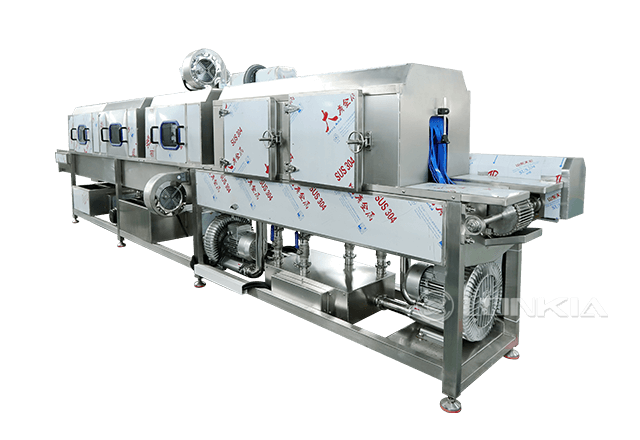
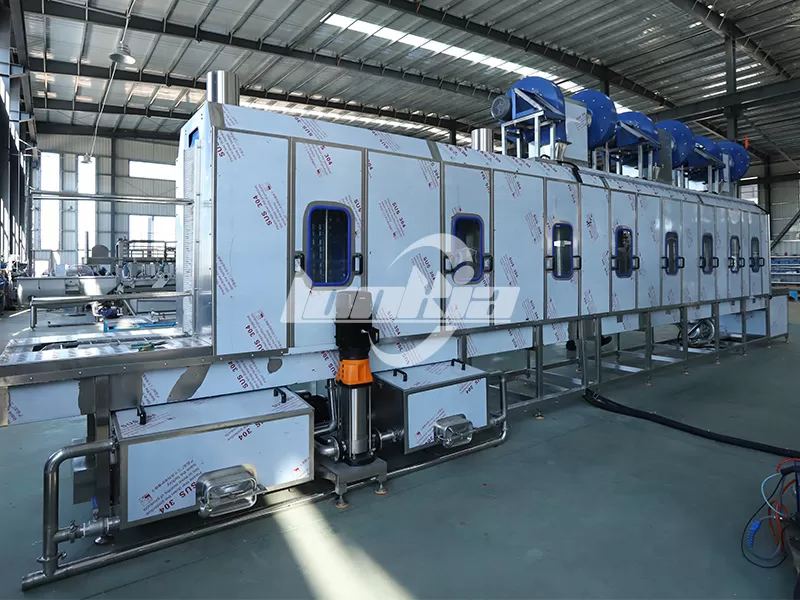
For example, industrial pallet washing machine typically employs high-pressure blower systems to blow out and evaporate water accumulated inside the trays, achieving a high level of drying efficiency.
The Core Impact of Drying Systems on Equipment Performance
- Enhancing Overall Cleaning Effectiveness: Cleaning is only the first step; drying determines the final quality. Only when fully dried are trays truly ready for immediate use.
- Improving Production Continuity: Dried trays can immediately proceed to the next process without waiting for air-drying, thereby accelerating the production line's pace.
- Reducing Manual Intervention: Without a drying system, trays often require manual wiping or natural air-drying, increasing both costs and time.
- Eliminating Equipment Bottlenecks: Without a drying module, even the most efficient cleaning section will be slowed down by the accumulation of wet trays.
How to Determine the Reliability of a Drying System?
From a customer's perspective, the following aspects should be prioritized:
- Is the blower power and airflow sufficient?
- Does it feature a multi-angle air jet structure?
- Is it optimized for pallet structures (e.g., grids, holes)?
- Is the drying section length appropriate?
- Does it support continuous conveying operation?
These factors directly determine drying effectiveness, rather than simply whether the pallet cleaning machine includes a drying function.
Design Advantages of the Lonkia Pallet Washer's Drying System
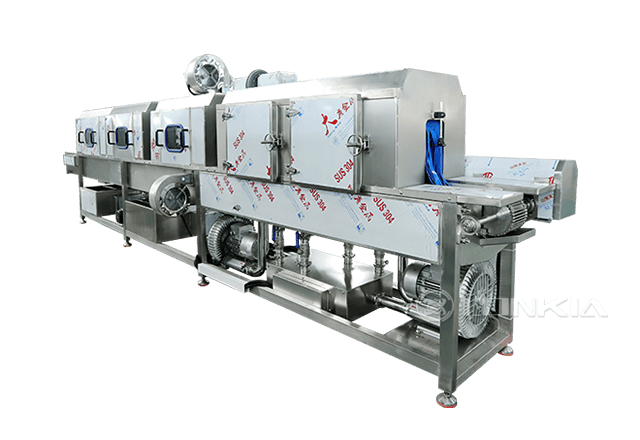
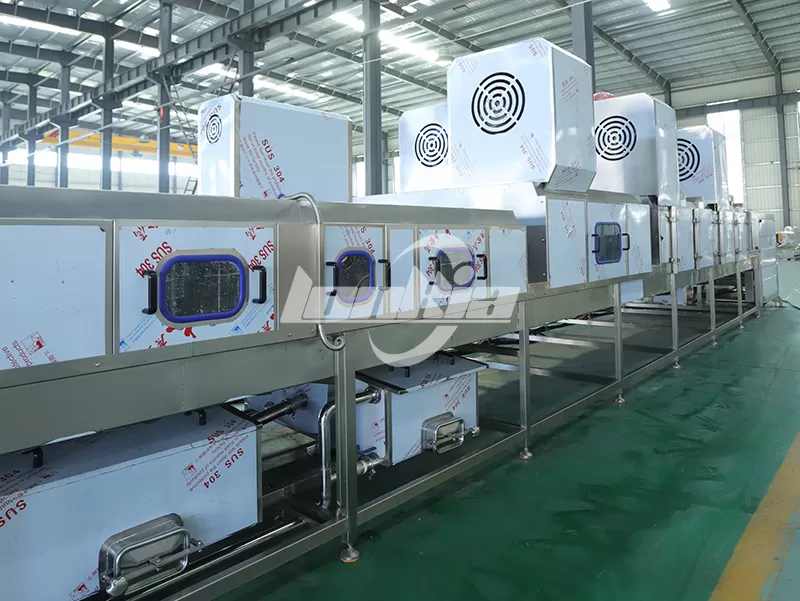
Taking Lonkia's pallet washing machine as an example, the equipment features an integrated washing and drying design that is structurally better suited to continuous production needs:
- Multi-stage washing and drying processes completed in a single unit
- Stable conveyor system integration minimizes downtime
- Washing and drying parameters can be adjusted based on pallet type
- Overall stable operation, suitable for long-term continuous use
This design not only enhances equipment efficiency but also helps customers reduce manual intervention and improve overall production reliability.
Conclusion
For companies that truly prioritize production efficiency and hygiene standards, selecting a pallet washing machine equipped with a high-efficiency drying system is far more important than focusing solely on cleaning capacity.
Cleaning determines the level of cleanliness; drying determines whether the pallets are truly ready for use.
If your production line faces the issue of "waiting for drying after washing," optimizing the drying system is often the most direct step toward improving efficiency.