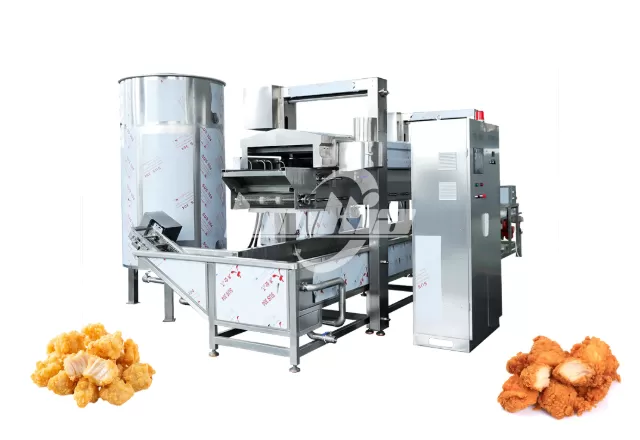
In the modern food processing industry, where efficiency, stability, and high quality are paramount, continuous frying equipment has gained widespread adoption for large-scale continuous production of meat, seafood, vegetables, and pasta products due to its exceptional design. Through sophisticated structural engineering, these potato chips deep fryers ensure consistent product color, flavor, and texture. This article delves into the core structure and design features of continuous fryers.
Core Structural Components of Potato Chips Deep Fryers
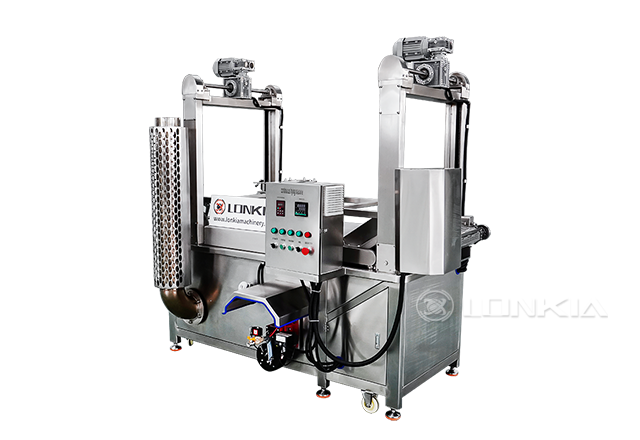
The continuous frying equipment is primarily modularly integrated from the following systems:
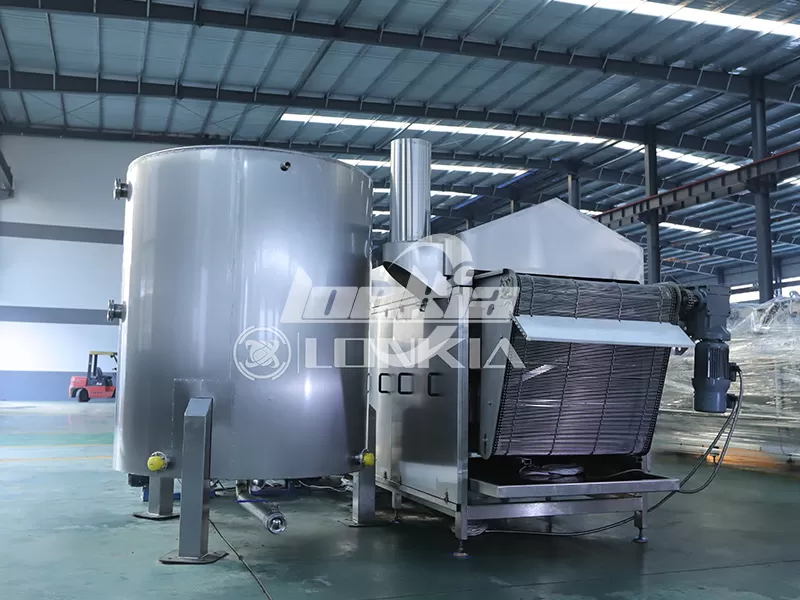
- Conveying System: Centered around variable-speed mesh belts, it typically employs a dual-layer stainless steel belt design with variable frequency stepless speed control. Products are conveyed steadily and heated uniformly, with frying time precisely controlled via belt speed.
- Heating and Temperature Control System: Supports multiple heat sources including electricity and natural gas. Equipped with high-efficiency heat exchangers and automatic temperature controllers, it maintains stable oil temperatures according to process requirements.
- Oil Filtration and Debris Removal System: Includes a circulating oil pump, filtration unit, and scraper debris remover. This system operates continuously during production, filtering food particles from the oil to delay lipid degradation and maintain oil cleanliness.
- Frame and Enclosure: The main body is typically constructed from food-grade 304 stainless steel, ensuring a robust structure and compliance with sanitary requirements. The frying tank lid is often designed as a liftable cover for thorough internal cleaning and equipment maintenance.
Key Design Features of the Industrial Deep Fryer
The potato chips deep fryer design features are centered around core industrial production requirements:
- Continuous Automated Operation: Materials pass continuously from the feed end to the discharge end, enabling seamless integration with pre-processing, post-seasoning, cooling, and packaging processes to form a complete snack frying production line, significantly enhancing efficiency.
- Consistent Quality Control: Precise regulation of constant oil temperature and conveyor speed (i.e., frying time) ensures high uniformity across batches in critical metrics like color, moisture removal rate, crispness, and oil absorption.
- Operational and Maintenance Convenience: Highly automated control systems reduce labor intensity and complexity. Modular design and easily accessible structures facilitate daily cleaning, maintenance, and component replacement. Lonkia potato chips deep fryer incorporates these usability details into its design.
- Safety and Durability Design: Common safety features include fully enclosed heating tubes to eliminate open flame risks and condensate return prevention devices to avoid hot oil splatter. Robust stainless steel construction and reliable component materials ensure equipment durability in continuous operation environments.
Conclusion
In summary, potato chips deep fryers provide food processing enterprises with stable, reliable large-scale production solutions through their modular mechanical structure, automated process control, and practical engineering design. Their value lies primarily in enhancing production capacity, stabilizing product standards, optimizing production management, and reducing overall operating costs.