During food processing, trolleys come into prolonged contact with materials such as meat, sauces, and fats. If they are not thoroughly cleaned, this not only affects subsequent production but may also increase the risk of cross-contamination. As a result, more and more companies are adopting trolley washing machines to replace manual cleaning, in order to achieve more consistent and efficient cleaning results.
However, even among trolley washing machines, there are often significant differences in actual cleaning performance between different models. For procurement personnel, understanding the key factors that influence cleaning performance helps in selecting equipment that truly meets production needs.
High-Pressure Spray Systems Determine Cleaning Coverage
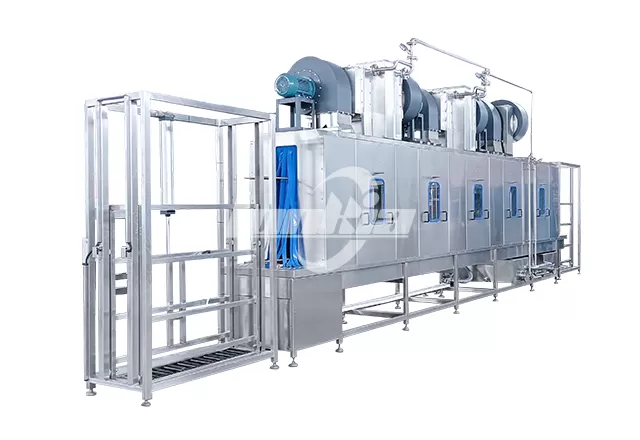
The spray system is the core component of a trolley washing machine and a critical factor affecting cleaning quality. High-quality equipment typically features a multi-angle, high-pressure nozzle layout, allowing the water flow to cover the inner and outer surfaces, the bottom, and corners of the trolleys where dirt tends to accumulate, thereby achieving a more uniform rinsing effect.
If the number of nozzles is insufficient or the spray angles are poorly designed, cleaning blind spots can easily occur, preventing grease or residue from being thoroughly removed. Therefore, when selecting equipment, special attention should be paid to the coverage range of the spray system, the spray pressure, and whether the nozzle layout is reasonably designed. A multi-stage spray structure can further enhance the overall cleaning effectiveness.
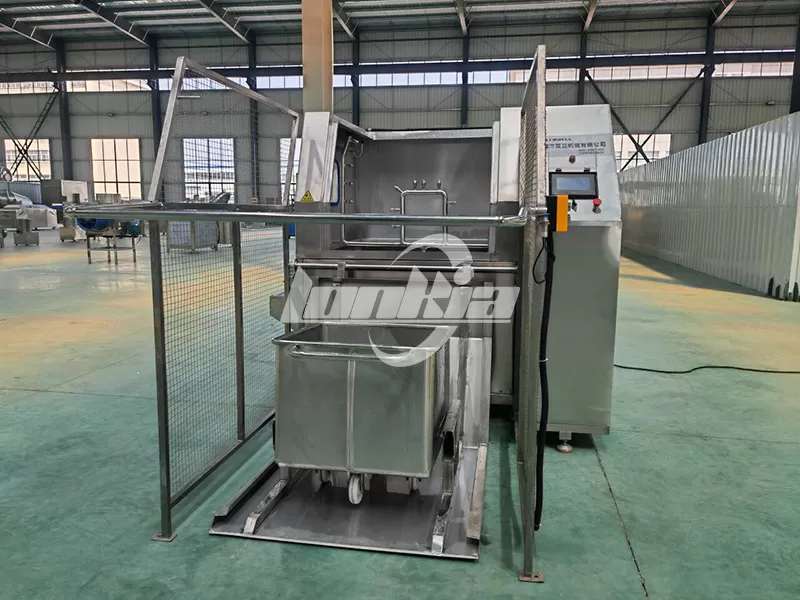
Water Temperature and Cleaning Duration Directly Affect Dirt-Removal Capability
For trolleys contaminated with grease and protein residues, relying solely on cold water rinsing typically fails to achieve optimal results. A trolley washer equipped with a heating system can adjust the cleaning water temperature according to different operating conditions, improving the efficiency of grease dissolution and making it easier for the high-pressure water stream to carry away contaminants.
At the same time, an appropriate cleaning duration is equally important. A cycle that is too short may leave stains behind, while one that is too long will reduce production efficiency. Equipment equipped with a PLC control system allows for flexible configuration of cleaning programs based on varying degrees of contamination, ensuring consistent cleaning quality and improving operational stability.
Is the Trolley Structure Compatible with the Equipment?
The dimensions, structures, and load-bearing methods of trolleys used by different companies are not entirely uniform. If the equipment dimensions do not match the trolley specifications, even with sufficient spray pressure, it may fail to cover all cleaning areas.
Therefore, before purchasing a trolley washing machine, verify the trolley's length, width, height, and any special structural features to ensure that the equipment's guidance system, wash chamber dimensions, and spray nozzle positions are fully compatible. Equipment that supports customized designs typically better meets the practical needs of different production lines, reducing the cost of retrofitting later on.
Water Circulation and Filtration Systems Affect Continuous Cleaning Capability
During continuous operation, large amounts of residue enter the wash water. If filtration capacity is insufficient, impurities may re-adhere to the trolley surfaces and clog the nozzles, reducing spray pressure.
High-quality trolley cleaning machines are typically equipped with multi-stage filtration and water recirculation systems that promptly separate impurities, maintain a stable flow of spray water, and ensure consistent cleaning performance even during prolonged operation. Additionally, the filtration system helps reduce maintenance frequency and improve operational stability.
Equipment Materials and Manufacturing Processes Are Equally Important
In addition to the cleaning system itself, the quality of the equipment's manufacturing also affects long-term performance. The food industry generally uses 304 stainless steel for the machine body, which offers excellent corrosion resistance and hygienic properties, making it suitable for environments requiring frequent cleaning.
At the same time, welding techniques, internal structure, and piping layout all impact daily maintenance and hygiene management. Equipment with a well-designed structure and no internal hygiene dead zones is more likely to maintain stable, long-term operation. Lonkia focuses on the practical application needs of food processing environments in its equipment design. By optimizing the spray structure, control system, and overall manufacturing processes, Lonkia provides customers with stable and reliable trolley washing solutions.
Conclusion
The cleaning effectiveness of a trolley washing machine is not determined by spray pressure alone, but rather by the combined effects of multiple factors, including the spray system, water temperature control, trolley compatibility, filtration and recirculation, and equipment manufacturing processes.
For food processing companies, when purchasing equipment, the focus should not be limited to a single parameter; rather, a comprehensive evaluation of the overall design and actual cleaning performance is essential. Selecting equipment with a well-designed structure, stable performance, and support for customized configurations not only improves the quality of trolley cleaning but also helps ensure the continuity of the production process and the long-term, stable operation of the equipment.